

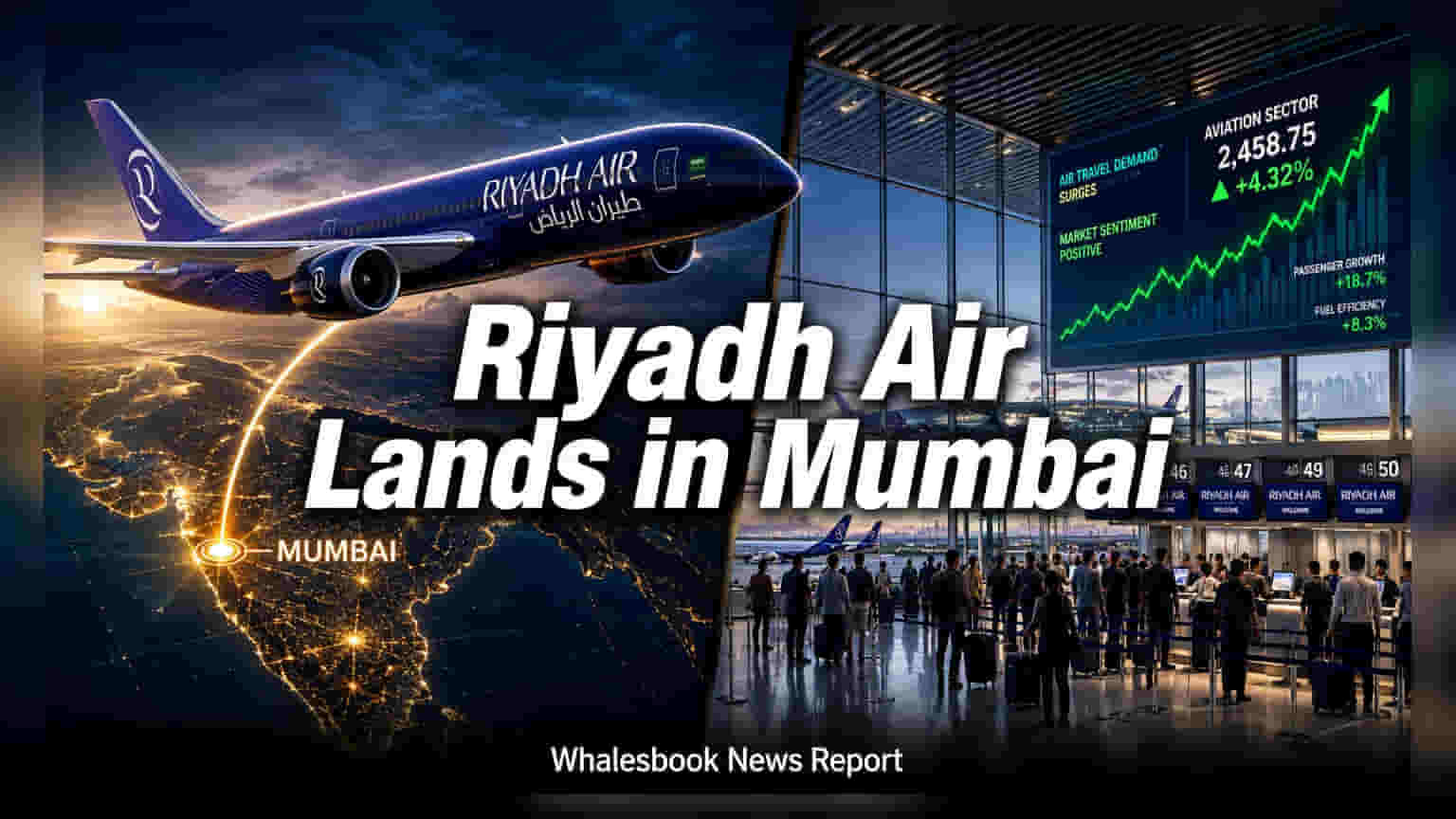
Saudi-owned Riyadh Air has launched daily direct flights between Riyadh and Mumbai, marking its first entry into the Indian market. The airline aims to connect Riyadh to over 100 destinations by 2030. While Riyadh Air is a private entity backed by the Public Investment Fund, its entry increases competition on the high-traffic India-Middle East travel corridor, which is significant for the aviation sector.
Riyadh Air, the national airline of Saudi Arabia, has officially commenced daily non-stop flights between Riyadh and Mumbai as of August 4, 2026. This launch marks the airline's first route into India and its tenth global destination overall. The expansion is a key component of the airline's strategy to align with Saudi Vision 2030, which seeks to transform the Kingdom into a global aviation and tourism hub by connecting its capital to over 100 international destinations by the end of the decade.
The airline is utilizing Boeing 787-9 Dreamliner aircraft for the new Mumbai-Riyadh service. Unlike many established carriers in the region that rely heavily on a hub-and-spoke model to channel passengers through transit hubs, Riyadh Air is positioning itself with a focus on point-to-point connectivity. Management has stated that the objective is to link Riyadh directly with major global capitals, aiming to capture demand from travelers whose primary destination is the Saudi capital rather than those merely transiting to other regions.
For the Indian aviation sector, the entry of a well-funded, state-backed carrier introduces new capacity on the lucrative India-Middle East route. This corridor is already highly competitive, with established players such as Emirates, Qatar Airways, and Indian carriers like IndiGo and the Air India group holding significant market share. The addition of Riyadh Air could lead to increased supply on the route, which often influences ticket pricing and load factors for existing operators in the region.
Because Riyadh Air is a private company wholly owned by the Public Investment Fund (PIF) of Saudi Arabia, it is not listed on any stock exchange. Consequently, there is no share price to track, and it does not trade on the NSE or BSE. However, investors in listed Indian aviation stocks may find the competitive dynamics relevant, as the arrival of new international capacity often triggers shifts in market share and pricing strategies across the industry.
The airline industry remains capital-intensive and subject to various external risks, including fluctuating global crude oil prices, which directly impact aviation turbine fuel costs. Furthermore, as a relatively new operator, Riyadh Air faces significant execution risk as it scales its operations from a startup to a major international carrier. Successful growth will depend on its ability to manage rapid fleet expansion, maintain operational efficiency, and compete effectively against incumbents with deep-rooted networks and established passenger loyalty programs. The market will monitor the airline's progress as it continues to add more destinations in Asia and Europe to its growing network.