

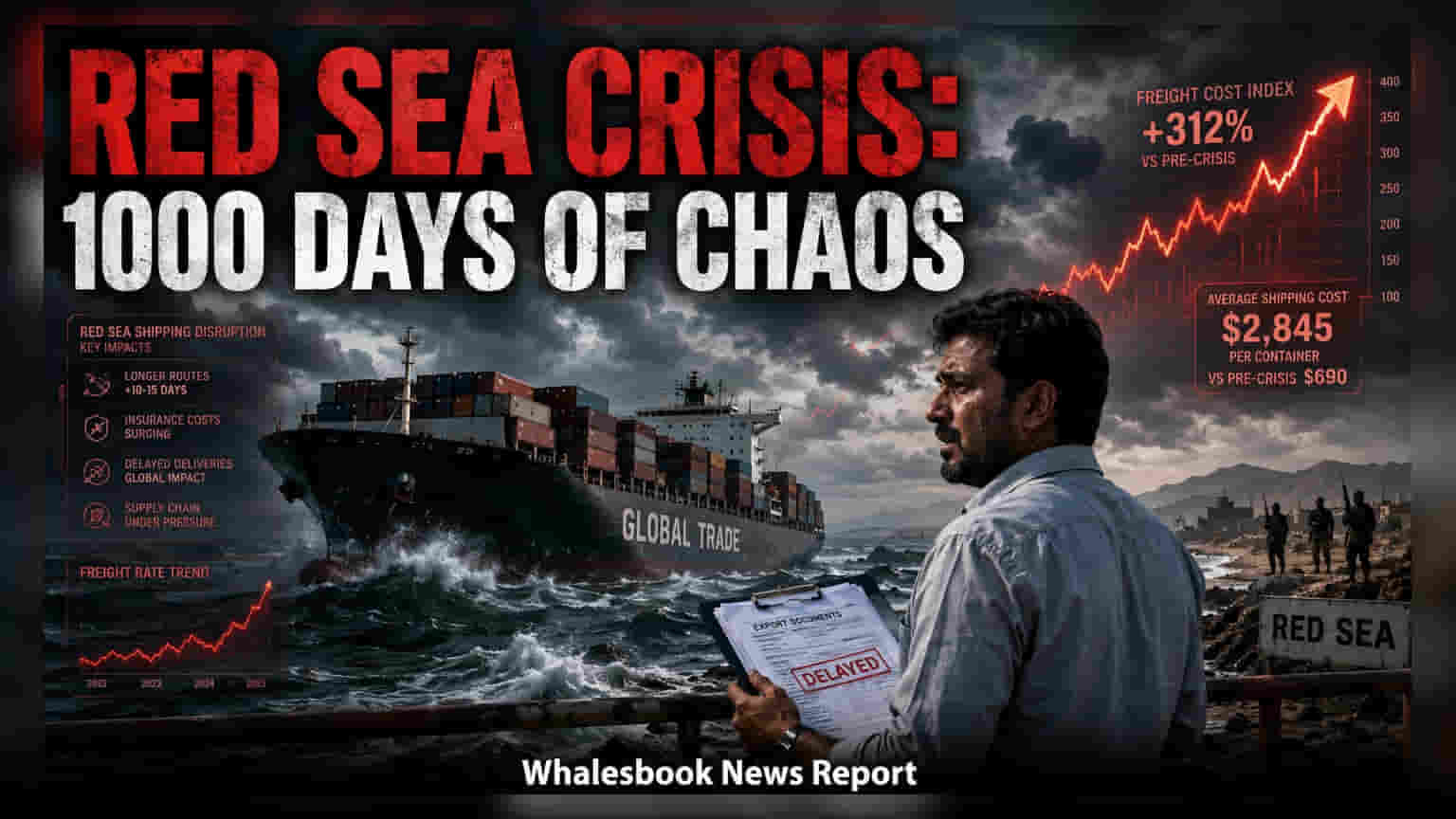
The Red Sea shipping crisis has reached a 1,000-day milestone, with major carriers still avoiding the Suez Canal. While India's exports showed resilience with 15% growth recently, shipping costs have jumped 3–4 times. This is creating severe liquidity pressure for exporters, especially MSMEs, due to extended transit times and high operational costs.
The Red Sea shipping crisis has officially crossed the 1,000-day mark as of August 2026, marking a persistent shift in global trade routes. Even after this extended period, major international shipping lines continue to bypass the Suez Canal to avoid regional conflict, opting for the much longer route around the Cape of Good Hope. This detour adds between 7 to 15 days to transit times for goods moving between India and Western markets, fundamentally altering the logistics landscape for domestic exporters.
The most immediate impact for Indian businesses is the sharp rise in transportation expenses. Freight rates for key routes to the US and Europe have surged 3 to 4 times compared to previous levels, with some spot rates climbing to between $9,000 and $12,000 per 40-foot container. This creates a difficult environment for companies, particularly in sectors with thin profit margins like textiles, garments, engineering goods, and agriculture.
Despite these mounting costs, official data shows that India’s merchandise exports grew by 15% during the April–July 2026 period. This growth highlights the resilience of Indian exporters who have managed to maintain delivery schedules despite the logistics crunch. However, behind this headline growth figure, many businesses are facing intense internal pressure. The primary challenge is not just the high freight cost, but the strain on liquidity and working capital. Because goods are stuck in transit for weeks longer than usual, payments are delayed, which significantly hurts the cash flow of Micro, Small, and Medium Enterprises (MSMEs).
The situation is further complicated by a shortage of containers and vessels, as the longer journeys force ships to spend more time at sea, reducing the number of available trips they can make. For exporters of perishable goods like horticulture, the uncertainty is even higher, as the extended transit time increases the risk of product damage, leading to higher insurance premiums and potential losses.
The ongoing conflict, underlined by a recent attack on a merchant vessel in August 2026, suggests that the logistical challenges will remain in the near term. The crisis has exposed a structural vulnerability for Indian trade: a high dependency on international shipping lines. With limited domestic shipping capacity, Indian exporters have little control over these pricing and capacity decisions.
For investors and industry observers, the key focus will be on how companies manage their profit margins in the coming quarters. The next critical monitorable is the impact on festive season shipments. If these logistics costs remain high, businesses may be forced to either absorb the cost—which hurts profit—or pass it on to consumers, which could impact demand. Market participants will likely track whether trade volumes can continue to grow at the same pace if the freight cost volatility persists through the end of the year.