

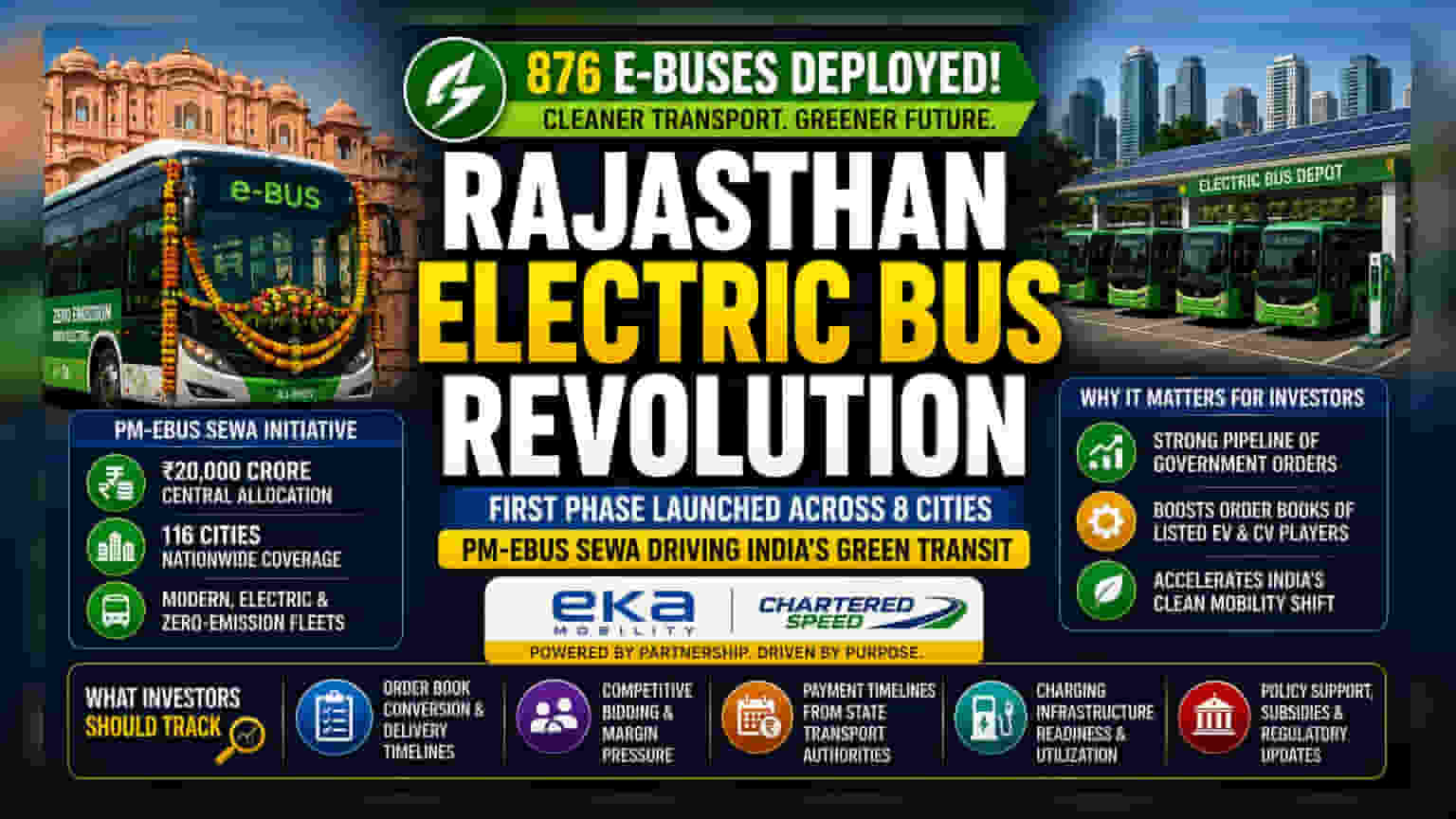
Rajasthan has commenced the deployment of 876 electric buses across eight cities, part of the ₹20,000 crore national PM-eBus Sewa scheme. While EKA Mobility and Chartered Speed are executing this specific project, the initiative remains a key driver for India’s public transport electrification. Investors in the automotive and EV components space are tracking these government order inflows as states accelerate their transition to greener fleets.
What Happened
Rajasthan has officially launched the first phase of its electric bus deployment, with 876 units set to be phased into public transport services across eight cities. The project, flagged off in Jaipur by the state government, is part of the central government’s PM-eBus Sewa initiative. The order is being executed by EKA Mobility, a subsidiary of Pinnacle Industries, in partnership with Chartered Speed, which will handle the operations and deployment. This development marks a significant move toward updating the state’s public transportation infrastructure with modern, zero-emission vehicles.
The PM-eBus Sewa Landscape
The PM-eBus Sewa scheme is a national effort designed to bolster public transport in 116 Indian cities with an allocation of ₹20,000 crore. The program is structured to help state transport authorities modernize their fleets, which have historically relied on internal combustion engines. By providing central financial support, the initiative aims to make it easier for states to transition to electric vehicles (EVs) without bearing the entire upfront capital cost. This is creating a consistent pipeline of new orders for companies involved in manufacturing and operating electric buses.
Why This Matters For Investors
While the specific order mentioned here involves private companies, the broader PM-eBus Sewa initiative is a major volume driver for listed players in the commercial vehicle and EV space. Companies such as Olectra Greentech, JBM Auto, Tata Motors, and Ashok Leyland have been active participants in these government tenders. For investors, the steady flow of such orders acts as a proxy for the health and growth of the electric bus sector. Tracking the total number of buses tendered versus those actually delivered provides insight into the order book growth of listed manufacturers.
Operational And Financial Realities
Most public transport electric bus projects operate on a Gross Cost Contract (GCC) model. Under this arrangement, the manufacturer or operator is responsible for supplying the bus, maintaining it, and providing the driver and charging infrastructure, while the state transport body pays a fixed fee per kilometer. While this ensures a long-term revenue stream for operators, it also introduces specific risks. The primary concern for investors is the potential for payment delays from state-run transport undertakings. Additionally, successful execution depends on the quick development of charging infrastructure, as the utility of these buses is entirely dependent on the availability of reliable power supply depots.
What Investors Should Track
When analyzing companies in this sector, investors may monitor a few key factors. First is the order book conversion rate, or how quickly companies are able to deliver buses after receiving a tender. Second is the competitive landscape, as aggressive bidding in government tenders can sometimes pressure profit margins for the winning companies. Finally, it is important to watch for any changes in government policy regarding subsidies or payment timelines, as these can directly impact the cash flow of both the manufacturers and the operating partners involved in these long-term transit projects.