

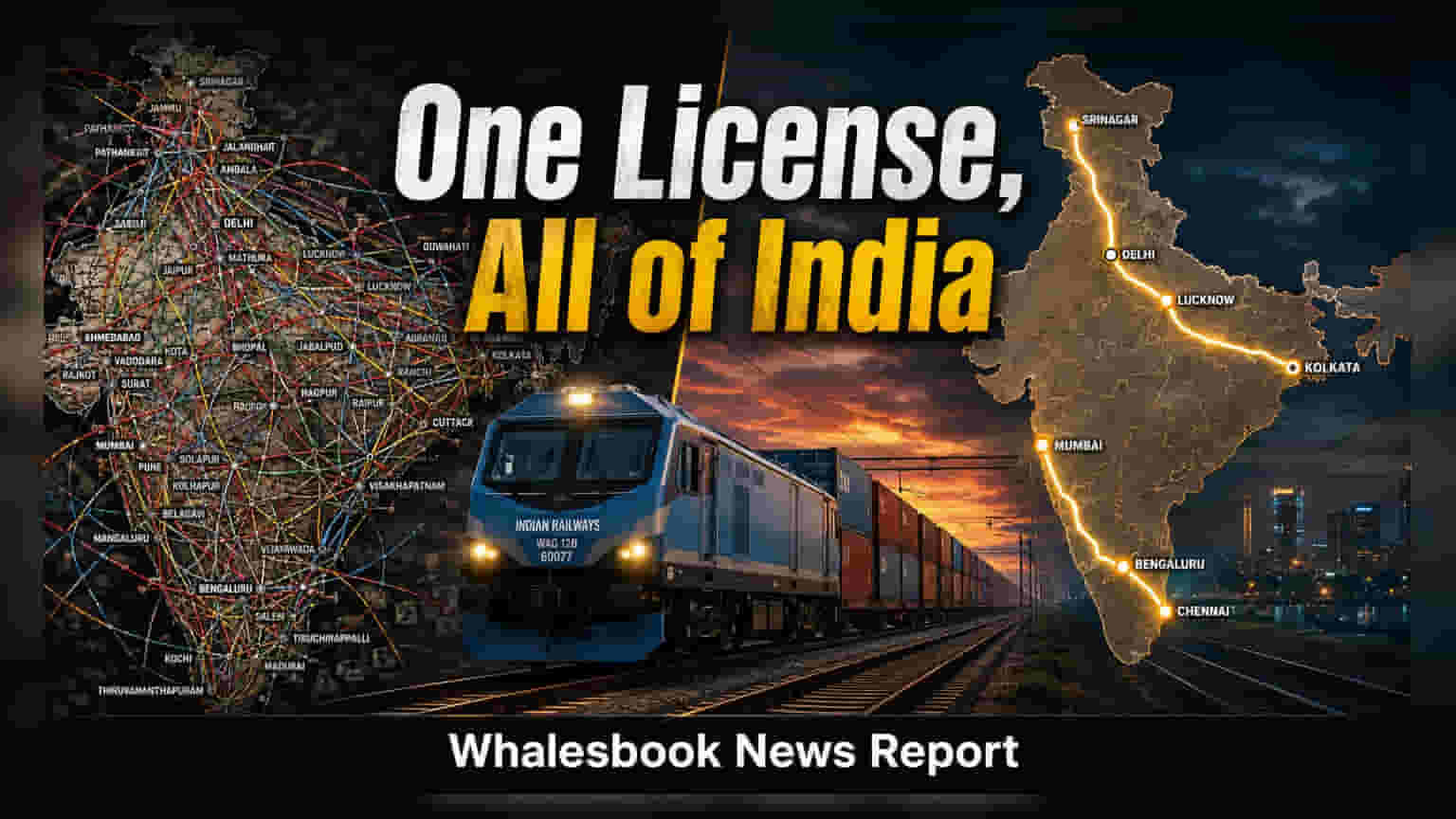
The Indian Ministry of Railways has launched a single, all-India license for container train operators, replacing the complex route-specific system. With a uniform ₹25 crore registration fee and 20-year concession extensions without additional charges, the policy aims to boost private investment. Investors may track how this change in the ease of doing business affects competition and logistics market share across the rail freight sector.
The Indian Ministry of Railways has rolled out a major reform for the logistics sector by introducing a single, pan-India license for Container Train Operators. This move replaces the previous system, which required operators to obtain specific licenses for different routes. Under the new framework, applicants will pay a uniform, non-refundable registration fee of ₹25 crore to gain access to the entire Indian Railways network.
This policy change is part of an effort to streamline operations and encourage more private companies to move freight from road to rail. By reducing bureaucratic hurdles, the government aims to lower logistics costs and improve the speed of cargo transport across the country. Existing operators, who currently function under the older, fragmented licensing regime, will have options to migrate to this new system as their current agreements expire.
A significant financial incentive included in this overhaul is the extension of concession periods. Operators can now extend their concession by 20 years without having to pay any extra renewal or extension fees. This reduction in the long-term cost of operations could improve financial planning for logistics companies and help them justify capital spending on infrastructure and container capacity.
From an investor perspective, this development changes the competitive landscape of the rail freight sector. While the ease of entry and potential for expansion are positive steps, the removal of barriers might also lead to increased competition. Market players should monitor whether this attracts new entrants or if established operators can leverage the simplified system to gain market share. The ultimate success of this reform will depend on how effectively these operators can improve efficiency and capture volumes from the road transport segment, which remains the dominant mode of logistics in India.
Looking ahead, the next important development for market participants will be observing how existing major operators choose to transition to the new permit structure and how the revised fee impacts their cash flows and investment strategies.