

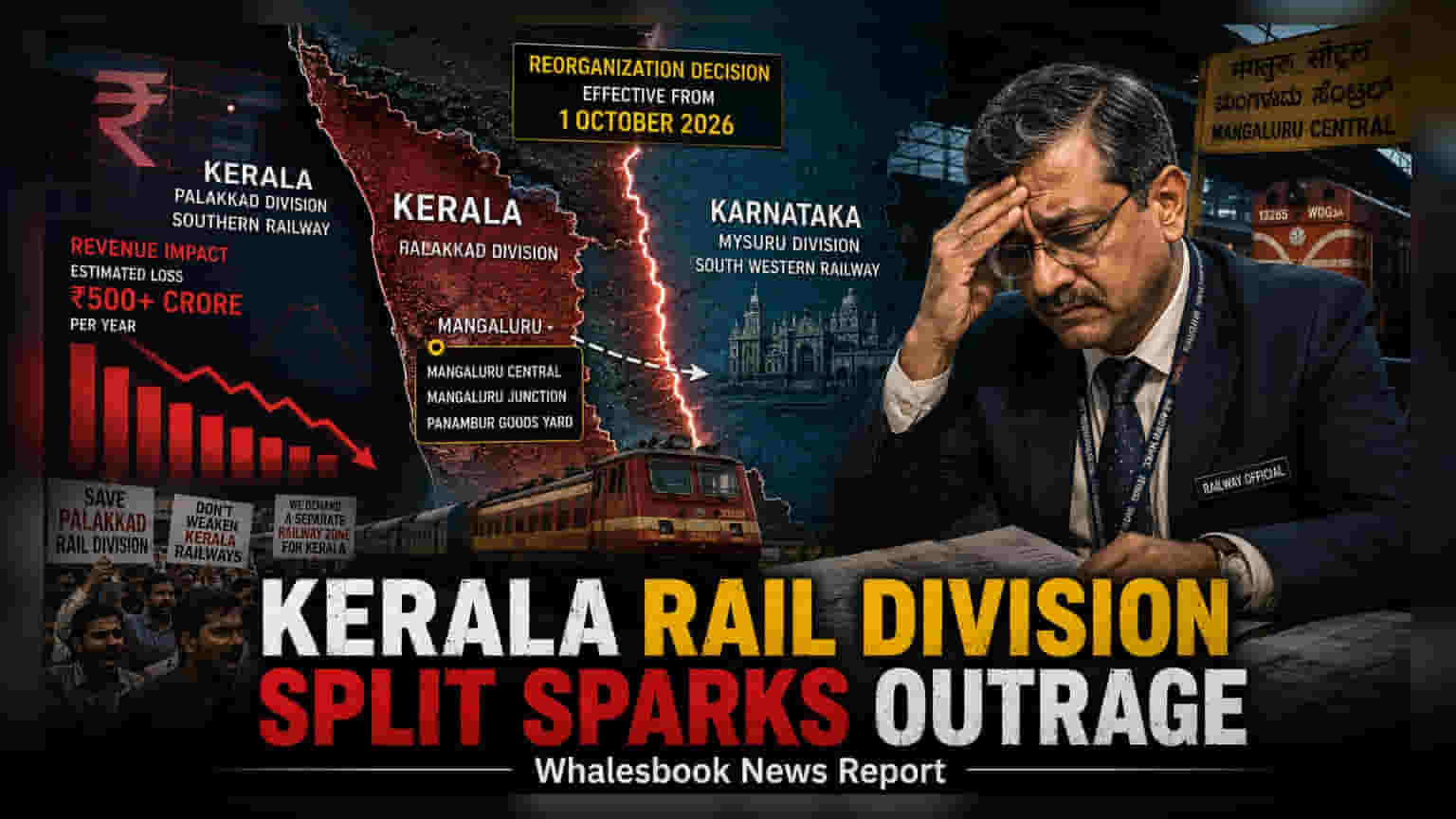
The Railway Board will transfer the Mangaluru region from the Palakkad railway division to the Mysuru division starting October 1, 2026. This administrative move faces heavy political opposition in Kerala, with officials citing potential revenue losses and reduced operational control as major concerns.
The Railway Board has finalized the decision to reorganize railway administration in the region by transferring the Mangaluru region—including Mangaluru Central, Mangaluru Junction, and the Panambur Goods Yard—from the Palakkad division under the Southern Railway to the Mysuru division under the South Western Railway. This shift, scheduled to become effective on October 1, 2026, marks a significant change in how railway services and infrastructure are managed in the area.
This decision has triggered strong reactions from political leaders across Kerala. State government officials and opposition members have described the move as a unilateral action that could severely affect the Palakkad division's future. The core of the concern lies in the financial and operational autonomy of the Palakkad division, which relies heavily on the Mangaluru region for a large portion of its earnings. Political estimates, voiced by state leaders, suggest that the division could lose a significant share of its total annual revenue, as the Mangaluru region currently acts as a primary hub for freight and passenger traffic.
Beyond the revenue numbers, the administrative change raises questions about long-term operational capabilities. Industry observers and passenger associations have noted that transferring these critical hubs could complicate the maintenance of existing train services. Access to pitlines and other essential railway infrastructure in the Mangaluru region is vital for the smooth operation of daily services. There is apprehension that the bifurcation could create hurdles in introducing new train services or extending existing ones, as the Palakkad division may lose direct control over the assets and personnel currently based in the Mangaluru area.
This is not the first time such an administrative reorganization has caused tension. Similar concerns were raised in the past during the formation of the Salem railway division, which also reduced the operational reach of the Palakkad division. For many in the region, this latest transfer reinforces the long-standing demand for a separate railway zone for Kerala, rather than having the state's railway infrastructure managed by divisions headquartered outside the state.
The state government has indicated that it intends to take the matter to the national level, with discussions planned to urge the central government to reconsider the decision. For the local economy and railway passengers, the immediate focus will remain on how this transition affects daily operations, ticket availability, and the overall maintenance of railway infrastructure once the transfer is officially implemented in October.