

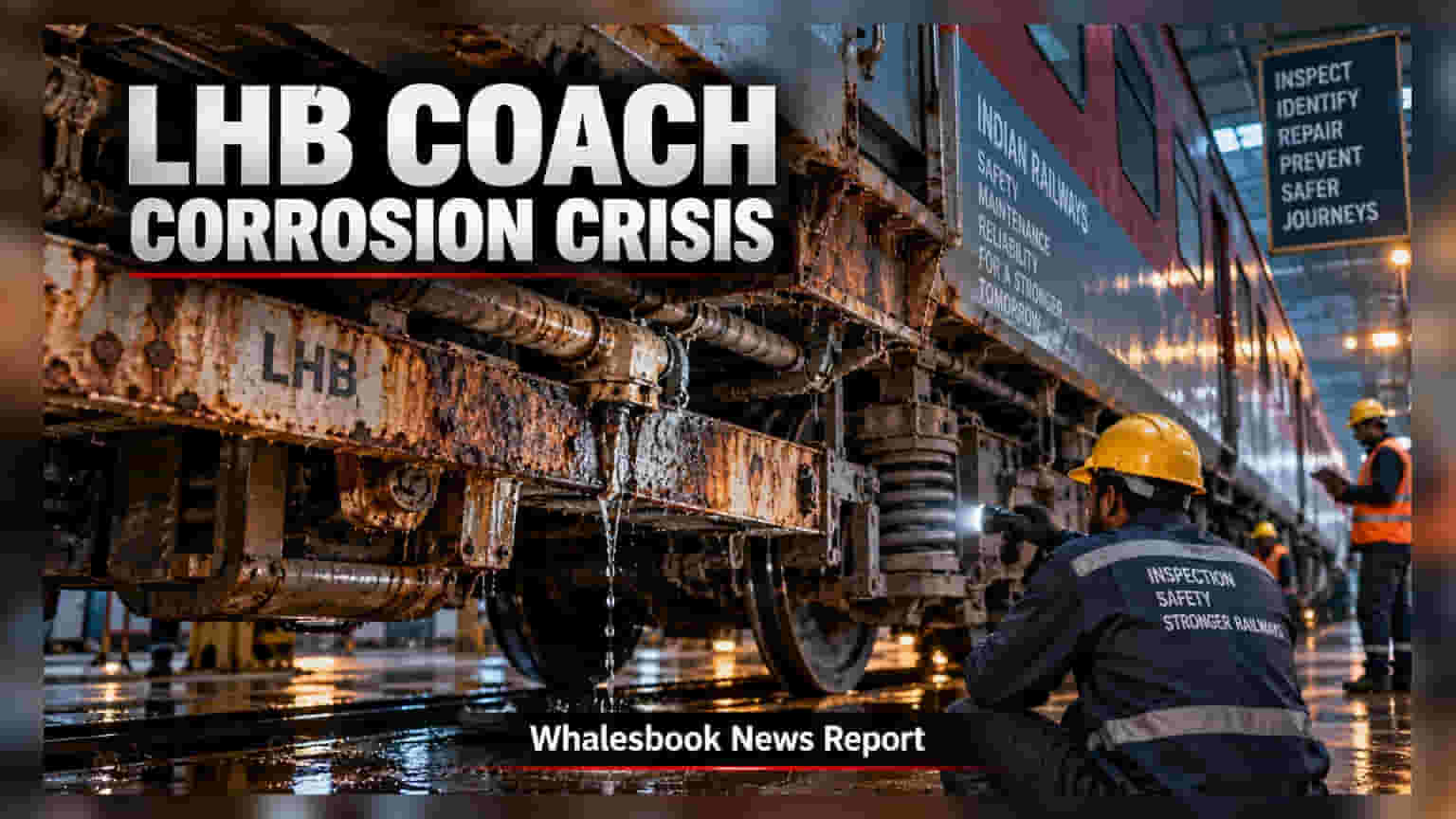
The Railway Board has mandated urgent safety inspections across all zones after identifying significant corrosion in LHB coach bogies. The move follows reports of structural decay caused by bio-toilet leaks, coastal salinity, and chemical cleaning agents, impacting the maintenance cost and operational lifespan of the rolling stock.
The Railway Board has directed a nationwide safety audit of all Linke Hofmann Busch (LHB) coaches following reports of premature corrosion in the underframes and bogie components. This directive mandates that all railway zones conduct urgent inspections to assess the structural integrity of these coaches, which are the standard for passenger travel in India. The move comes as technical teams identified widespread decay in these critical parts, prompting an immediate need to bolster maintenance and anti-corrosion protocols.
The technical assessment highlighted several factors contributing to the structural degradation. One of the primary issues identified is the leakage of acidic effluent from bio-toilets, which damages trough floors and support beams. Additionally, coaches operating in coastal corridors are facing rapid oxidation due to high atmospheric salinity. The situation is further aggravated by the use of aggressive industrial chemicals during coach washing, combined with moisture trapped under vinyl advertisements, which accelerates the damage in areas previously thought to be protected.
For Indian Railways, this development underscores the challenges of maintaining modern assets in diverse and harsh operating environments. The board has now mandated stricter oversight on the chemicals applied during coach washing cycles and requires that all drainage pathways remain clear to prevent moisture retention. The board has also instructed key manufacturing units, including the Integral Coach Factory in Chennai, the Rail Coach Factory in Kapurthala, and the Modern Coach Factory in Rae Bareli, to evaluate engineering solutions to mitigate these vulnerabilities in future coach production.
This shift in maintenance focus suggests that the operational cost of managing railway assets may increase as the department prioritizes safety and long-term asset value. Investors and stakeholders in the railway ecosystem may monitor whether this directive leads to new requirements for specialized anti-corrosion materials, updated design specifications in upcoming coach tenders, or changes in how cleaning services and maintenance contracts are awarded across different railway zones.