

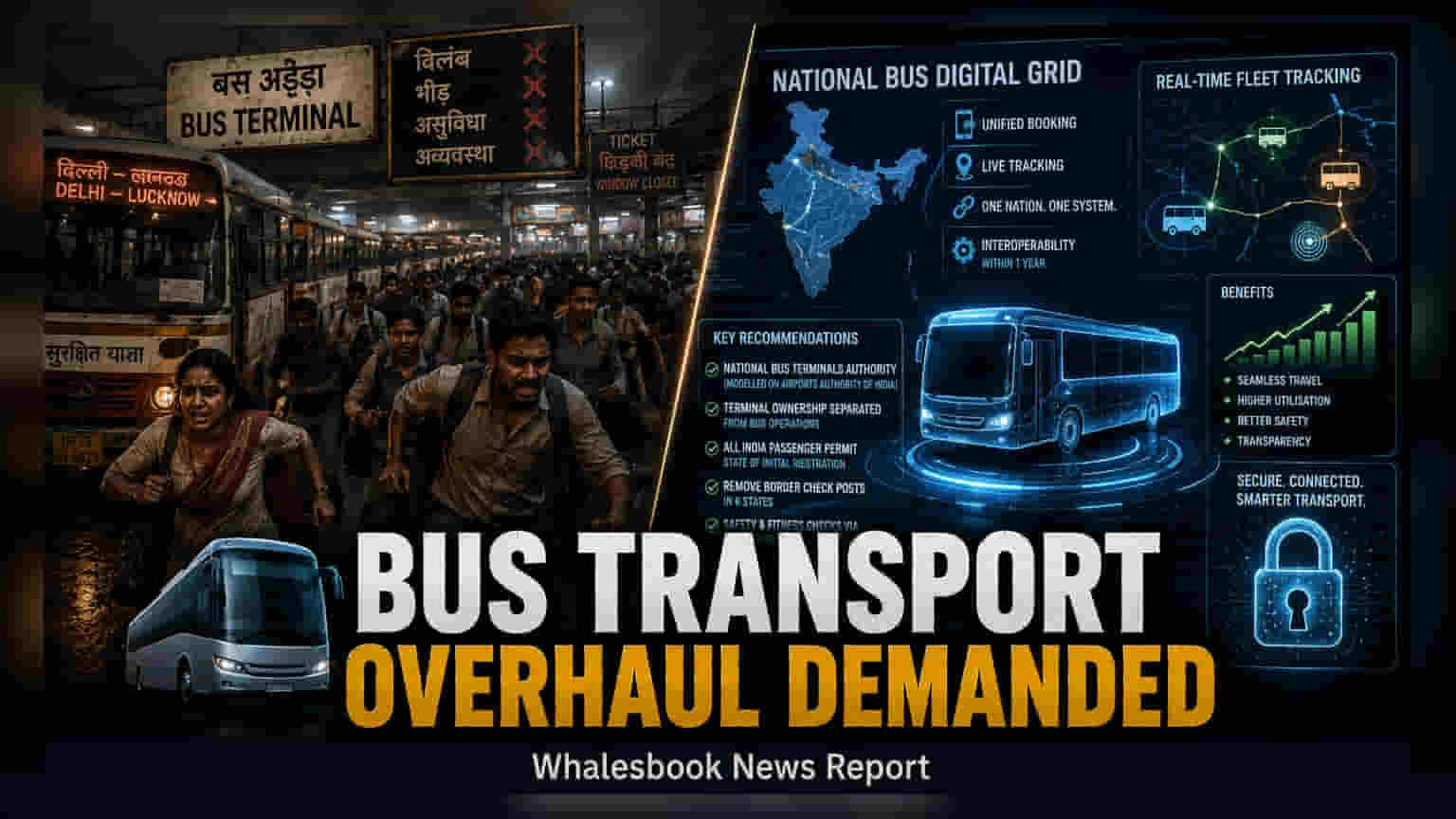
A parliamentary committee has released its 392nd report, recommending a comprehensive modernization of India's bus transport system. Key proposals include creating a national digital grid for booking and tracking, and establishing a National Bus Terminals Authority. While the move targets better efficiency and safety, investors should note that the plan faces significant implementation hurdles, including financial stress within state transport undertakings and the need for federal coordination.
A parliamentary standing committee on transport, tourism, and culture has presented its 392nd report, outlining a roadmap to modernize the bus transport sector across India. The recommendations, presented on Tuesday, August 11, 2026, aim to transition the industry toward a more integrated, digital, and safety-focused model. The committee's plan addresses long-standing operational challenges by proposing significant policy and regulatory changes.
At the core of the proposal is the creation of a 'National Bus Digital Grid.' This initiative aims to unify booking platforms and implement live tracking across all states, creating a seamless experience for passengers. The committee has also recommended standardizing interoperability between different systems within one year. For the broader industry, this suggests a push toward increased technology spending, as operators will likely need to upgrade their fleets and back-end systems to meet these new digital standards.
Another significant recommendation is the establishment of a 'National Bus Terminals Authority,' modeled after the Airports Authority of India. By suggesting the separation of terminal ownership from daily bus operations, the report aims to improve infrastructure quality. For infrastructure and construction firms, this could eventually open doors for public-private partnership models in building and managing modern bus terminals, provided states adopt these recommendations.
To standardize and modernize, the committee has also called for the replacement of the current All India Tourist Permit system with an All India Passenger Permit, to be issued by the state of initial registration. The report also highlights the need to remove border check posts in the six states where they remain, which is expected to reduce transit delays and improve vehicle utilisation efficiency.
Despite the long-term potential for efficiency gains, the sector faces substantial risks that investors should consider. Many State Road Transport Undertakings (SRTUs) are currently grappling with high debt and recurring operational losses, which may limit their capacity to fund the capital-intensive upgrades required by these proposals. Furthermore, the Indian transport sector is highly fragmented, with state governments holding significant power over permits, terminal management, and enforcement. Achieving federal coordination and uniform adoption of these rules across all states remains a complex hurdle.
For private bus operators, the transition may bring increased compliance costs and a requirement to invest in mandatory digital and safety equipment, such as automated testing stations for fitness checks. The ultimate impact of these recommendations will depend heavily on the timelines for implementation, the willingness of state governments to align with central policies, and the availability of funding for infrastructure modernization. The next important monitorable will be the Ministry’s response and the pace at which these proposed standards are formally notified and adopted by the states.