

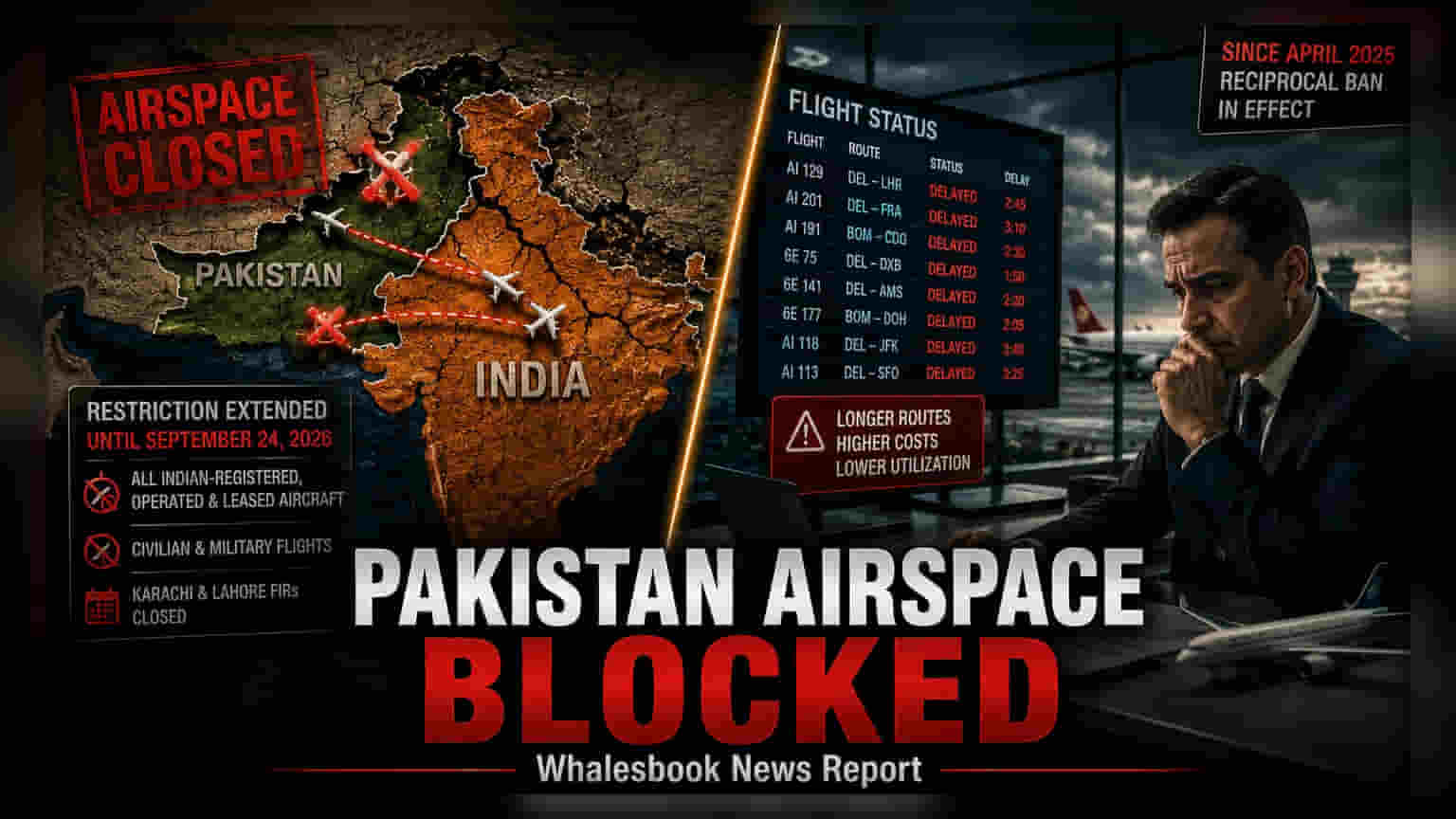
Pakistan has extended its airspace ban for Indian-registered aircraft until September 24, 2026. This recurring restriction forces Indian airlines to utilize longer flight routes, leading to higher fuel consumption and operational costs that pressure profit margins.
Pakistan’s civil aviation authority has extended the closure of its airspace to all Indian-registered, operated, and leased aircraft until September 24, 2026. This restriction applies to both civilian and military flights across the Karachi and Lahore flight information regions. India continues to enforce a reciprocal ban on all Pakistani-registered aircraft and airlines, maintaining a state of airspace restriction that has been in place since April 2025.
Operational Impact on Indian Airlines
The ongoing airspace restrictions have significant implications for the cost structure of Indian airlines. International flights heading to destinations in the west, such as Europe or the Middle East, are often forced to take longer, circuitous routes to avoid restricted airspace. In the aviation industry, distance is directly linked to fuel consumption, which is typically one of the largest operating expenses for any carrier. Longer flight paths translate to higher fuel burn per flight, which can directly compress operating margins if the airline cannot fully pass these costs to passengers through higher ticket prices.
Beyond fuel expenses, these restrictions affect aircraft utilization rates. When an aircraft is in the air for longer periods to cover the same destination, its turnaround time is reduced. This means a single plane might be able to complete fewer trips in a 24-hour cycle compared to a scenario where optimal, shorter routes are available. For airlines, the efficient use of their fleet is a critical lever for profitability, and reduced utilization can limit the capacity an airline can deploy across its network.
Competitive Disadvantage and Market Context
Indian carriers currently operate at a potential disadvantage compared to international airlines that are not subject to these restrictions. Non-Indian carriers, which can continue to utilize Pakistani airspace, can offer more direct routes. This provides them with a competitive edge in terms of both flight duration and cost efficiency. For Indian passengers, this may result in longer travel times on certain international sectors.
This airspace closure, which has been extended periodically since it began in April 2025 following the Pahalgam terror incident, has become a known variable in the operational landscape of the Indian aviation sector. While the industry has adapted to these routes over the past year, the recurring nature of the extension prevents airlines from returning to optimal routing and cost structures.
Investors typically monitor how airlines like InterGlobe Aviation (IndiGo) and the Air India group manage these operational pressures. The key monitorable in upcoming financial results will be commentary on fuel cost management and yield improvements, which airlines use to offset the higher cost of operations caused by these diverted flight paths. The ability to maintain profitability despite these external operational challenges remains a central point for analysis in the domestic aviation sector.