

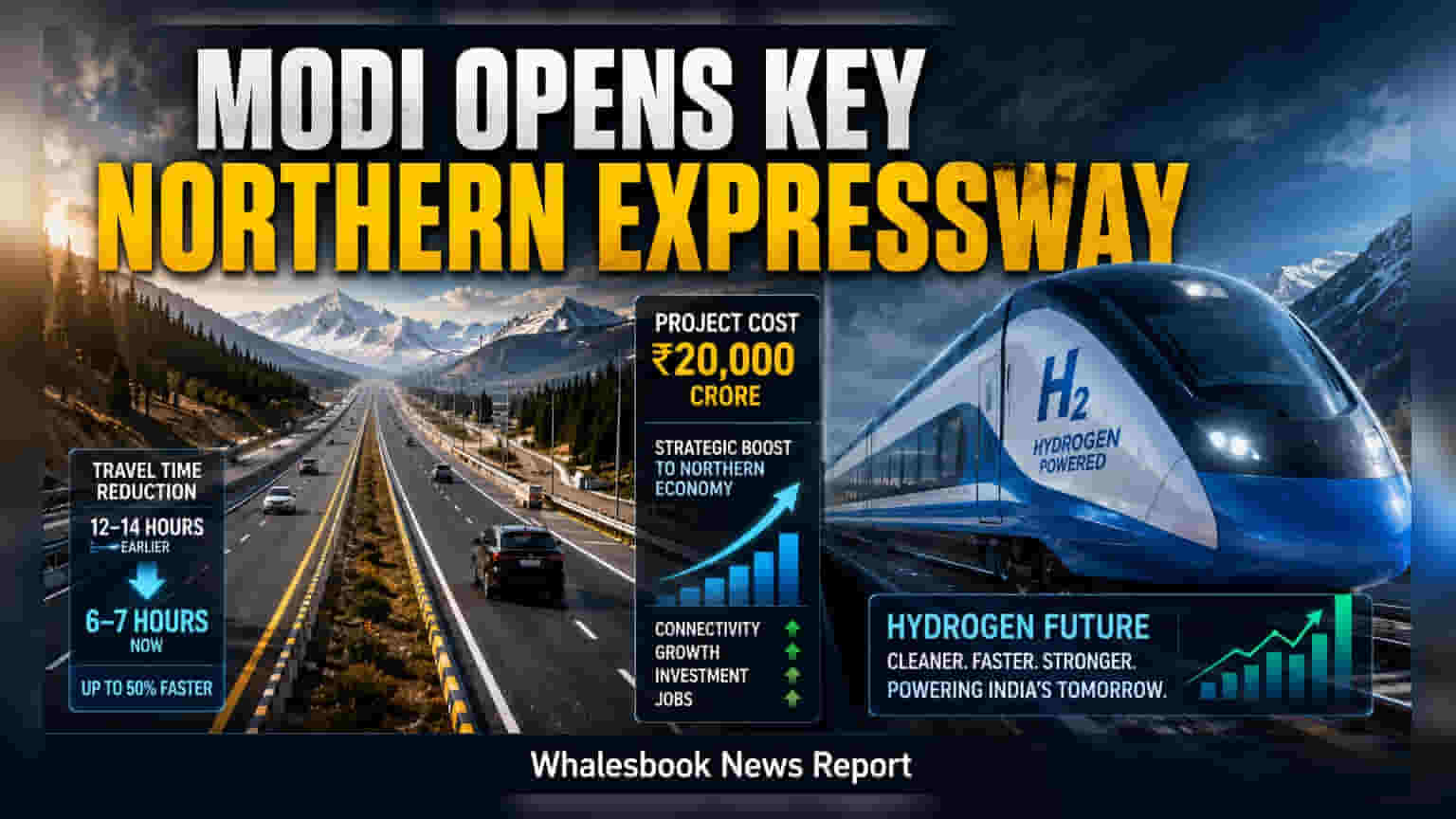
Prime Minister Narendra Modi has inaugurated the Delhi-Amritsar-Katra Expressway, a ₹9,680 crore project designed to cut travel time to Katra to six hours. This launch is part of a broader ₹14,700 crore infrastructure push in Haryana and Punjab that includes national highways and the nation's first hydrogen-powered train.
Prime Minister Narendra Modi has officially dedicated the Delhi-Amritsar-Katra Expressway to the nation, marking a major milestone for connectivity in North India. This 157.92 km, four-lane Greenfield corridor was built at a cost of approximately ₹9,680 crore. The new route is expected to significantly reduce travel time, bringing the journey between Delhi and Katra down to six hours from the previous 14 hours. The stretch between Delhi and Amritsar will also see travel time drop to four hours from eight.
Advancing Rail and Road Infrastructure
Beyond the expressway, the government is focusing on green energy and regional logistics. The Prime Minister flagged off India’s first hydrogen-powered train operating between Jind and Sonipat. This technology utilizes hydrogen fuel cells and produces only water vapor, showcasing an shift toward cleaner transport alternatives. In total, infrastructure projects worth over ₹14,700 crore were launched in Jind, including significant national highway upgrades in Haryana such as the Ambala-Kala Amb and Jind-Gohana Greenfield highways. These projects are intended to improve road safety and logistics efficiency for heavy transport moving between Haryana and Himachal Pradesh.
Regional Development Beyond Transport
The development program extends to social infrastructure, including the inauguration of the Pandit Neki Ram Sharma Government Medical College and new facilities at PGIMER in Chandigarh. Furthermore, the Amrit Bharat Station Scheme saw the redevelopment of 75 railway stations nationwide, including Jalandhar Cantt. Other critical projects include the commissioning of the Daulatpur Chowk-Kartoli rail line and the foundation stone for the Southern Ludhiana Bypass, which aims to decongest regional traffic.
Investor Context and Monitoring
For investors, these large-scale infrastructure projects represent a significant commitment to regional economic development, which often acts as a catalyst for local commerce, real estate, and logistics efficiency. However, the success of such massive undertakings relies on long-term traffic volume to justify the capital spending and maintenance costs. Investors typically monitor how these new routes impact the operational margins of logistics companies and the potential increase in commercial activity in towns located along these new corridors. The next phase of development will focus on the operational efficiency of these new railway lines and the impact of the new highways on regional goods movement and fuel consumption patterns for the transport sector.