

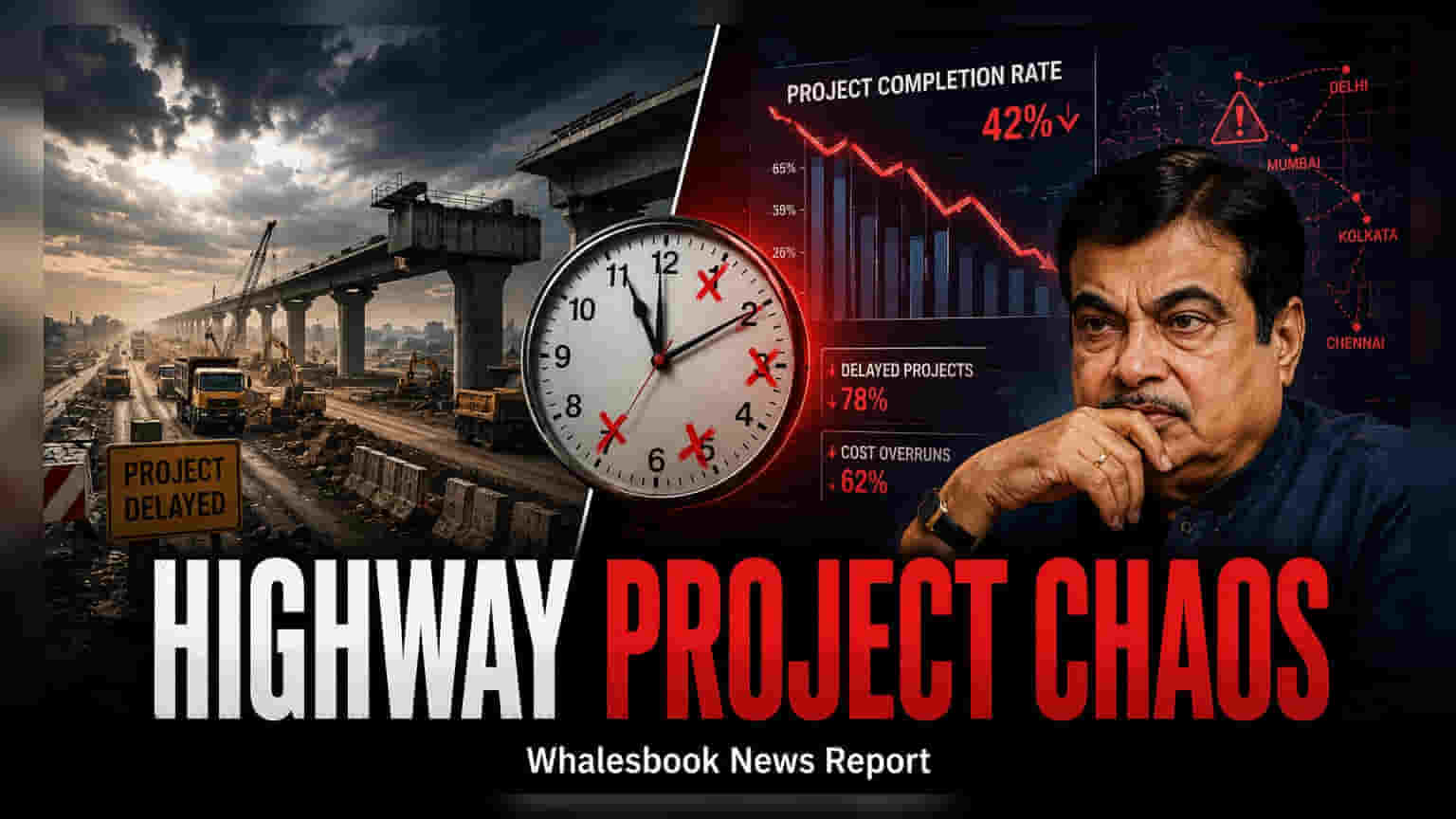
New government data shows 629 of 1,191 national highway projects have missed original deadlines. This report to Parliament highlights execution challenges in the infrastructure sector. Meanwhile, authorities have penalized 103 contractors for poor quality work over the last three fiscal years to address these performance concerns.
Detailed Coverage
A significant number of India's national highway projects are currently running behind their planned schedules, according to official data presented to the Rajya Sabha. Out of 1,191 active projects, 629 have failed to meet their original completion deadlines. Union Minister Nitin Gadkari shared these figures in a written reply, highlighting the scale of execution challenges facing the national infrastructure program.
While widespread delays present concerns regarding project timelines and capital turnover for infrastructure companies, the government is taking active steps to address execution quality. Between the 2023-24 and 2025-26 fiscal years, 103 contractors and concessionaires have faced penalties or blacklisting due to subpar construction quality. For investors in the infrastructure and construction space, this suggests that regulatory focus is shifting toward stricter accountability and adherence to standards, which may impact companies with weaker execution track records.
Safety and Traffic Management Upgrades
Beyond project completion, the government is investing heavily in safety infrastructure. An advanced traffic management system is being deployed across approximately 52,647 kilometers of national highways and expressways that have four or more lanes. This initiative involves a network of command and control centers designed for real-time monitoring and incident response. The program also utilizes artificial intelligence to analyze accident data, leading to the identification of 6,358 high-risk segments, or 'black corridors,' where safety measures are being prioritized.
Toll Collection and Revenue Trends
On the revenue and operational side, the Ministry is standardizing toll collection through a FASTag-based Annual Pass system for non-commercial vehicles. Introduced in August 2025, this pass costs ₹3,075 for the 2026-27 fiscal year and covers either one year or 200 crossings. By June 2026, the adoption of these passes reached 7.7 million units, accounting for roughly 33% of total electronic toll collections for private cars, jeeps, and vans. This shift toward digital, standardized tolling is aimed at increasing efficiency in toll plaza operations.
Investors monitoring this sector should track the pace at which the delayed 629 projects are brought back on track and whether the tighter quality controls result in improved project completion rates. The impact of these delays on the balance sheets of major construction players, particularly regarding potential cost overruns and locked-up capital, will remain a primary monitorable in the coming quarters.