 Whalesbook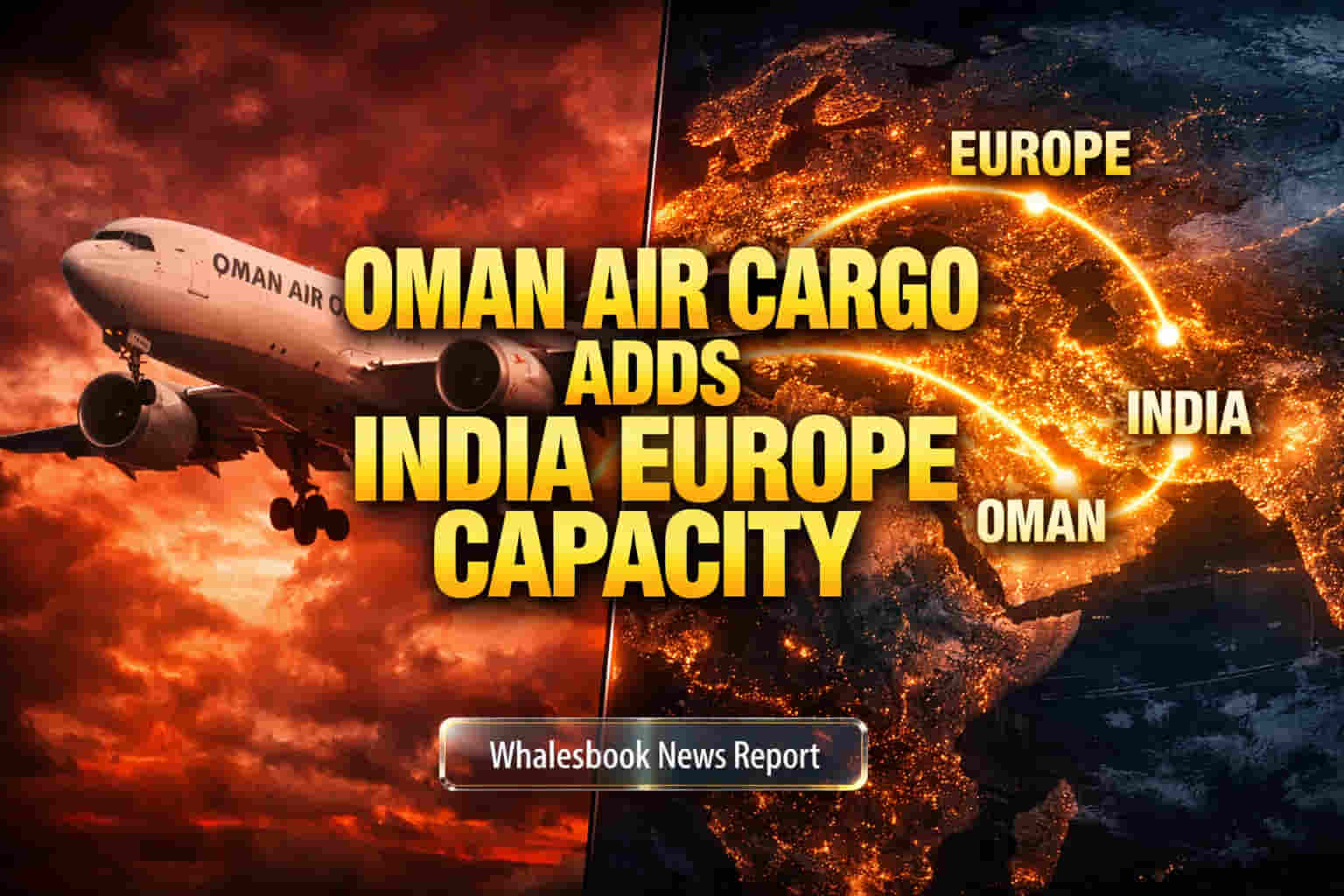


Strategic Airspace Maneuvers
Oman Air Cargo is proactively bolstering its network capacity, injecting additional belly hold capacity for flights connecting Oman to the United Kingdom, Europe, India, and Asia. This strategic move directly addresses the significant regional airspace closures that have compelled the carrier to suspend operations to key Middle Eastern destinations like Bahrain, Jordan, Kuwait, Qatar, and Dubai. The carrier's 2026 strategy explicitly centers on strengthening trade flows from the Far East, Southeast Asia, and the Indian subcontinent into Europe, positioning Oman Air Cargo along crucial east-west corridors. Leveraging Oman's strategic geographic advantage, Muscat International Airport is increasingly positioned as a competitive gateway with less congestion than traditional regional giants like Dubai and Doha. This proactive expansion by Oman Air Cargo, valued at approximately $1.0 billion for the Oman air cargo market, aims to capture transit traffic rerouted due to the disruptions, offering shippers an alternative amidst a constrained environment. The airline's focus on optimizing its niche network and exploring diverse capacity models aligns with its historical growth trajectory, which saw a 42% increase in cargo volumes in the first half of 2023.
DP World's Unwavering Operations
Global ports operator DP World has confirmed that its terminals at Dubai's flagship Jebel Ali Port remain fully operational, despite enhanced security measures implemented due to regional instability. The company, which reported a record revenue of $20.0 billion and adjusted EBITDA of $5.5 billion for 2024, is demonstrating operational resilience. DP World's financial performance for the first half of 2025 showed revenue growth of 20.4% to $11.2 billion, with adjusted EBITDA rising 21.4%. The company continues its substantial investment strategy, allocating $2.5 billion for capital expenditure in 2025, with plans including expansion in Jebel Ali, India, the UK, Senegal, and Saudi Arabia. Reinforcing its commitment to the India-Middle East corridor, DP World's marine services arm recently acquired the container vessel 'DP World Chennai,' integrating it into its Red Sea-Gulf-India service to enhance schedule reliability and product flexibility. This strategic acquisition underscores DP World's dedication to bolstering trade infrastructure, with plans for a $5 billion investment in India's trade infrastructure in the coming years. DP World's market capitalization stands at $13.52 billion with a P/E ratio of 11.33.
The Wider Network Shockwave
The escalating geopolitical tensions in the Middle East have triggered a significant shockwave across global air cargo networks. Regional airspace closures affecting the United Arab Emirates, Qatar, Kuwait, Bahrain, Iraq, Iran, Israel, and Jordan have led to a reduction in available lift, with global air cargo capacity contracting by approximately 18% and Asia-Middle East-Europe capacity falling by around 26%. Airlines are bypassing traditional Gulf hubs like Dubai, Abu Dhabi, and Doha, resulting in increased direct Asia-Europe flights and extended routings for India-Europe and India-North America cargo. This rerouting, often necessitating longer flight paths, increases fuel consumption and operating costs, leading to potential upward rate movements, particularly on Asia-Europe lanes. Carriers like Emirates SkyCargo, Qatar Airways Cargo, and FedEx have suspended flights or operations to affected regions, creating significant backlogs. Initial estimates suggest a 7-10 day backlog could form even if airspace reopens quickly, with full normalization potentially taking weeks. Major international carriers have suspended flights to key regional gateways, and war-risk insurance premiums and associated surcharges are rising sharply, further inflating shipping costs.
Risk Factors
The current geopolitical volatility presents substantial risks to the global logistics sector. Prolonged airspace closures and maritime transit disruptions through critical chokepoints like the Strait of Hormuz could lead to sustained increases in freight rates and extended transit times, potentially adding 10-18 days to voyages around Africa. The cascading effect of these delays can result in port congestion at alternative hubs, equipment shortages, and a decline in schedule reliability, impacting inventory management and customer service. For companies heavily reliant on traditional Middle Eastern transit hubs, this situation poses a competitive disadvantage as capacity becomes constrained and operational costs escalate. While DP World's extensive infrastructure and diversification provide a buffer, the industry as a whole remains exposed to the unpredictable nature of geopolitical instability, which can rapidly inflate operational expenses through higher fuel costs and insurance premiums. The direct impact on air cargo capacity reductions, such as the 26% drop on Asia-Middle East-Europe lanes, highlights the vulnerability of time-sensitive supply chains to regional conflicts.
Future Outlook
Oman Air Cargo's calculated expansion into key East-West corridors, particularly serving India and Europe, positions it to capitalize on the current network disruptions. The carrier's focus on strengthening trade flows from Asia and its strategic geographic advantage at Muscat International Airport are expected to drive continued growth. Meanwhile, DP World's ongoing investments in its global network and specific initiatives like the 'DP World Chennai' acquisition signal a commitment to reinforcing service reliability and capacity, especially for trade routes connecting India and the Middle East. The broader air cargo market faces upward pressure on rates and extended transit times due to persistent geopolitical instability, necessitating strategic adjustments and contingency planning for all industry participants.