

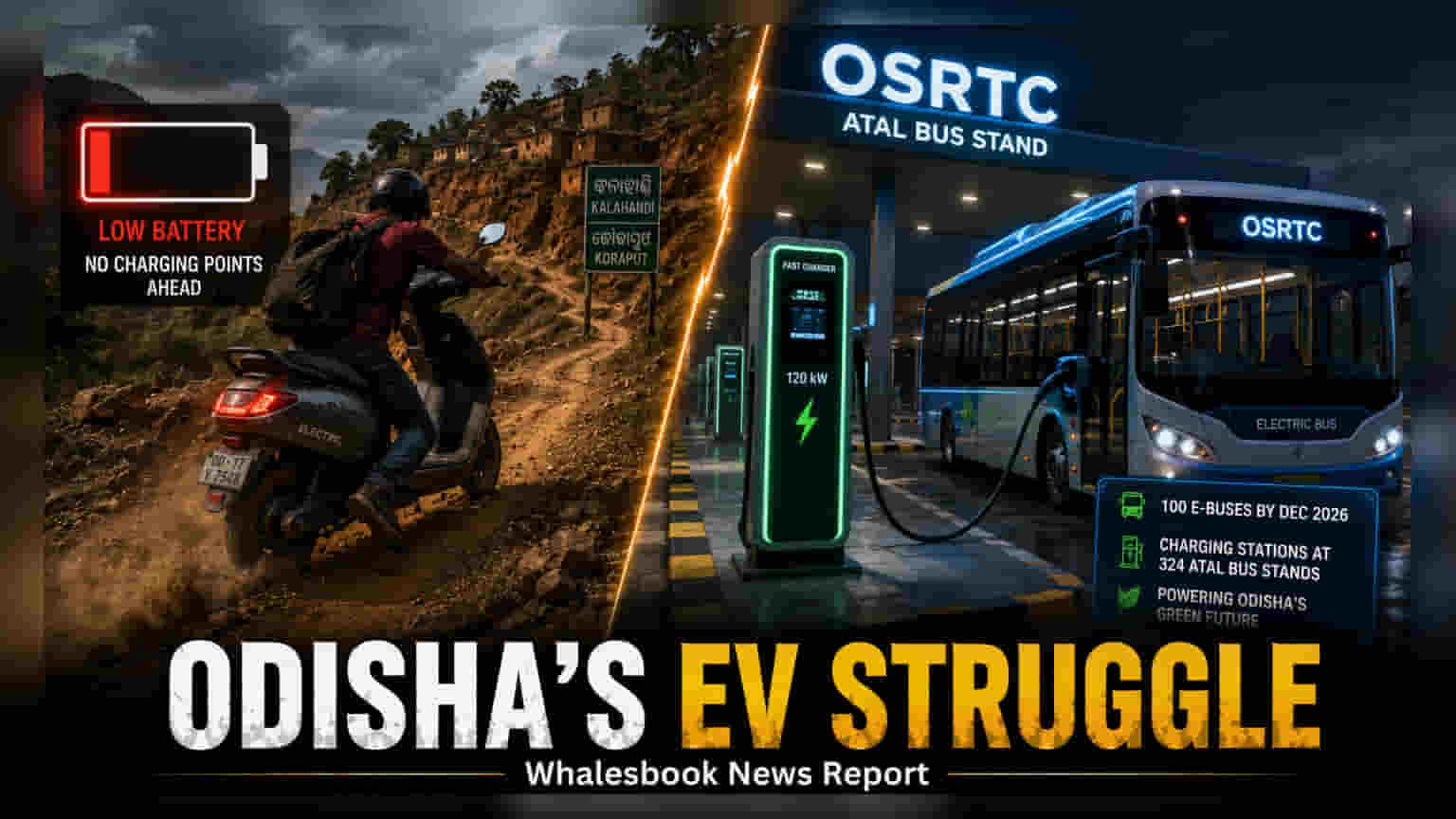
Odisha has achieved a 17% EV market share as of June 2026, fueled by strong government mandates and central funding. However, rural regions face significant challenges, including erratic power, difficult terrain, and limited charging infrastructure. Investors should monitor whether planned infrastructure investments can bridge this gap between urban adoption and rural viability.
Odisha's electric vehicle (EV) adoption has reached a significant milestone, with the state capturing a 17% market share as of June 2026. This growth is largely driven by active state policy, including a mandate effective June 1, 2026, requiring all new official government departmental purchases to be electric. The state has also leveraged the central PM E-DRIVE scheme to secure over Rs 40.50 crore to expand charging infrastructure. Despite these positive indicators, the reality in rural and hilly districts like Kalahandi and Koraput presents a different picture.
While urban centers are rapidly adopting EVs, residents in remote areas report that the transition is hampered by a lack of basic infrastructure. The primary concerns include the unreliability of rural electricity supply, which makes consistent charging difficult, and the challenging mountainous terrain that limits vehicle range and efficiency. These physical constraints, combined with the higher initial purchase cost of EVs compared to traditional vehicles, continue to deter many rural consumers despite available state subsidies, which were recently extended until September 30, 2026.
To address these barriers, the Odisha State Road Transport Corporation (OSRTC) is rolling out significant capital projects. The state plans to deploy 100 new e-buses by December 2026 and aims to add 100 more annually for the next four years. Additionally, charging infrastructure is being developed at 324 Atal Bus Stands across 314 blocks. These stations are designed to support a wide range of vehicles, from two-wheelers requiring 10 kW chargers to heavy vehicles needing 240 kW systems, under a public-private partnership model.
For investors, the crucial aspect of this story is the execution risk associated with rural infrastructure. The Odisha Electricity Regulatory Commission (OERC) has proposed new regulations in August 2026 to integrate distributed renewable energy and battery storage, aiming to improve grid reliability. However, the success of the state's EV push depends heavily on whether these grid improvements can keep pace with infrastructure rollouts.
The operational risk in remote areas is also a factor, as maintaining and servicing high-tech EVs in underserved regions remains an open challenge. If the state cannot stabilize rural power supply and ensure reliable charging networks, the projected growth in EV penetration might be slower than expected in these segments. The key monitorable for the next few quarters will be the pace of charging station commissioning in rural blocks and the actual on-ground performance of the new e-bus fleet in challenging terrains.