 Whalesbook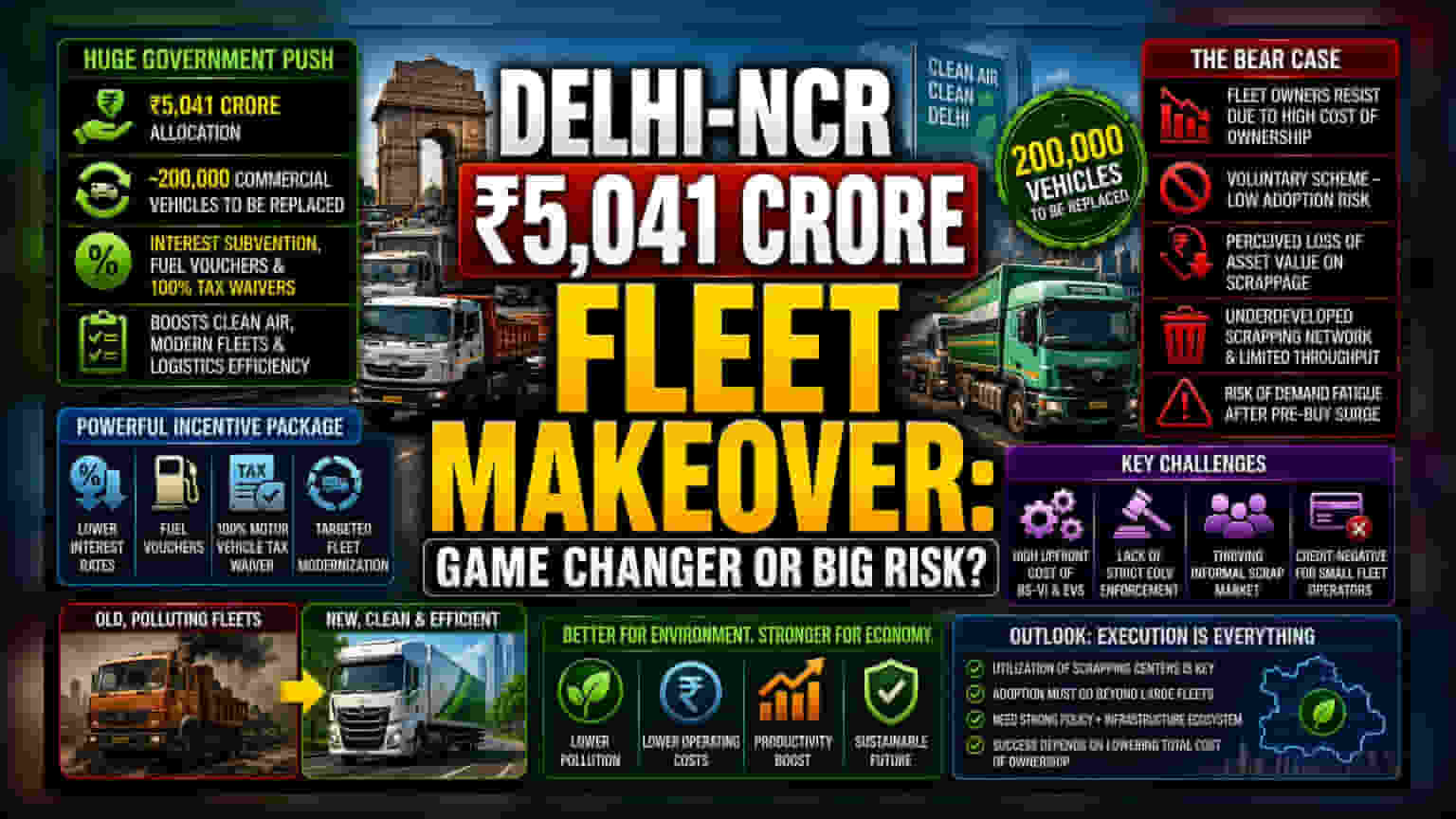


The Incentive-Driven Gamble
The Union Cabinet's latest initiative to modernize the Delhi-NCR commercial vehicle fleet represents a high-stakes attempt to break the cycle of aging, polluting transport. By allocating Rs 5,041 crore to replace approximately 200,000 vehicles, the government is effectively betting that interest subventions, fuel vouchers, and tax waivers will be sufficient to overcome deep-seated fleet owner resistance. However, the commercial vehicle segment has historically struggled with a demand-supply mismatch; past attempts to spark mass replacement have often been stymied by the high cost of ownership associated with newer emission-compliant vehicles, which often negate the marginal gains in fuel efficiency.
The Structural Valuation Gap
Unlike passenger vehicle segments where retail demand remains elastic, the commercial vehicle market is strictly tethered to industrial output and freight rates. While manufacturers like Tata Motors and Ashok Leyland have long lobbied for scrappage incentives to stimulate a "replacement cycle," previous data suggests that fleet owners view the transition to BS-VI or electric platforms as a credit-neutral or even credit-negative move. Even with 100% motor vehicle tax concessions, the upfront capital expenditure required for modern, compliant fleets poses a significant barrier. Furthermore, the reliance on an underdeveloped network of formal scrapping facilities introduces logistical friction. Without a mandatory and strictly enforced end-of-life vehicle policy, the thriving informal scrap market—which often operates at lower costs—is likely to persist, undermining the government's environmental objectives.
The Forensic Bear Case
The fundamental risk to this initiative lies in its voluntary nature. Industry analysis indicates that in states where similar facilities were established, throughput remained dismally low due to owner hesitancy and perceived loss of asset value. There is also the issue of "pre-buying" fatigue; past shifts in emission standards have shown that when manufacturers offer discounts, demand is pulled forward, leading to a subsequent collapse in sales. From a regulatory perspective, the lack of a unified national infrastructure for vehicle assessment and disposal means that enforcement remains inconsistent. If the incentive package does not bridge the gap between the rising cost of BS-VI/EV technology and the stagnating earnings of small-scale fleet operators, the scheme risks becoming a stranded asset on the government's balance sheet.
Forward Outlook
Moving forward, market participants will be watching the utilization rates of these new scrapping centers. If adoption remains limited to large fleet operators, the impact on Delhi’s air quality will be negligible. Long-term success for this policy depends on whether state governments can move beyond simple tax waivers and successfully integrate scrapping incentives into the broader logistical ecosystem, effectively lowering the total cost of ownership for the average fleet operator.