

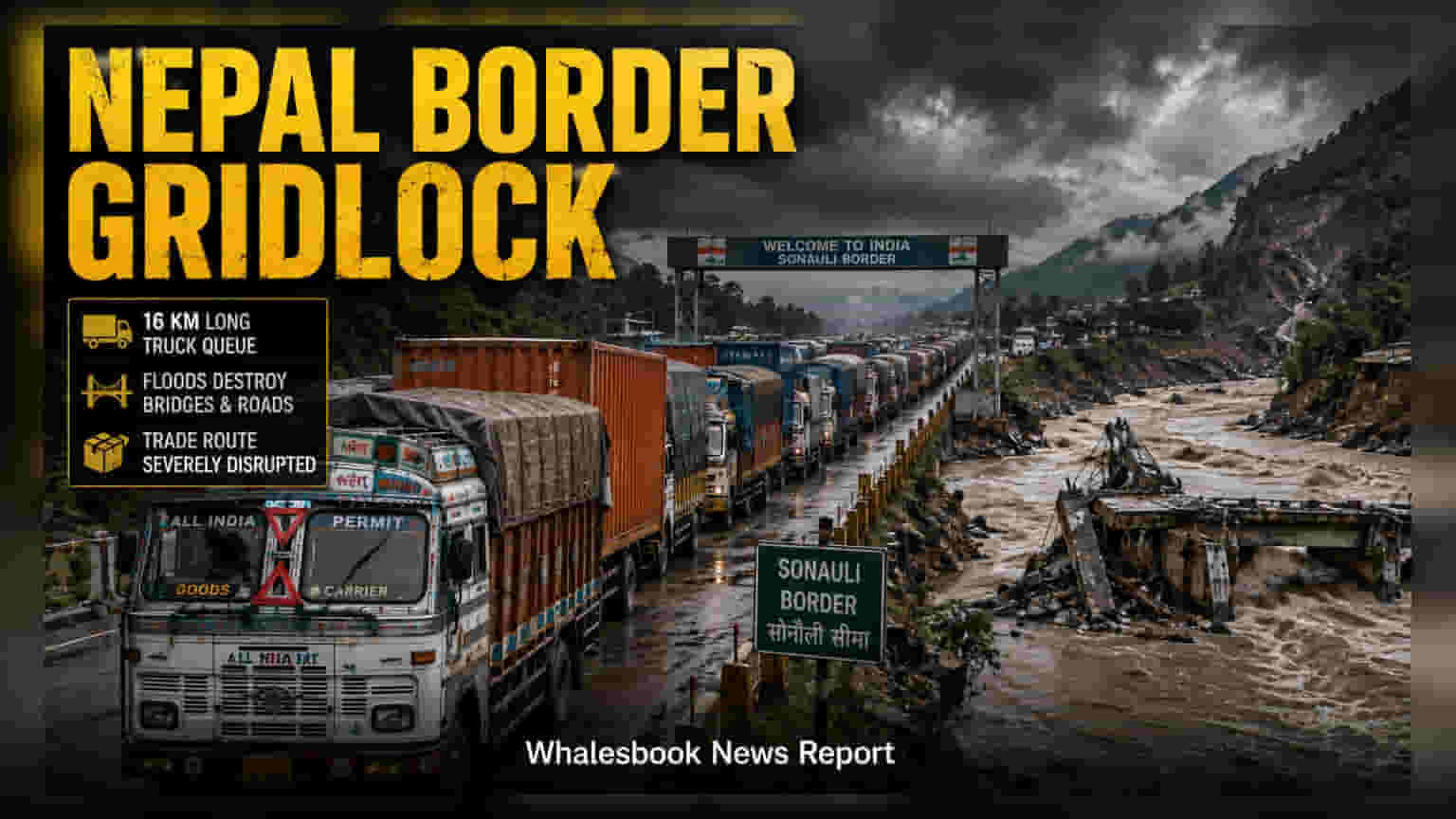
Severe flash floods in Nepal have damaged critical infrastructure, creating a 16-kilometer queue of cargo trucks at the Sonauli border in Uttar Pradesh. The blockade disrupts essential supply routes, impacting cross-border trade and logistics. Companies relying on this key trade corridor may face short-term delivery delays and operational challenges.
Severe weather conditions in Nepal have led to widespread infrastructure damage, effectively paralyzing cross-border logistics at the Sonauli border crossing in Uttar Pradesh. A 16-kilometer queue of cargo vehicles has formed as traffic movement into Nepal remains severely restricted, affecting the flow of goods across one of the most critical trade routes between the two nations.
The disruption follows intense flash floods in Nepal, which have caused significant damage to transportation networks, including the destruction of motorable bridges and paved roads. According to regional reports, nearly 19 bridges and 40 kilometers of road infrastructure have been compromised, creating an immediate bottleneck that prevents freight from reaching major inland destinations. Local authorities, including the Sashastra Seema Bal, have increased surveillance in the area to manage the security and logistical fallout of this sudden trade standstill.
Impact on Regional Supply Chains
The Sonauli border serves as a primary gateway for Indian goods entering Nepal. The current blockade poses a direct challenge to supply chains that rely on road transport for just-in-time delivery. Companies with significant export exposure to the Nepali market—including those in the FMCG, construction materials, and processed food sectors—may face operational headwinds. The primary concern for businesses is not only the immediate delay in delivery timelines but also the potential for increased logistical costs if alternative, more expensive routes are required, or if inventory remains stuck in transit for an extended period.
Beyond the immediate trade impact, the environmental risk remains a point of focus for Indian border districts. The Central Water Commission and relevant state authorities are maintaining high-alert status, monitoring the Gandak and Trishuli rivers for potential downstream flooding. While the immediate attention is on trade disruption, the region’s vulnerability to secondary river surges adds a layer of uncertainty for local communities and industrial units located within the catchment areas of Bihar and Uttar Pradesh.
Monitoring the Recovery
The economic impact of this event will largely depend on the timeline for repairing critical road and bridge infrastructure. Investors and businesses operating in this corridor should track the pace of restoration efforts, as the duration of the 16-kilometer backlog will directly influence supply chain efficiency. While the situation is currently being managed by local disaster response forces, the broader operational impact on trade volumes and delivery schedules will likely remain a key monitorable until the transit routes are fully restored.