 Whalesbook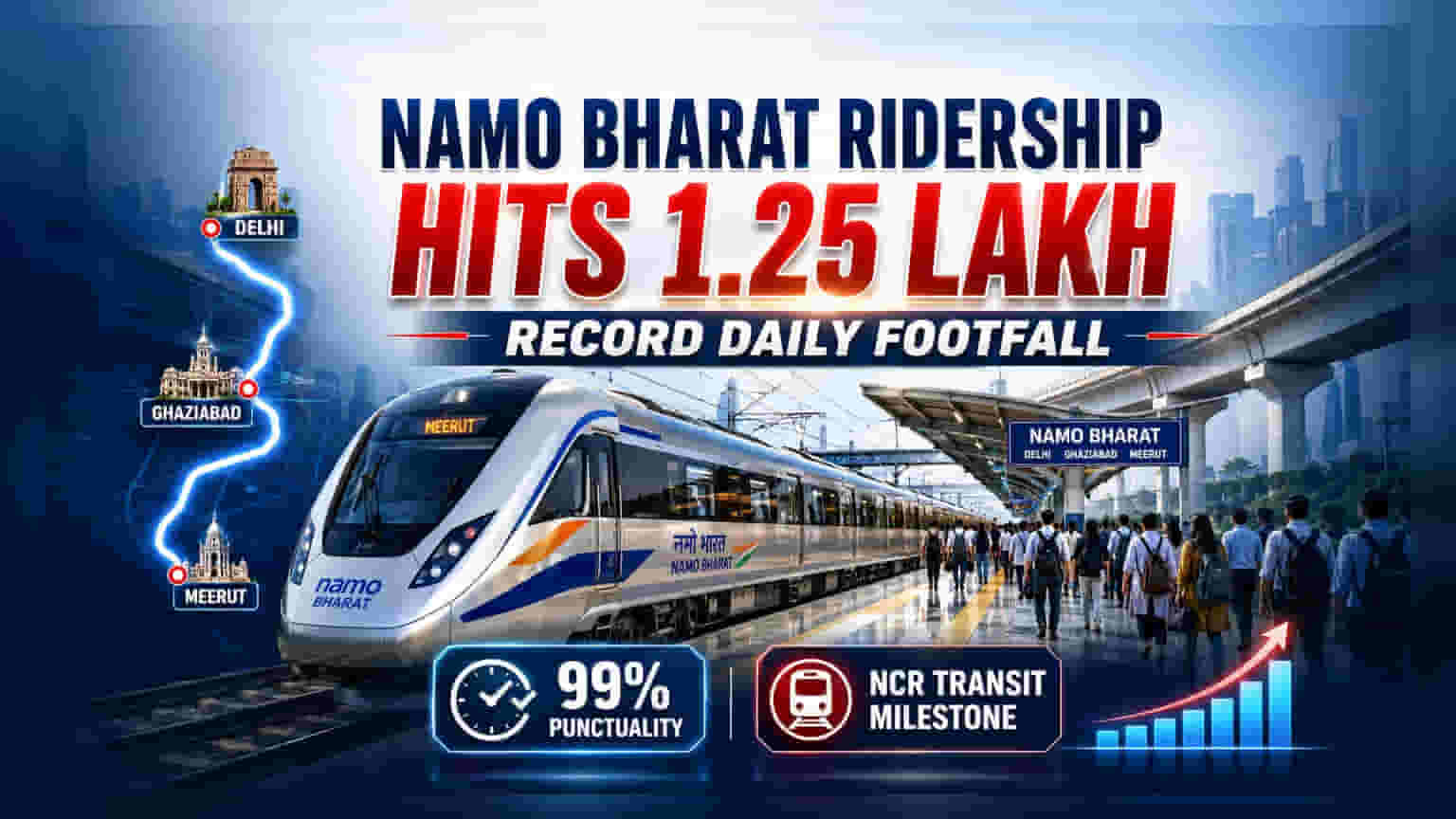


What Happened
The Delhi-Ghaziabad-Meerut Namo Bharat corridor has achieved a significant milestone, recording its highest-ever daily ridership of 1.25 lakh passengers. This surge in volume, reported by the National Capital Region Transport Corporation (NCRTC), reflects a steady increase in user adoption for India’s first regional rapid transit system. The NCRTC noted that the system has been maintaining high operational punctuality, consistently staying near the 99 percent mark.
Why This Matters For Infrastructure
For investors and market observers, this ridership record is a positive signal for large-scale infrastructure projects. Public transit investments, such as the Namo Bharat corridor, require substantial capital. Reaching high daily ridership figures early in the project’s lifecycle is a critical indicator of viability. It suggests that commuters are choosing the rapid rail system over road travel, which validates the demand thesis behind such large-scale connectivity projects in the National Capital Region.
The Bigger Business Context
The success of the Namo Bharat corridor is the result of a multi-company effort involving global technology and local construction expertise. Companies like Alstom have been involved in the design and manufacturing of the high-speed trainsets, which feature aerodynamic designs and advanced signaling technology. On the infrastructure front, the construction of the corridor involved various large-scale engineering and construction players, showcasing the complexity and scale of India's transit infrastructure drive. The project’s operational success also involves maintenance partnerships, such as the arrangement with Deutsche Bahn to operate the corridor.
Challenges and Operational Risks
While the ridership numbers are encouraging, the long-term success of such infrastructure projects depends on several factors. Managing the operational cost of high-tech transit systems is essential. Additionally, the project faces the ongoing challenge of seamless integration between different transport modes—such as Metro services, railways, and bus networks—to ensure the final-mile connectivity that keeps ridership high. Investors typically monitor how efficiently these systems maintain high uptime and service quality while managing the debt or funding costs associated with their development.
What Investors Should Track
The key monitorable for the infrastructure sector is the execution timeline of the upcoming phases of the Namo Bharat project. Future phases extending to Modipuram and beyond are critical for increasing the network effect and overall utility. Furthermore, market watchers often keep an eye on how these operational successes influence government policy on future Transit-Oriented Development (TOD) projects and whether similar high-speed regional rail models are replicated in other high-density corridors across India. The ability to maintain 99 percent punctuality and manage infrastructure maintenance as the network expands will be a benchmark for other regional rail initiatives.