

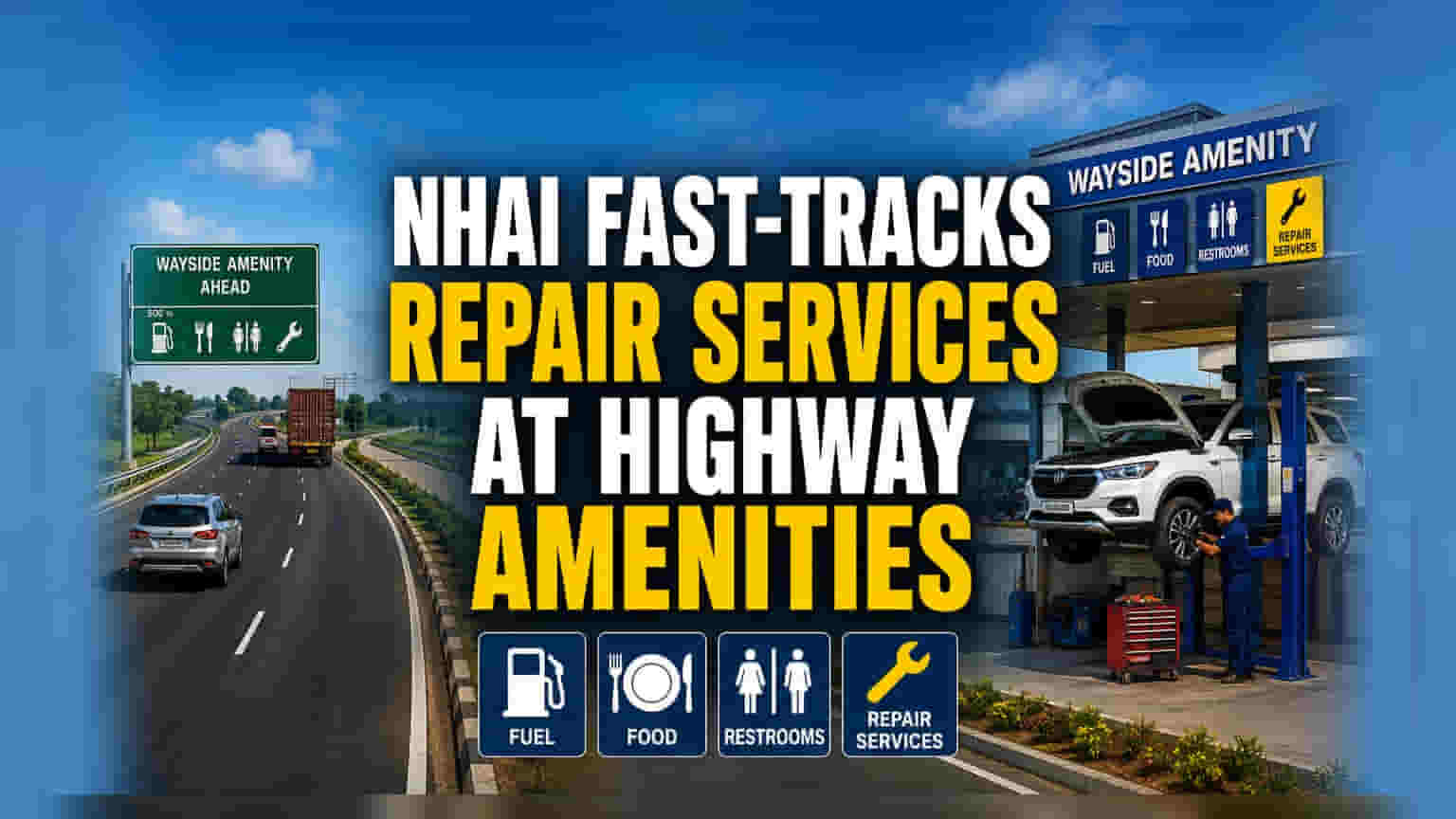
The National Highways Authority of India (NHAI) is mandating vehicle repair and puncture services at its roadside rest areas. With over 700 facilities planned by the end of fiscal 2026, this move aims to improve safety on high-speed corridors. For infrastructure companies operating these sites under long-term public-private partnership contracts, this creates a new service-based revenue stream.
What Happened
The National Highways Authority of India (NHAI) has directed its logistics subsidiary, National Highways Logistics Management Limited (NHLML), to fast-track the inclusion of vehicle repair and puncture services at Wayside Amenities (WSAs). These amenities are currently being developed across the national highway and expressway network, typically placed every 40 to 60 kilometers. This directive comes in response to rising motorist feedback regarding vehicle breakdowns on access-controlled routes.
The Business Model For Operators
These wayside facilities are developed using a Public-Private Partnership (PPP) model. Under this structure, private companies bid for contracts to develop and operate these sites for periods ranging from 15 to 30 years. Previously, these contracts primarily focused on basic amenities like fuel, food, and restrooms. By allowing the addition of vehicle repair shops, the NHAI is expanding the revenue potential for these private operators. For companies that manage these concessions, this allows for a diversified income model beyond just food and fuel sales, as they can now charge for specialized mechanical services.
Why This Matters For Infrastructure
From an investor perspective, the efficiency of these wayside amenities is closely linked to the overall quality of toll road assets. A well-serviced highway encourages higher traffic volume and improves user experience. The addition of repair services addresses a core pain point—vehicle breakdown in remote stretches—which can make the toll road more attractive to commuters. Companies involved in the construction and operation of these infrastructure projects benefit when the government improves the utility of the assets they manage, as it can lead to more consistent footfall and longer-term occupancy of the leased space.
Operational Risks And Considerations
While the addition of repair shops is a logical step, it is not without execution risks. The success of these facilities depends entirely on the volume of traffic using the specific highway. If a route has low traffic density, maintaining a dedicated, skilled team for vehicle repairs may become a cost burden rather than a profit generator. Furthermore, operating such services requires adherence to standardized safety and quality protocols mandated by the NHAI. Investors should consider whether the operators have the capability to scale these services profitably without incurring high maintenance or staffing costs.
What Investors Should Track
Investors and market participants should monitor the bidding outcomes for the remaining projects. Out of the target of over 700 WSAs expected by the end of fiscal 2026, a significant number are still in the pipeline or bidding stage. Key monitorables include the uptake of these repair services in the pilot projects and whether the revenue generated from these add-on services helps private operators offset the high cost of maintaining wayside infrastructure over the long 15 to 30-year lease periods.