

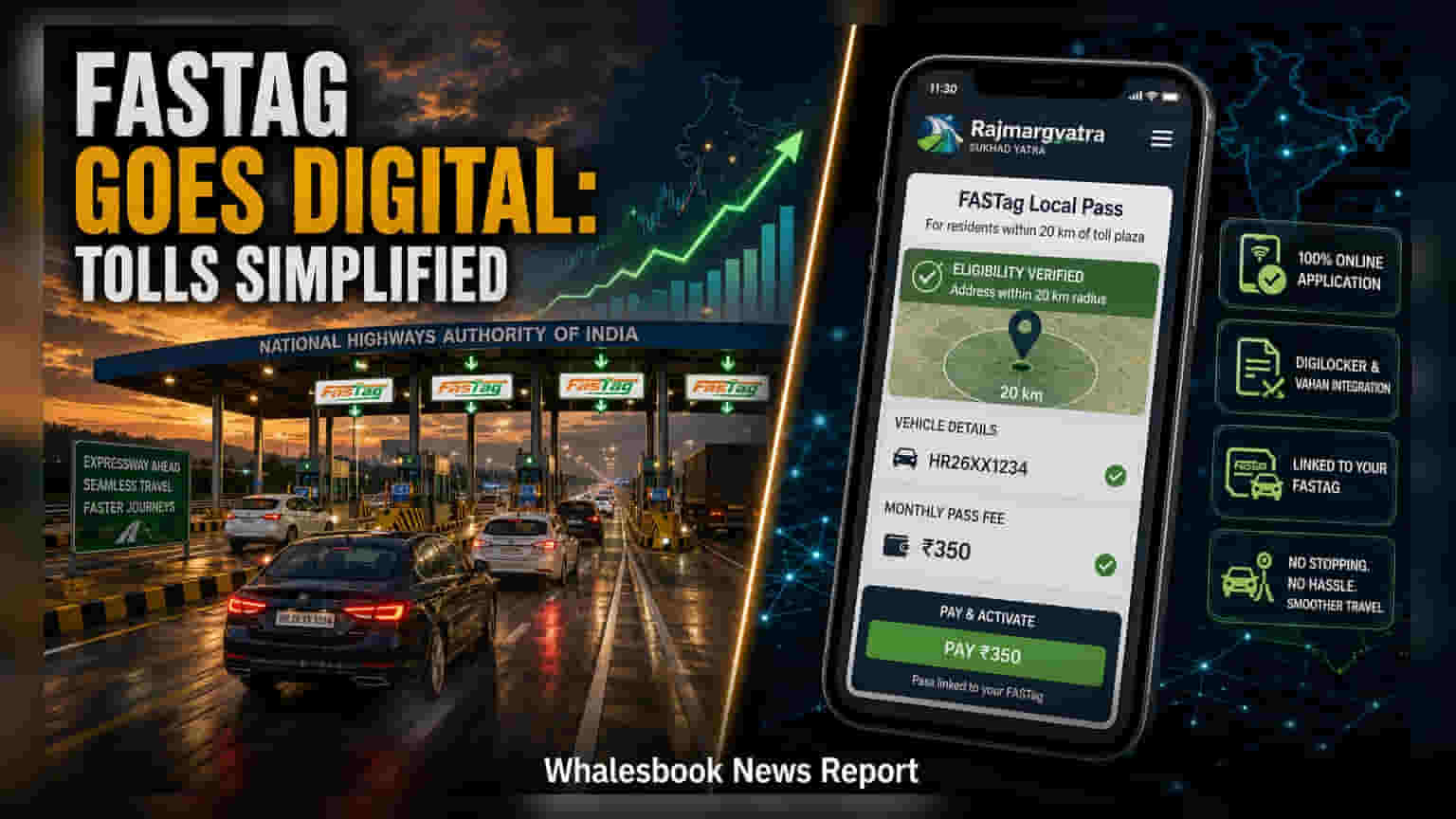
The National Highways Authority of India has moved its local toll pass system to the Rajmargyatra app, covering 121 plazas. Eligible residents within a 20 km radius can now secure monthly passes for ₹350 through digital verification. This shift aims to reduce manual paperwork and improve toll collection transparency ahead of the national rollout of barrier-less tolling.
The National Highways Authority of India (NHAI) has expanded its digital FASTag Local Pass facility to 121 toll plazas across the country. This update allows residents living within a 20 km radius of designated toll plazas to apply for and renew their monthly passes entirely online, removing the need for physical office visits or manual paperwork.
Digital Application Process
Under the new system, users can apply via the Rajmargyatra mobile application. The process uses Geographic Information System (GIS) technology to confirm that the applicant's registered address falls within the required 20 km zone. Once the location is verified, the app integrates with government platforms like DigiLocker and VAHAN to instantly validate vehicle and residency details.
After verification, users can pay the monthly fee of ₹350 to activate the pass. Once paid, the pass is linked directly to the vehicle's existing FASTag. This eliminates the need for commuters to carry physical identification or repeatedly visit toll booths to renew their status, providing a significant boost to commuter convenience.
Impact on Toll Efficiency and Transparency
For the NHAI and highway operators, this digitization serves a dual purpose beyond simple convenience. It is a critical step in the transition toward Multi-Lane Free Flow (MLFF) tolling, a technology designed to allow vehicles to pass through toll points without stopping.
In older systems, manual verification of local passes was often prone to inconsistencies. Some residents previously relied on informal, undocumented arrangements at toll booths, which created difficulties for operators trying to maintain accurate revenue records. By moving this process online, the NHAI establishes a formal, transparent, and auditable trail for every local user. This helps operators reduce administrative burdens and minimizes potential revenue leakage, which is essential as the highway network prepares for fully automated, barrier-less collection.
Key Considerations for Users and Operations
While the system is designed to be seamless, the operational success of this digital pass depends on a few factors. First, the reliability of the system hinges on the real-time connectivity between the Rajmargyatra app and government databases like VAHAN and DigiLocker. Any technical downtime at these database levels could temporarily hinder the application or renewal process for users.
Second, the effectiveness of the GIS boundary tool is important. The accuracy of the 20 km radius detection will determine how many residents qualify for the concessional rate without manual intervention. For investors and stakeholders monitoring highway operations, the key monitorable will be the adoption rate of this digital facility and how quickly it replaces the remaining manual processes at these 121 locations. As the NHAI continues to phase out physical touchpoints, the focus will remain on whether these digital systems can handle the scale required for a nationwide barrier-less tolling network.