

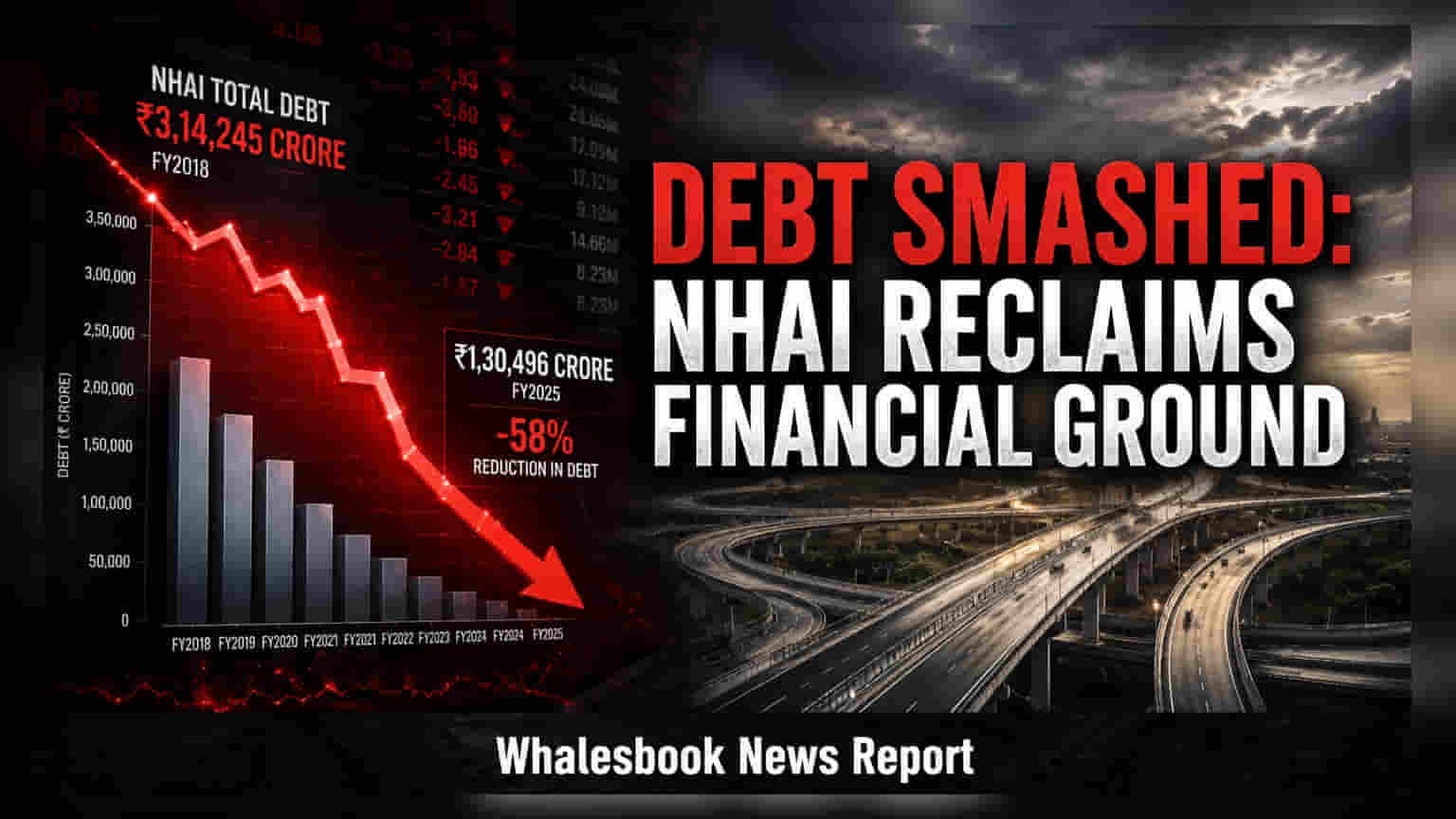
The National Highways Authority of India has reduced its total debt to under ₹2 lakh crore from a peak of ₹3.5 lakh crore in FY22. This improvement was driven by accelerated asset monetization and increased government budget support. The authority now plans to raise ₹30,000 crore through highway projects in the current fiscal year to continue strengthening its balance sheet.
Detailed Coverage
The National Highways Authority of India (NHAI) has significantly improved its financial position by cutting its total debt to just under ₹2 lakh crore. This follows a period of heavy borrowing that saw debt peak at ₹3.5 lakh crore during the 2021-22 fiscal year. Since March 2022, the authority has prepaid loans worth over ₹1.2 lakh crore and repaid an additional ₹31,300 crore, marking a shift in its financial strategy.
Transition to Budgetary Funding
A major factor in this debt reduction is the change in how NHAI funds its operations. Since the 2022-23 fiscal year, the authority has largely stopped direct market borrowing. Instead, its funding needs are now met through government budgetary support, which classifies the money as capital spending by the central government. This policy change has allowed the government to provide much higher support, with the annual budget allocation for the highway sector rising to ₹3.1 lakh crore this year, compared to ₹31,000 crore in 2013-14.
Success of Asset Monetization
To complement government funding, NHAI has relied heavily on monetizing its existing highway assets. By leasing out completed roads to private investors, the authority generates cash while passing on the operational responsibilities. In FY24 alone, this strategy generated a record ₹41,079 crore, following earlier annual receipts of approximately ₹28,000 to ₹29,000 crore.
The authority uses two primary models for these deals. Under the Toll-Operate-Transfer (TOT) model, the authority has raised ₹63,911 crore since 2018-19 by monetizing 3,175 km of highways. Additionally, the Infrastructure Investment Trust (InvIT) model has brought in ₹59,588 crore, covering 2,913 km of road assets. These models are popular with long-term investors because they offer stable revenue from toll collections with relatively low project risk.
Future Monitoring
Looking ahead, NHAI aims to raise ₹30,000 crore from asset monetization in the current financial year. For investors and market observers, the key monitorable will be the authority's ability to maintain the pace of highway construction while continuing to reduce its remaining debt. The financial stability of the roads sector remains linked to these asset monetization targets and the consistency of central government budget allocations, which have been critical to reducing the financial burden that built up in previous years.