 Whalesbook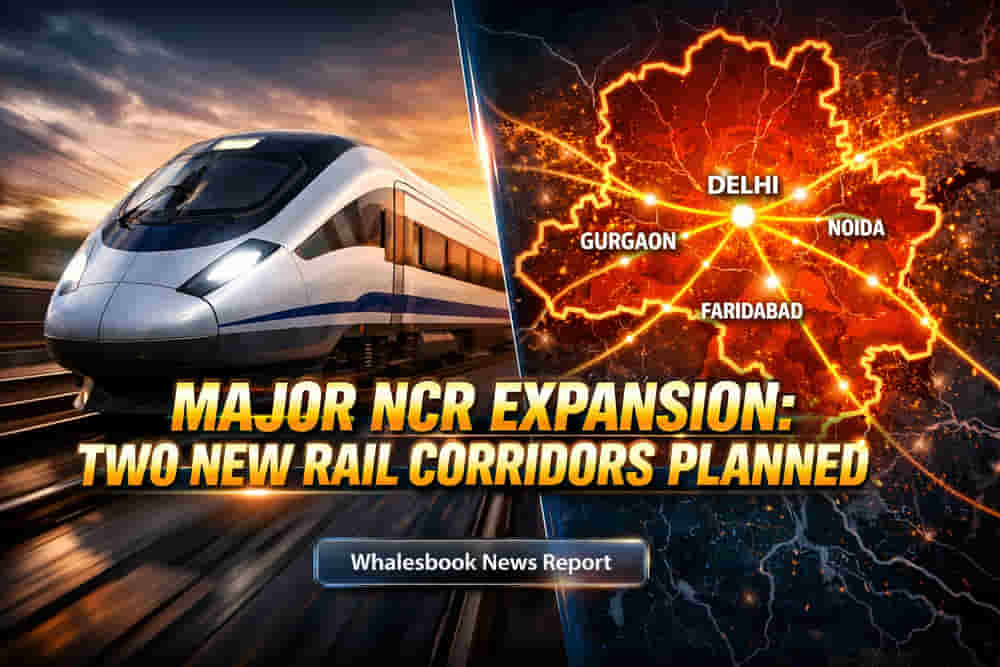
### The Strategic Imperative for NCR Connectivity
Union Housing and Urban Affairs Minister Manohar Lal Khattar has signaled the imminent approval of two new rapid rail corridors extending from the Sarai Kale Khan hub. This strategic expansion aims to significantly enhance the National Capital Region's (NCR) high-speed transit infrastructure, directly supporting a vision for a more integrated and de-congested region. The proposed corridors, one to Karnal in Haryana (approximately 125-130 km) and another connecting Babarpur in Haryana to Neemrana in Rajasthan, are designed not merely to cut travel times but to fundamentally redistribute population and economic activity away from the overwhelmed core of Delhi. This approach aligns with the National Capital Region Planning Board's long-standing objectives for balanced regional development and urban integration.
### Sarai Kale Khan: A New Transit Nexus
The inauguration of the Sarai Kale Khan station on the Delhi-Ghaziabad-Meerut Rapid Rail Transit System (RRTS) positions it as a linchpin for future transport initiatives. This station will serve as a critical interchange, anchoring the next phase of NCR transport planning. Its development as a multimodal hub, connecting to existing metro lines, railway stations, and bus terminals, is a testament to the integrated approach to urban mobility. This emphasis on connectivity is crucial as Delhi grapples with immense population pressure, estimated to reach over 35 million by 2026, and its conurbation continues to expand.
### Transit-Oriented Development as a Decentralization Tool
The expansion of rapid rail and metro networks is central to the government's strategy for managing Delhi's growth into a major economic center. Minister Khattar stressed the importance of transit-oriented development (TOD), advocating for the integration of housing and commercial spaces around transit stations. This model aims to reduce reliance on private vehicles, thereby easing congestion and pollution. Experts highlight that RRTS corridors are viewed as catalysts for decentralised economic growth, encouraging balanced development by making peripheral towns viable residential options while maintaining strong economic ties to core urban centers. This integrated approach is vital, as India's overall metro network has expanded dramatically to over 1,090 km across 26 cities by 2025, from 248 km in 2014.
The Analytical Deep Dive: Balancing Growth with Risk
The ambitious expansion of the NCR's high-speed transit network, exemplified by the RRTS projects, aligns with India's broader infrastructure push. The government has significantly increased capital expenditure in transport, with railways and roads consistently accounting for nearly half of all infrastructure investments. The Delhi-Meerut RRTS corridor alone, costing approximately ₹30,000 crore, aims to cut travel time to under an hour, a stark contrast to the multi-hour road journeys previously required. Funding for such projects often involves a mix of international loans from institutions like the ADB, AIIB, and NDB, alongside central and state government contributions, demonstrating a scalable model for public capital leveraging development finance.
However, the success of these large-scale transit projects hinges on more than just infrastructure delivery. Challenges such as ensuring affordable housing near stations, seamless last-mile connectivity, and integrated land-use planning are critical for realizing the full socio-economic benefits of TOD. The rapid growth of the NCR, with its population exceeding 46 million and significant urban pressure, necessitates a coordinated strategy to avoid creating new bottlenecks or exacerbating existing inequalities. While RRTS projects offer substantial benefits in terms of reduced travel time, expanded labor markets, and potential for regional investment, their long-term viability requires careful management of financial costs and integration with local development priorities.
The Bear Case: Navigating Implementation Hurdles
Despite the significant potential, implementing such large-scale infrastructure projects in India is fraught with challenges. High construction and operational costs can strain financial resources, especially when ridership forecasts do not materialize, as seen with some metro phases in other cities. Fare sensitivity among commuters is a significant factor; while the Delhi-Meerut RRTS has a minimum fare of ₹20 and a maximum of ₹210, affordability remains a concern for widespread adoption. Furthermore, issues like land acquisition delays, the need for robust private sector participation, and ensuring adequate last-mile connectivity from stations are persistent hurdles. The success of TOD, a critical enabler for RRTS, is also dependent on overcoming challenges related to land pooling, policy coordination, and preventing gentrification that could displace lower-income groups.