

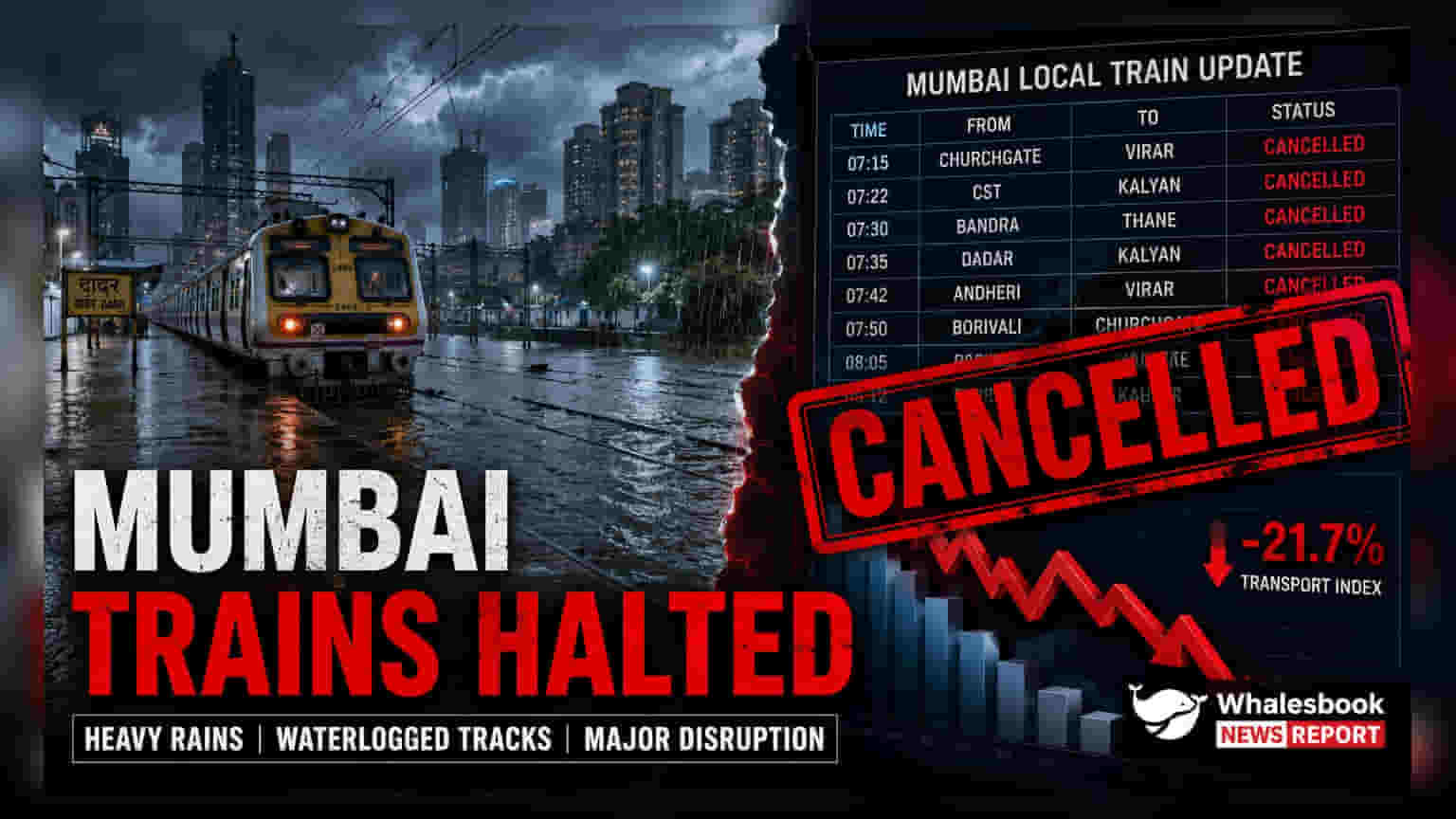
Heavy rainfall and waterlogging have forced the cancellation of four Western Railway passenger trains between Mumbai, Hisar, and Jaipur on July 6 and 7. Rail traffic on the Central Railway line also faces diversions due to a landslide near Thakurvadi, impacting travel connectivity.
Heavy monsoon rainfall in Mumbai has caused significant disruptions to rail operations on Monday, July 6, 2026. Waterlogging across the Western Railway's Mumbai Central division has led authorities to cancel four passenger train services to ensure passenger safety and manage track conditions.
The cancelled services include train number 22915, which was scheduled to depart from Bandra Terminus to Hisar on July 6, and its return service, train number 22916, which is cancelled for July 7. Additionally, train number 22933 from Bandra Terminus to Jaipur is cancelled for July 6, while the corresponding return train, 22934 from Jaipur to Bandra Terminus, will not operate on July 7. These routes are critical links for passengers traveling between Mumbai and northern states.
Infrastructure Challenges on Central Railway
Beyond the Western Railway, the Central Railway network is managing a separate infrastructure challenge caused by a landslide occurring between the Thakurvadi and Monkey Hill stations. This section, located in the hilly terrain of the Western Ghats, is prone to such events during intense monsoon spells. The landslide has forced railway authorities to implement diversions and partial cancellations for several trains passing through the affected zone, further complicating transit for commuters.
For investors monitoring infrastructure and logistics, these disruptions highlight the seasonal risks faced by rail operators during India's monsoon season. While such events are typically temporary, they can affect operational efficiency, leading to increased costs for maintenance, potential revenue loss from ticket cancellations, and the need for logistical adjustments.
Railways in the Mumbai region often face annual challenges during heavy rains, and the ability of operators to clear tracks and restore normalcy is a key operational metric. Travelers and stakeholders are advised to monitor official railway updates for real-time changes to schedules as the situation evolves over the next 48 hours.