

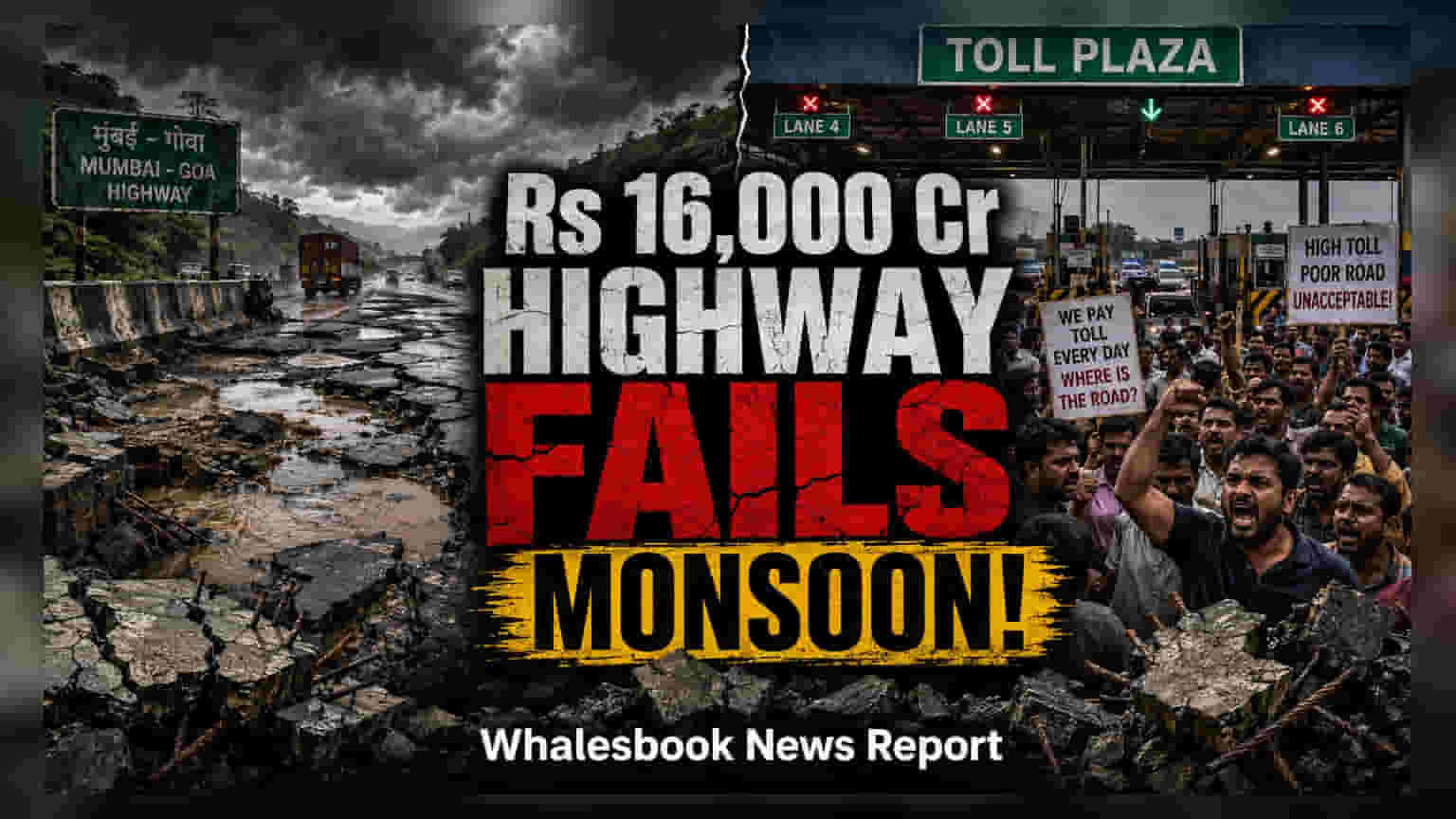
The Mumbai-Goa National Highway project, which has cost Rs 16,000 crore, is facing fresh criticism due to poor road quality and potholes during the monsoon. Despite ongoing construction, early toll collection has triggered local protests and commute delays. For investors, these recurring infrastructure delays highlight execution risks and potential regulatory scrutiny for companies involved in such long-gestation projects.
The Mumbai-Goa National Highway (NH-66) is once again in the spotlight as the project struggles with quality concerns. Despite an estimated expenditure of Rs 16,000 crore over the last 14 years, large sections of the highway have developed potholes and surface damage with the onset of monsoon rains. The ongoing wear and tear on newly constructed cement-concrete stretches has raised serious questions about the quality of engineering and the project's long-delayed completion timeline.
For investors in the Indian infrastructure sector, this project serves as a practical look at the risks associated with large-scale government contracts. Projects of this nature are typically executed by various private construction firms through different contract models. When a high-profile project becomes a focal point for delays and safety concerns, it often leads to increased government scrutiny. This can translate into tighter audits, delayed payments for contractors, or penalties for performance failures, all of which impact the financial health of the involved companies.
Beyond construction quality, the project is also facing revenue-related challenges. The commencement of toll collection at the Kharpada toll plaza in mid-May has been met with significant local outrage. Commuters, frustrated by the poor state of the road, are actively seeking ways to bypass the toll. For investors tracking companies or infrastructure trusts that rely on toll revenue, this situation creates uncertainty. Persistent protests and potential government intervention to suspend toll collection until the road is fully traffic-worthy can directly impact revenue projections.
Safety concerns have also mounted alongside the structural issues. The collapse of an animal overpass, designed to facilitate safe wildlife crossing, is a specific example of the project's quality struggles. Such failures not only delay the project further but also increase the maintenance costs, as repairs often have to be performed while the road is operational. This creates a difficult environment for the companies tasked with the maintenance and operations of the highway.
Moving forward, the primary monitorables for investors and stakeholders are the updated timelines for the completion of pending bypasses and bridge projects. Market participants will also watch for any official government communication regarding the performance of the involved contractors. The ability of the project to meet safety standards and resolve structural issues will be critical in determining whether the highway can eventually generate stable, long-term returns for those involved in its operation and management.