

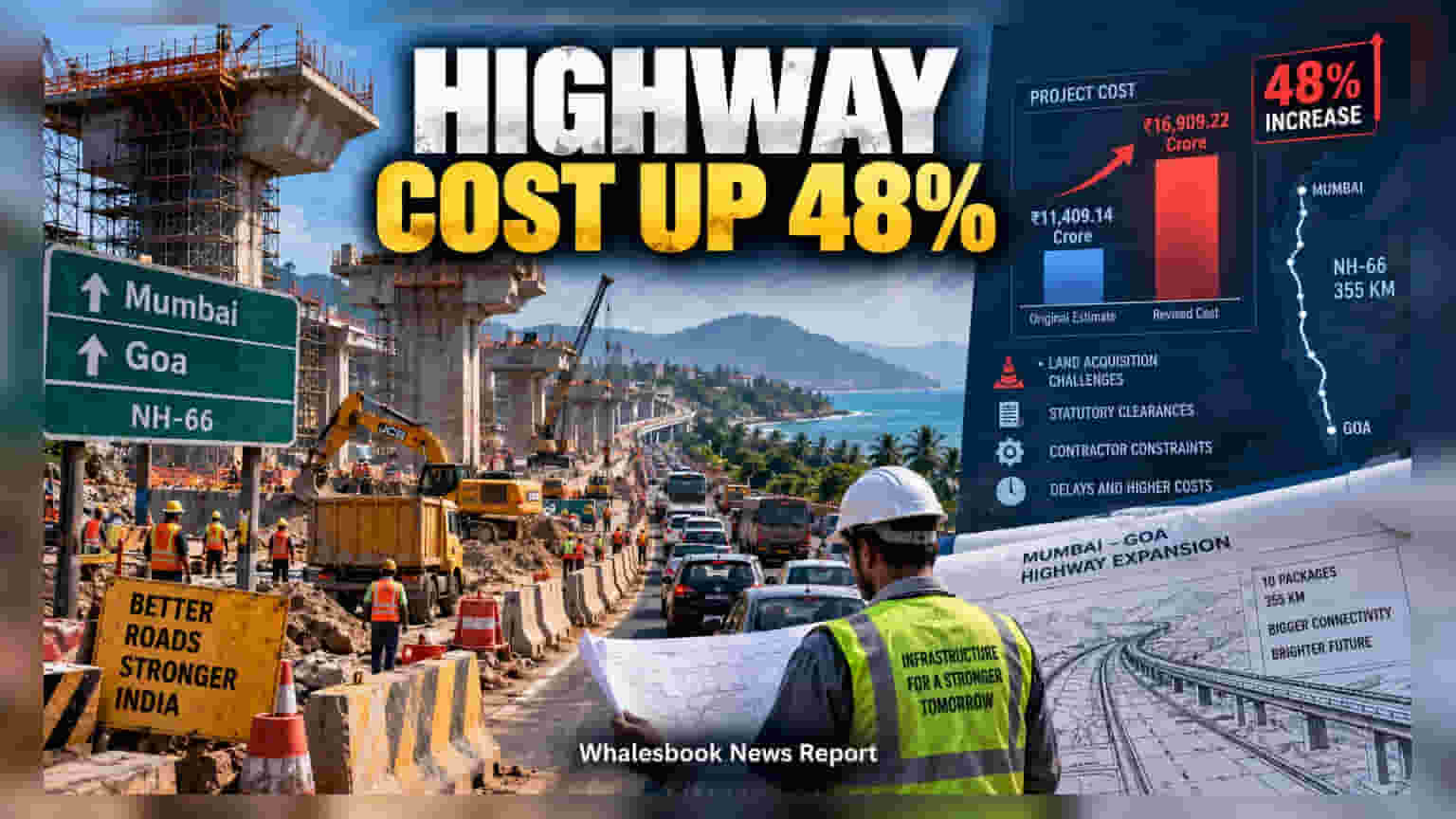
The Mumbai-Goa highway widening project’s sanctioned cost has increased to ₹16,909 crore from the original estimate of ₹11,409 crore. With over ₹11,577 crore already spent while work remains incomplete, the project highlights significant execution and budget risks in major infrastructure developments.
The Mumbai-Goa highway expansion project, a key corridor in Maharashtra, has seen its total sanctioned cost rise by nearly 48%. According to data obtained through the Right to Information Act, the project cost has been revised to ₹16,909.22 crore, up from the original estimate of ₹11,409.14 crore.
Budget Overruns and Spending
A critical concern for infrastructure observers is that project spending has already crossed the initial budget. Authorities have reported an expenditure of approximately ₹11,577 crore on the 355-km stretch. Despite this heavy spending, significant portions of the highway remain unfinished. The cost escalation is particularly notable in specific segments, such as the Parshuram Ghat-Arawali stretch within the Chiplun-Ratnagiri section. The cost for this single package surged by roughly 126%, jumping from ₹983 crore to ₹2,226 crore.
Why Costs and Delays Are Rising
The project involves the four-laning of NH-66 across 10 construction packages. Authorities have cited several persistent challenges for the delays in completion. These include difficulties in land acquisition, lengthy statutory clearance processes, pre-construction hurdles, and financial constraints faced by the contractors assigned to the work. When contractors face financial pressure, it often slows down on-site activity, creating a cycle of delays that further increases project costs due to inflation and overheads.
Legal and Public Impact
The progress of this highway has been a subject of judicial attention. In January 2024, the Bombay High Court observed that the prolonged delays were causing public hardship and increasing the financial burden on the state due to rising costs. For commuters, the incomplete stretches mean continued traffic bottlenecks, especially during peak travel periods like the Ganesh festival, which sees massive movement between Mumbai and the Konkan region.
What to Monitor Next
For investors and sector watchers, the core issue is the efficiency of project execution. Escalating costs without timely delivery can strain public finances and hurt the financial viability of construction projects. The key monitorable for the coming months will be the timeline set for completing the remaining stretches and whether further budget revisions are requested. Tracking whether the current contractors can speed up execution or if new administrative measures are required to resolve the deadlock will also be important.