

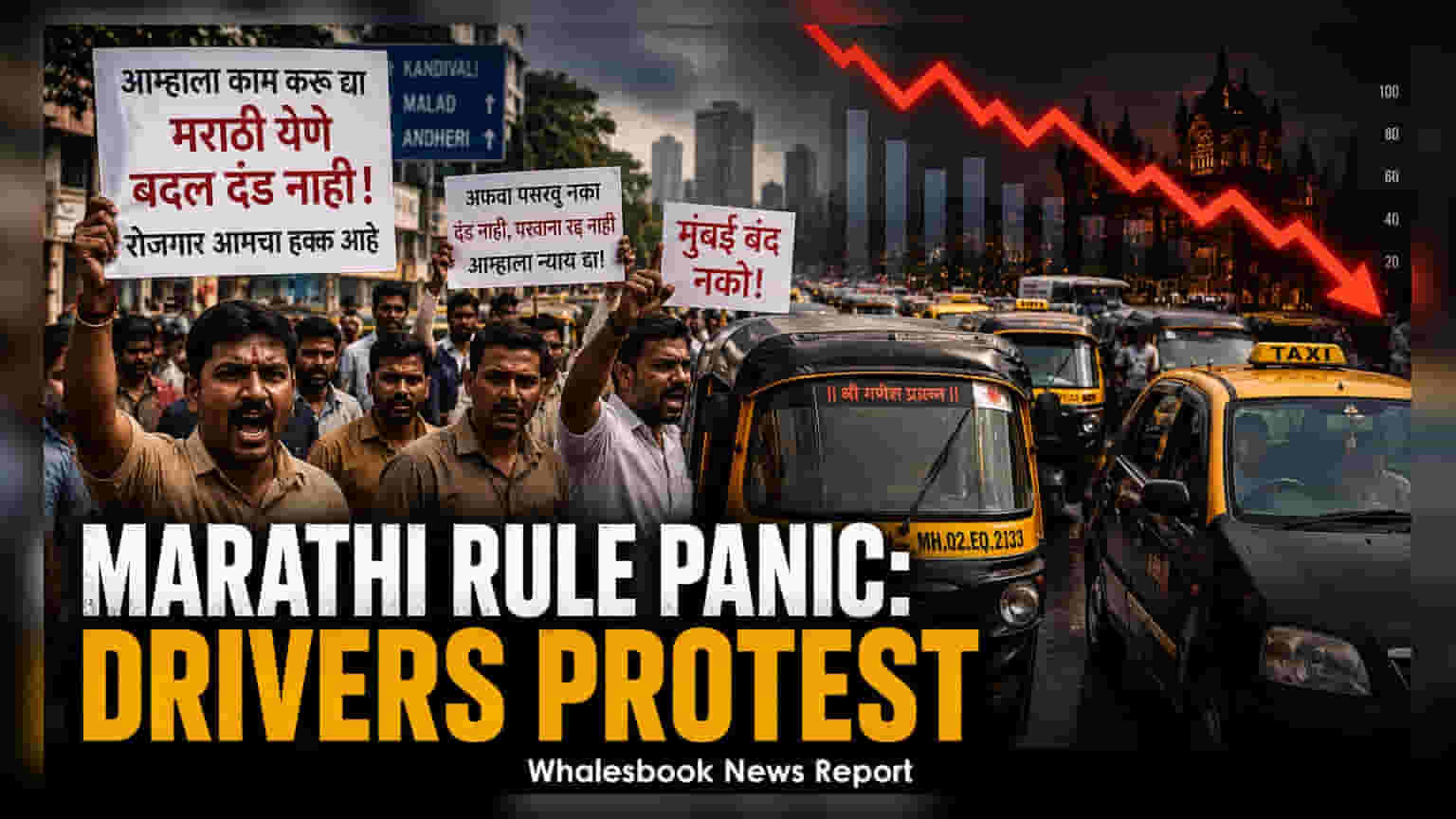
Protests by Mumbai taxi and auto-rickshaw drivers, triggered by rumors of heavy fines for lacking Marathi proficiency, have subsided following government intervention. Chief Minister Devendra Fadnavis clarified that drivers only need basic work-related communication skills and are granted a one-month grace period for compliance. This update resolves concerns regarding potential labor and operational disruptions in the city’s transport network.
On Monday, Mumbai’s transport network experienced brief disruptions as auto and taxi drivers staged protests across suburbs, including Kandivali, Malad, and Andheri. The unrest was fueled by widespread rumors that suggested drivers would face immediate and steep fines ranging from Rs 5,000 to Rs 20,000 if they could not demonstrate proficiency in the Marathi language.
To address the growing panic, Maharashtra Chief Minister Devendra Fadnavis intervened, clarifying that the state government’s mandate is limited to basic, work-related communication. The policy does not require drivers to be language experts or demonstrate complex linguistic fluency. The government explicitly confirmed that no licenses have been cancelled, aiming to debunk the misinformation that had spread among the driving community.
State Transport Minister Pratap Sarnaik provided further details on the official procedure. According to the government resolution issued on August 12, drivers are entitled to a one-month notice period to learn basic Marathi before any action is taken. RTO officials have been strictly instructed not to impose fines before this grace period expires. If a driver fails to meet the requirement after the notice, the protocol involves a license suspension, followed by an additional three-month window to acquire the necessary skills, ensuring that license cancellation is a final resort.
For those monitoring the urban mobility and logistics environment, this event underscores the operational sensitivity of labor-intensive sectors to regulatory changes. While the situation has returned to normal, such incidents highlight the potential for temporary uncertainty regarding labor availability and compliance costs when new policies are introduced. The key takeaway for observers is the importance of clear communication from authorities in maintaining the stability of essential urban services.
The immediate monitorable for stakeholders will be the implementation phase of this requirement. The focus will be on how the Regional Transport Office (RTO) conducts the assessment and whether the one-month compliance window proceeds without further administrative friction or labor unrest, ensuring the continued smooth functioning of the city's transport ecosystem.