

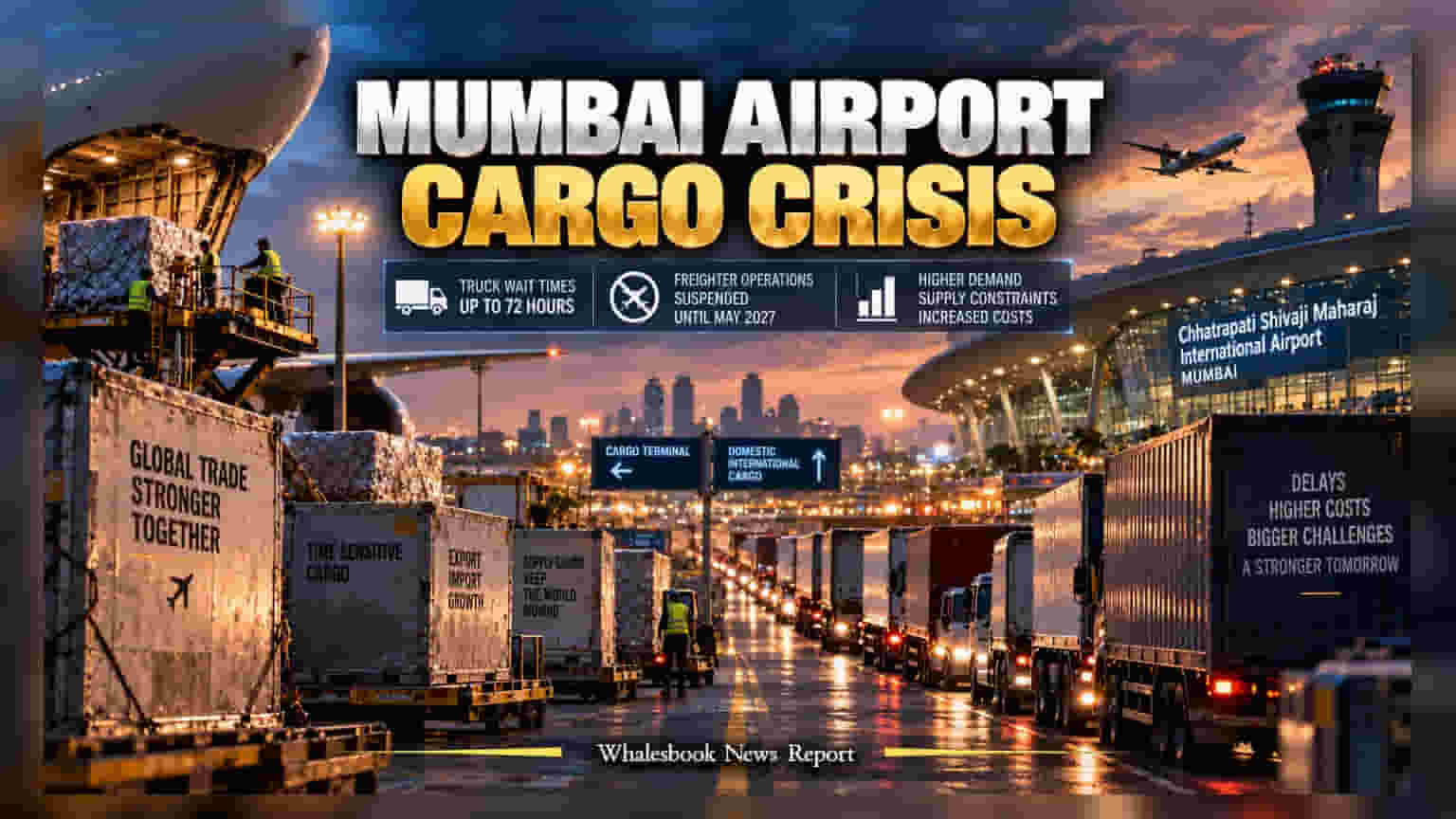
Cargo trucks at Mumbai’s Chhatrapati Shivaji Maharaj International Airport are facing 72-hour wait times due to essential runway re-carpeting. With dedicated freighter flights suspended until May 2027, the airport is redirecting traffic to the new Navi Mumbai International Airport. This transition is a key test for Adani Airport Holdings as it eyes a potential IPO with a valuation target exceeding $20 billion.
The logistics sector in Mumbai is currently navigating a period of operational friction as cargo terminals at the Chhatrapati Shivaji Maharaj International Airport (CSMIA) report truck wait times of up to 72 hours. This congestion is the result of heightened seasonal demand colliding with critical airside infrastructure projects. To facilitate essential runway re-carpeting and apron reconstruction, the airport operator has suspended dedicated freighter operations, a pause expected to last until May 2027.
For trade and logistics companies, this period presents a challenge in maintaining supply chain efficiency. While approximately 65% of the total cargo volume continues to move through belly cargo capacity on passenger flights, the removal of dedicated freighter slots has squeezed available space for time-sensitive and oversized shipments. The resulting backlog has prompted concerns from international trade bodies, including IATA, regarding operational access and the potential for increased logistics costs during the transition period.
The strategic solution involves a phased migration of freighter traffic to the newly operational Navi Mumbai International Airport (NMI). This move is designed to distribute volume and utilize more modern infrastructure, but the shift is complex. For Adani Airport Holdings, the operator of MIAL, this migration is not merely a logistical necessity but a significant performance benchmark. As the company reportedly works toward a potential IPO with a target valuation exceeding $20 billion, the ability to execute this 10-month transition without causing long-term disruption to regional trade flows serves as a crucial operational metric for stakeholders.
The risks associated with this phase are multifaceted. Aside from the immediate impact on export and import trade, the operator faces potential reputational and regulatory scrutiny if the service levels at the legacy terminal or the new hub fail to meet expectations. Investors tracking this development should look beyond the short-term headlines and monitor the efficiency of the NMI cargo ramp-up. The success of this facility in absorbing the redirected volume will be a vital indicator of management’s capability to handle large-scale infrastructure integration, particularly as the airport operator aims to strengthen its market position ahead of its future public listing.