 Whalesbook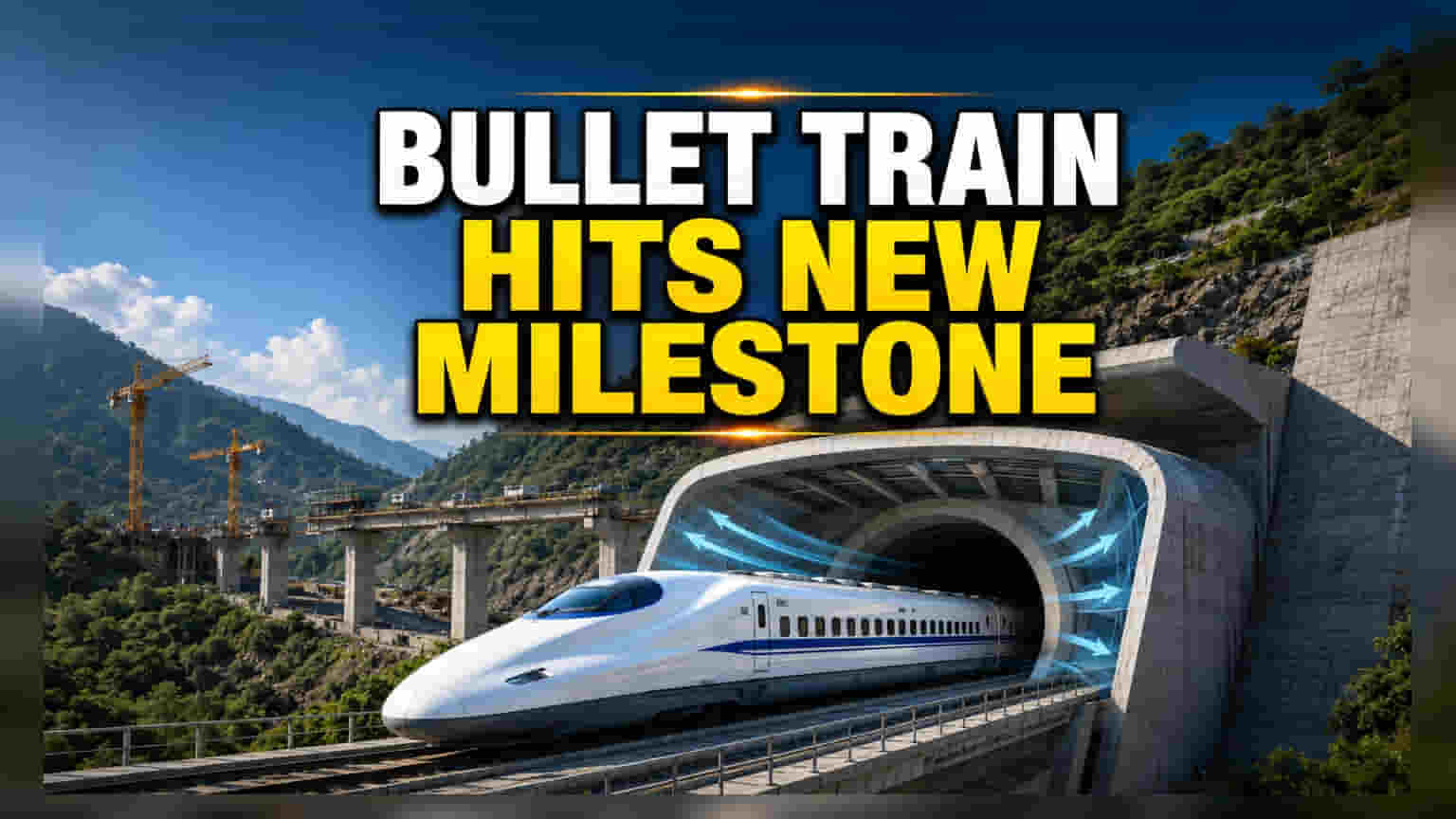


The Mumbai-Ahmedabad high-speed rail project has introduced tunnel hood technology to manage pressure and noise in mountain tunnels. While this highlights technical progress, investors should focus on the project's timeline and cost management, given the history of execution challenges in India's large-scale infrastructure sector.
What Happened
The Mumbai-Ahmedabad High-Speed Rail (MAHSR) project has reached a new technical milestone by installing tunnel hood technology in its mountainous sections. These structures are designed to manage air pressure changes when high-speed trains enter and exit tunnels at speeds reaching 300 kmph. This technology, adapted from global high-speed rail designs, aims to prevent the 'tunnel boom' effect—a loud noise caused by rapid air compression—and improves passenger comfort by allowing air to escape gradually through specially designed vents.
Why This Matters For Project Execution
For investors, the introduction of this technology is a sign of technical execution in a highly complex infrastructure project. The MAHSR corridor involves significant engineering challenges, including mountain tunneling and bridge construction. The successful implementation of specific technical standards suggests that the National High-Speed Rail Corporation (NHSRCL) is adhering to international benchmarks, such as those used in Japan's Shinkansen system. While this improves the project's safety and quality profile, the primary interest for the market lies in the project's overall construction progress and the ability of contractors to manage complex tasks without significant cost overruns.
The Infrastructure Context
Large-scale infrastructure projects in India, such as the bullet train, are critical for the order books of major engineering and construction companies. Larsen & Toubro (L&T) is one of the primary contractors involved in civil works for this corridor. When evaluating companies involved in such projects, investors often look at how efficiently they handle technical complexity and site-specific hurdles. Infrastructure projects of this scale often face pressures related to raw material costs, labor availability, and specialized equipment imports. Successfully integrating new technologies like tunnel hoods without delaying the overall project timeline is a positive indicator of execution capability.
Risks and Concerns
The MAHSR project has historically faced various challenges, including delays related to land acquisition in certain stretches and inflationary pressures on project costs. While technical milestones like this are positive, they do not resolve the broader systemic risks associated with mega-projects. Investors should be aware that projects of this size are sensitive to changes in government policy, interest rates, and the financial health of the executing agencies. Any significant delay in land acquisition or cost escalation beyond the budgeted amount can impact the financial performance of the construction partners involved in the long term. There is also the constant risk of regulatory hurdles or environmental clearance delays which have affected large infrastructure projects in the past.
What Investors Should Track Next
The key monitorable for investors interested in this sector is the consistent progress of the project against its stated deadlines. Rather than focusing on single technical updates, tracking the periodic release of the project's physical progress reports and financial updates from major contractors is more useful. Investors may also look for management commentary regarding order execution, working capital cycles, and any potential cost inflation that could impact profit margins for the construction companies working on the corridor. The ability of the project to move from the construction phase to the testing phase on schedule will be the ultimate test of its execution efficiency.