 Whalesbook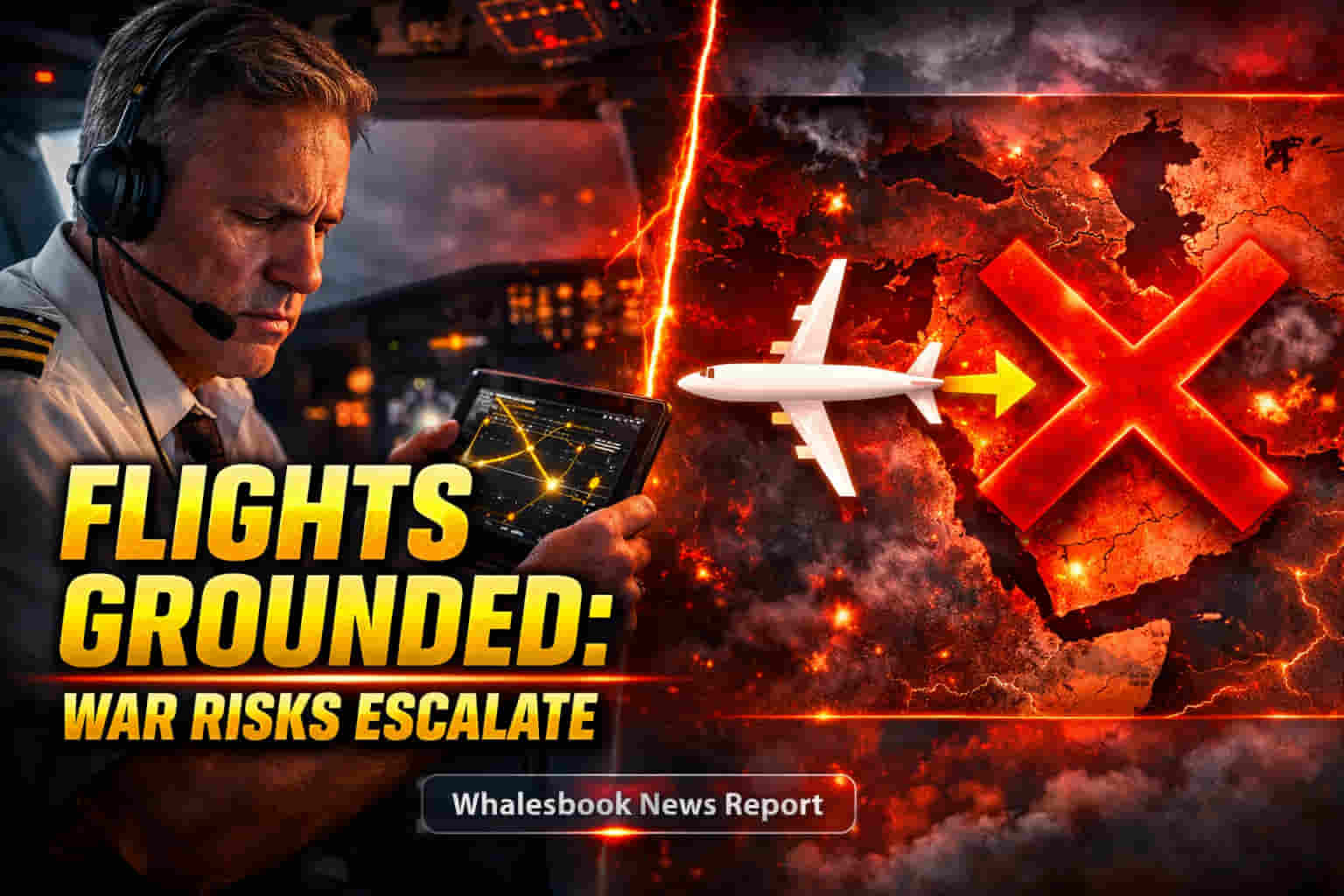


1. THE SEAMLESS LINK
The widespread flight suspensions and rerouting necessitated by escalating geopolitical tensions in the Middle East have created immediate operational and financial headwinds for global airlines. This disruption is not merely a logistical inconvenience but a direct assault on already sensitive airline margins, exacerbated by a sharp rise in crude oil prices.
2. THE STRUCTURE
The Cost of Conflict: Grounded Aircraft and Soaring Fuel Bills
On February 28, 2026, strikes targeting Iran prompted significant airspace closures across the Middle East, including by Israel, Iran, Iraq, and Jordan. This event immediately forced major carriers to alter flight paths, leading to substantial increases in flight times and fuel burn. Lufthansa, for example, suspended flights to Tel Aviv, Beirut, and Oman until March 7, and also to Dubai for the weekend [11, 34]. Wizz Air halted all flights to and from Israel, Dubai, Abu Dhabi, and Amman until March 7 [11]. Air France and Iberia Express cancelled Tel Aviv services, while KLM grounded a flight from Amsterdam to Tel Aviv [11]. These diversions add to existing challenges of navigating airspace closures over Russia and Ukraine, creating longer, less efficient routes between Europe and Asia [10, 11]. The direct financial implication is a surge in operational costs, compounded by the fact that fuel accounts for a significant portion of an airline's expenses, typically 20-30% and potentially up to 40% during prolonged periods of high prices [23, 24]. WTI crude oil has reached a seven-month high, directly translating into higher jet fuel costs and impacting airline profitability for the first quarter [20, 23].
Analytical Deep Dive: Sector Vulnerability and Historical Precedent
Historically, geopolitical risk has been a significant driver of volatility in the airline industry [4]. Events such as the 9/11 attacks and the Russia-Ukraine conflict have demonstrably led to sharp, short-term declines in airline stock prices [4, 6]. Geopolitical tensions not only disrupt operations but also erode traveler confidence, leading to reduced demand on affected routes [12]. This fragility is evident in current market reactions. Shares of American Airlines (AAL), United Airlines (UAL), and Delta Air Lines (DAL) have all experienced declines of over 5% in recent trading days [23, 24]. While Wizz Air (WIZZ) has seen its stock decrease by 5.72% in the past month, trading at GBX 1,220 with a market cap of £1.26 billion [5], Lufthansa (LHA) trades at $10.70 with a market cap of $12.8 billion, though its high leverage (debt-to-equity of 137.28) and weak liquidity ratios raise concerns [26, 31]. Air France-KLM (AF.PA) saw its stock drop 6.39% on February 27th, despite a 39.68% rise over the past 12 months, reflecting ongoing sensitivity to regional instability [27]. While Fitch Ratings suggests global air traffic volumes will remain resilient in 2026, it acknowledges that geopolitical tensions introduce regional volatility and could dampen discretionary spending on long-haul travel [13]. Analysts remain divided, with some maintaining 'Outperform' ratings on carriers like American Airlines [15] while others, like Barclays, hold 'underweight' ratings on Air France-KLM [22].
⚠️ THE FORENSIC BEAR CASE
The current geopolitical escalation presents a multi-faceted risk to airline profitability and stock valuations. Beyond the immediate increase in fuel costs and operational expenses due to rerouting, airlines face the peril of misjudging fuel hedging strategies. Locking in elevated prices if tensions ease could lead to substantial losses, particularly for carriers with weaker balance sheets [23, 24]. Companies like Lufthansa, with a high debt-to-equity ratio of 137.28 and weak current ratios (0.78), are particularly vulnerable to sustained cost increases and potential demand shocks [31]. The erosion of traveler confidence during periods of heightened conflict can significantly reduce passenger and cargo revenues, a critical factor for airlines already operating on slim margins [4, 12]. While some airlines may attempt to pass these costs to consumers, driving up fares, this risks further dampening demand, especially for price-sensitive leisure travelers [1, 12]. The Middle East is a critical transit corridor, and prolonged instability or further airspace closures could necessitate permanent, costly adjustments to global route networks, impacting everything from delivery times to overall travel accessibility.
3. THE FUTURE OUTLOOK
While the aviation sector has shown resilience, evidenced by projected traffic volume growth in 2026 [13], the immediate future is clouded by significant geopolitical uncertainty. Airlines must balance the need to manage escalating operational costs and potential demand softening against maintaining competitive pricing and network integrity. The current environment underscores the sector's inherent fragility and its susceptibility to external shocks, suggesting that periods of volatility and investor scrutiny are likely to persist as long as regional tensions remain unresolved.