 Whalesbook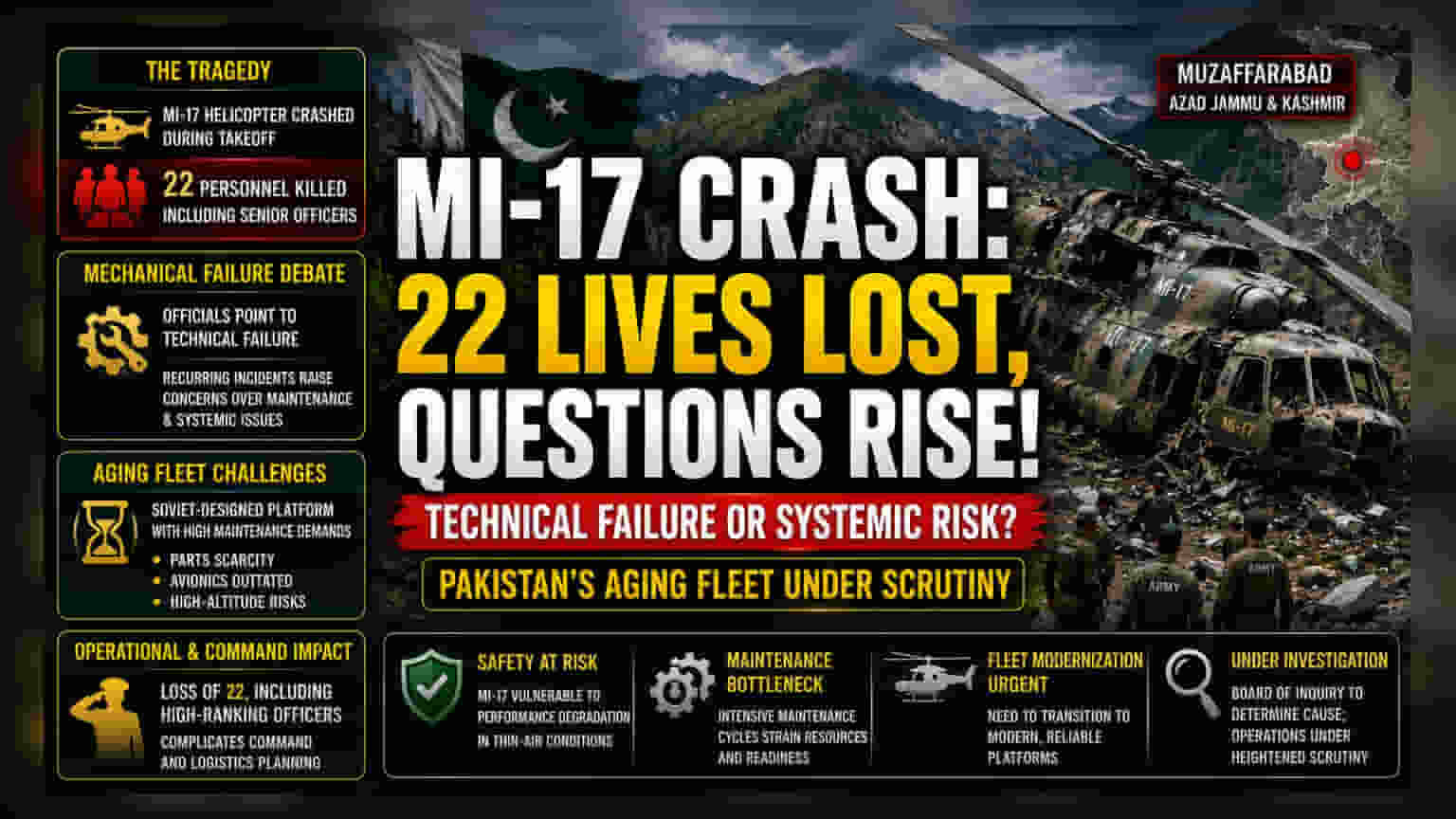


A Russian-made Mi-17 transport helicopter crashed near Muzaffarabad, resulting in 22 fatalities. While officials attribute the disaster to technical failure, the incident heightens scrutiny regarding the operational readiness of Pakistan’s aging Soviet-era aviation assets.
The Mechanical Failure Debate
The catastrophic loss of an Mi-17 transport helicopter near Muzaffarabad brings the operational integrity of Pakistan’s high-altitude aviation fleet into sharp focus. Although military officials have initially pointed toward a technical failure during takeoff, the recurring nature of these incidents across rugged northern terrains suggests deeper systemic maintenance issues. With the loss of 22 personnel, including senior officers, the incident serves as a grim reminder of the risks associated with sustaining Soviet-designed platforms in volatile, mountainous environments.
Aging Assets and Maintenance Constraints
These aircraft remain essential for logistics in inaccessible areas, yet their age creates a complex maintenance bottleneck. While previous refurbishment programs involving U.S. technical assistance were designed to extend the lifespan of these workhorses, the challenge of sourcing replacement parts and modernizing avionics remains significant. In contrast to more modern platforms employed by regional peers, the Mi-17 platform demands intensive, high-frequency maintenance cycles. The reliance on these aging airframes limits operational flexibility, especially when logistical demands in sensitive border zones increase due to broader security fluctuations.
The Forensic Risk Perspective
The timing of this tragedy exacerbates internal military pressures, occurring just days after widespread civil unrest in the region. From a risk management perspective, the loss of high-ranking officers in a single transport event complicates the chain of command and logistical planning capabilities in the immediate term. Furthermore, repeated accidents within this specific helicopter class fuel market concerns regarding the safety protocols and the long-term feasibility of the current fleet composition. Historical data shows that these platforms are particularly susceptible to performance degradation in high-altitude, thin-air conditions, which complicates the military’s ability to conduct rapid troop deployments without significant risk of mechanical fatigue.
Strategic Outlook for Fleet Modernization
Future stability in transport operations will likely hinge on the military's ability to transition away from these vintage platforms toward more reliable, modernized alternatives. Analysts suggest that until a comprehensive fleet audit is finalized by the board of inquiry, the existing inventory will remain under strict operational limitations. The reliance on legacy systems, despite ongoing attempts to bridge the gap with external technical support, continues to act as a structural vulnerability for regional military logistical readiness.