

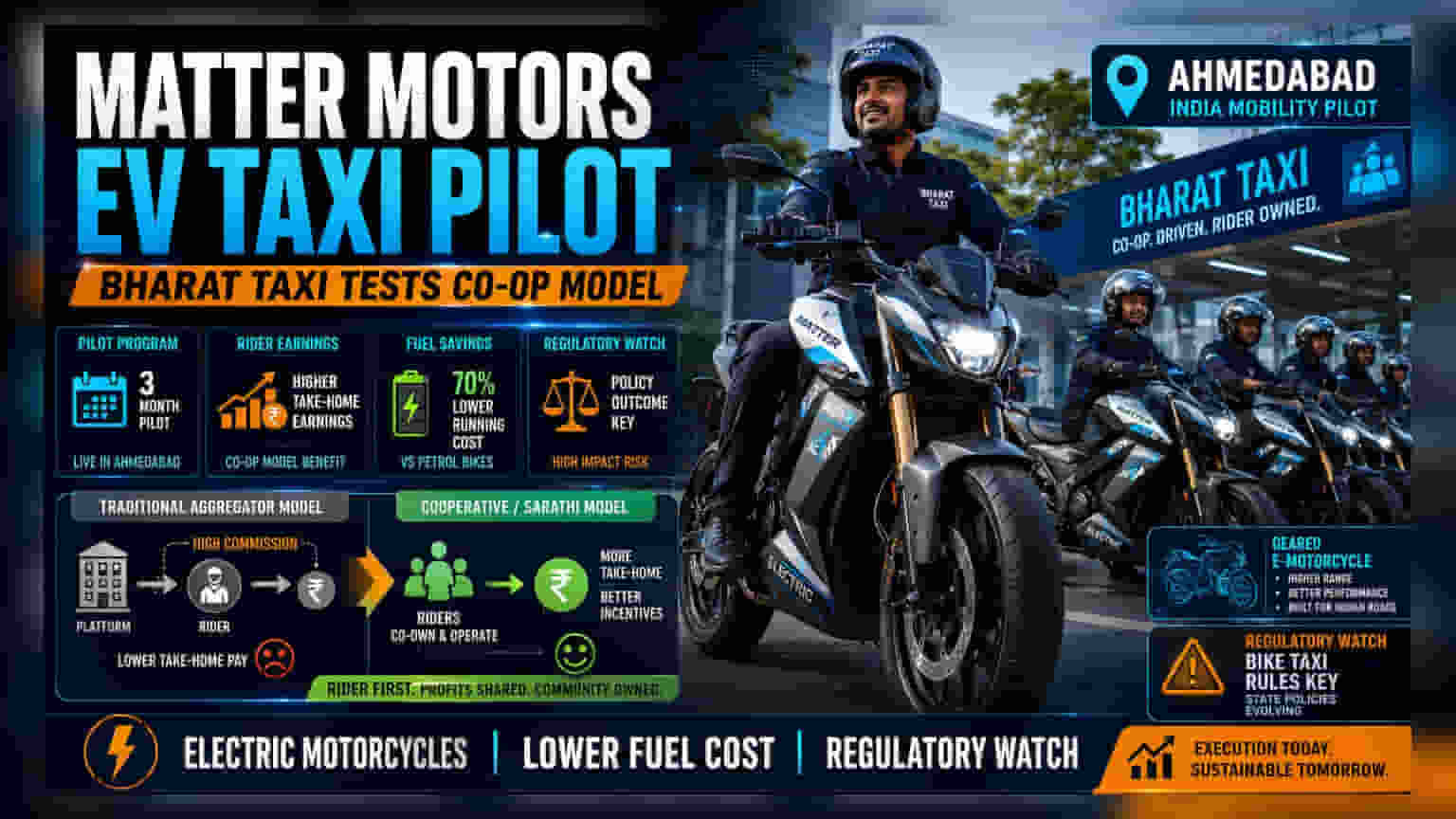
Electric motorcycle maker Matter Motors is launching a three-month pilot program deploying its AERA motorcycles within Bharat Taxi’s cooperative-led ride-hailing network. This initiative tests a cooperative ownership model designed to reduce operational costs for riders by eliminating fuel expenses, while also navigating the evolving regulatory landscape for bike taxi services in India.
What Happened
Ahmedabad-based electric motorcycle manufacturer Matter Motors has initiated a three-month pilot program in collaboration with Bharat Taxi, a government-supported, cooperative-led ride-hailing platform. The pilot will deploy Matter’s AERA electric motorcycles within Bharat Taxi’s 'Sarathi' network. The project aims to test the operational and commercial viability of using geared electric motorcycles for passenger transport, focusing on reducing fuel costs—a significant expense for gig workers—by shifting to an all-electric fleet.
The Shift to a Cooperative Model
This partnership marks a distinct shift from the traditional commission-based model used by major private ride-hailing aggregators. Bharat Taxi operates as a cooperative society, where drivers (referred to as 'Sarathis') act as shareholders rather than just service providers. By combining this model with electric vehicles, the companies aim to improve the total take-home earnings of the riders. In the conventional platform-aggregator model, drivers often face high commission charges and fluctuating fares. The cooperative structure, backed by national institutions, is designed to retain a larger portion of earnings for the vehicle owners themselves.
Why This Matters for the EV Ecosystem
For the broader electric vehicle (EV) sector, this pilot is significant as it challenges the dominance of electric scooters in the commercial fleet and delivery segment. While electric scooters are currently the preferred choice for many last-mile delivery services, Matter’s AERA—touted as a geared electric motorcycle—offers a different riding experience, including a 4-speed manual gearbox. If the pilot succeeds, it could validate a new commercial use case for electric motorcycles, potentially influencing future purchasing patterns for gig workers and commercial fleet operators across India.
Regulatory and Market Risks
Investors monitoring the mobility sector should note that the bike taxi industry in India remains in a complex regulatory phase. While some state governments are beginning to formulate specific aggregator policies for two-wheelers, other regions have faced legal challenges, bans, or restrictive mandates regarding the use of private vehicles for commercial transport. The long-term success of this pilot will depend not only on the vehicle's performance and rider economics but also on how different state governments finalize their respective licensing and operating frameworks for electric bike taxis. Any negative regulatory shifts could impact the scalability of such cooperative-based mobility initiatives.
What Investors Should Track Next
Beyond the immediate outcomes of this three-month trial, market observers may track the following:
- Rider Adoption: Whether the cost-benefit analysis—specifically the savings on fuel versus the initial price of the AERA motorcycle—convinces riders to shift to the cooperative model.
- Regulatory Updates: Future state-level policy announcements that could legalize or restrict bike-taxi aggregators.
- Expansion Plans: Any subsequent scaling beyond the pilot phase, which would provide more data on the sustainability of the zero-commission cooperative model.
- Competitive Reaction: How established ride-hailing aggregators adjust their business models or fleet electrification strategies in response to new cooperative-based competitors.