 Whalesbook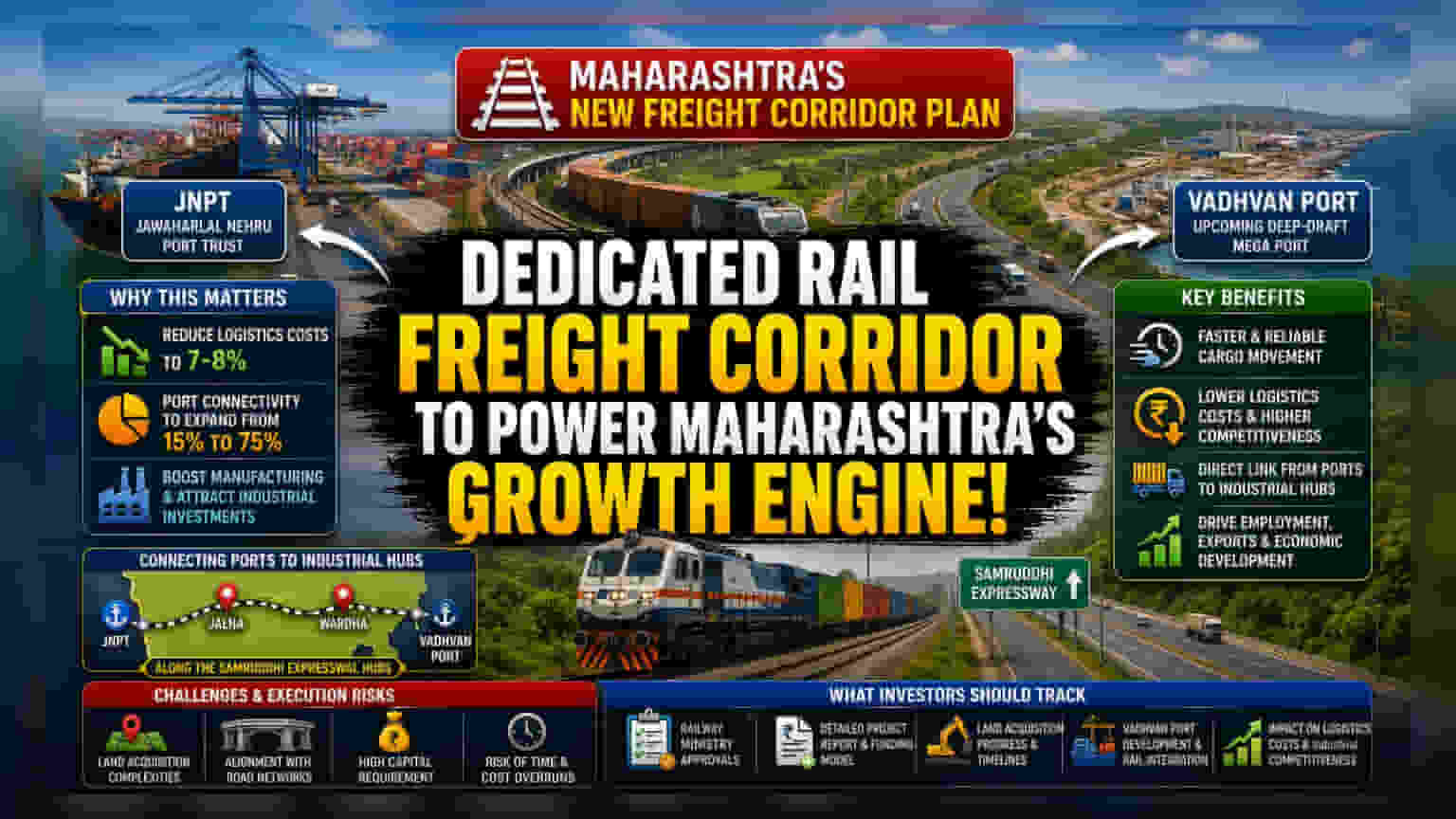


Maharashtra has proposed a dedicated rail freight corridor connecting JNPT and Vadhvan Port to the Samruddhi Expressway. This infrastructure push aims to bring logistics costs down to 7-8 percent and integrate inland industrial hubs like Jalna and Wardha into global supply chains. For investors, this plan highlights a focus on regional logistics efficiency, though successful execution will depend on long-term funding and land acquisition timelines.
What Happened
Maharashtra’s government has formally proposed a dedicated rail freight corridor aimed at connecting the state’s key maritime gateways, specifically the Jawaharlal Nehru Port Trust (JNPT) and the upcoming Vadhvan Port, with the Samruddhi Expressway. This proposal was discussed by Maharashtra Chief Minister Devendra Fadnavis and Railway Minister Ashwini Vaishnaw. The initiative seeks to build a specialized rail network that runs alongside the expressway, creating a direct path for goods to travel from ports to inland industrial hubs, including major centers in Jalna, Wardha, and Gadchiroli.
Why This Matters For Investors
High logistics costs are often cited as a challenge for Indian manufacturing competitiveness. By bringing these costs down to a target of 7-8 percent, the state aims to attract more manufacturing and industrial investments. For investors, this plan signals a potential long-term boost for logistics, port-led development, and industrial infrastructure sectors. The focus is on widening the benefits of port connectivity from the current 15 percent of the state to 75 percent. If implemented, this could create new industrial corridors, impacting companies involved in logistics services, warehousing, and infrastructure construction.
The Bigger Business Context
Infrastructure development in India is currently driven by national initiatives like the PM Gati Shakti program, which emphasizes multi-modal connectivity—linking rail, road, and ports seamlessly. The proposed project is an extension of this logic at a state level. The Vadhvan Port, which is currently under development, is a massive project intended to handle larger container vessels and provide deep-draft port capabilities. Linking this port directly to a dedicated freight corridor could significantly enhance the speed and reliability of cargo movement, which is essential for export-heavy industries like electronics and manufacturing.
Challenges and Execution Risks
While the vision for improved connectivity is clear, investors often look at the practical side of such large-scale infrastructure projects. Building a dedicated rail corridor in a high-density, high-land-cost state like Maharashtra involves significant hurdles. Key risks include the time required for land acquisition, the complexity of aligning the rail route with existing road networks, and the requirement for substantial long-term funding. Projects of this nature are prone to time and cost overruns, which can put pressure on the financial health of the implementing agencies or the state exchequer. The history of large infrastructure projects in India shows that execution speed is often a critical variable for determining economic viability.
How Investors May Read This
Investors looking at the infrastructure and logistics space may watch how the government secures funding and whether it collaborates with the central government for rail development. The project is currently in the proposal stage, meaning it is not an immediate revenue driver for any company. Instead, it serves as a long-term indicator of the state's industrial policy. The market will likely look for clarity on the project timeline, the involvement of private players in development, and the eventual allocation of capital. The success of this corridor will depend on whether it can deliver the promised reduction in logistics costs, which relies heavily on efficient operation once the construction phase is complete.
What Investors Should Track
Moving forward, the primary monitorables include official approvals from the Ministry of Railways, the formal project report detailing costs and funding models, and the timelines for land acquisition. Any update on the progress of Vadhvan Port and its integration with existing rail lines will also provide clues about the project's feasibility. Investors should monitor how the government balances this massive capital spending with existing debt commitments to understand the project's sustainability.