

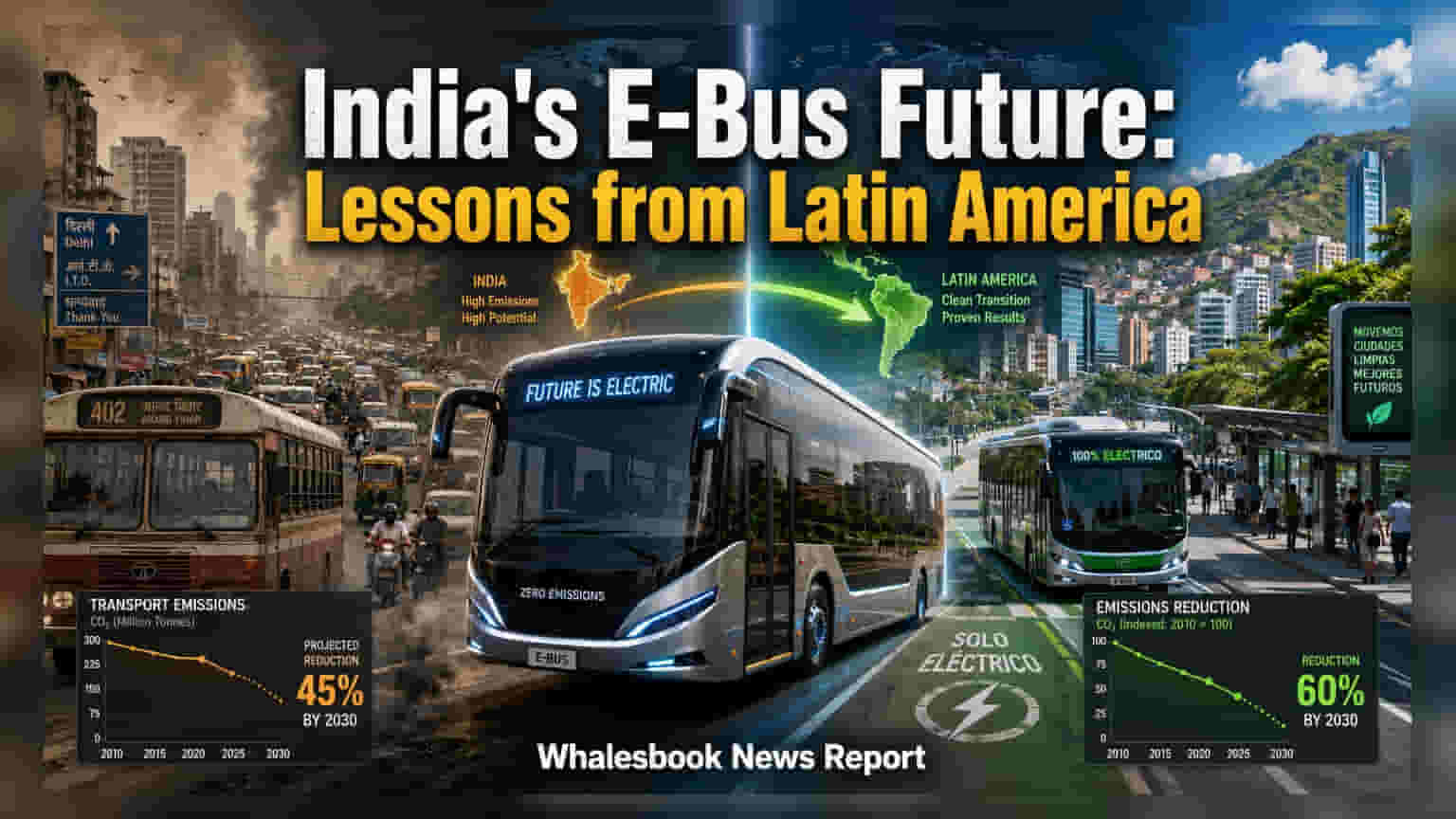
Latin American cities have deployed over 10,000 electric buses, showcasing a roadmap for clean public transport. This shift provides valuable insights for India, where large-scale e-bus adoption is underway to tackle urban pollution. Investors tracking the Indian EV sector should monitor how policy stability, infrastructure development, and manufacturing capacity shape the long-term viability of these projects.
The recent success of electric bus adoption in Latin American cities provides a practical case study for India’s own rapidly growing electric vehicle (EV) public transport sector. With over 10,000 electric buses now operating across more than 80 cities in the region, the Latin American experience highlights the importance of sustained policy and long-term funding in achieving mass transit electrification. This international progress serves as a relevant benchmark for Indian megacities like Delhi, Mumbai, and Bengaluru, which are actively pursuing e-bus integration through various central and state-led transport schemes.
The Business Impact of Public Transit Electrification
For India’s commercial vehicle sector, the transition to electric mobility is not just about manufacturing vehicles but also managing a complex service ecosystem. The Latin American model underscores that financial success in this space is heavily linked to government support and the availability of development funding. Projects in cities like São Paulo utilized massive investment programs and policy mandates to move away from diesel, a structure often mirrored in India’s FAME (Faster Adoption and Manufacturing of Hybrid and Electric Vehicles) initiatives and the PM-eBus Sewa scheme.
In India, major commercial vehicle manufacturers and specialized EV bus makers are increasingly competing for large-scale government tenders. These contracts are typically volume-driven, requiring companies to balance high upfront capital expenditure with the need to maintain profit margins over the contract period. The ability of companies to secure these orders while managing the operational complexity of charging networks is a primary determinant of their competitive position in the sector.
Risks and Operational Challenges
While the shift to electric buses is essential for reducing carbon emissions, investors should be aware of the specific challenges inherent in this business model. The initial cost of electric buses remains higher than diesel counterparts, placing a burden on state transport undertakings (STUs) and manufacturers. Furthermore, profit margins for manufacturers can be thin, as they are often determined by the lowest bid in competitive government tenders.
Operational risks are another important factor. Unlike traditional buses, electric fleets require a robust and reliable charging infrastructure. Issues such as grid capacity, battery performance in harsh Indian weather conditions, and the long-term cost of battery replacement can significantly affect the financial viability of these projects. If infrastructure does not keep pace with the deployment of vehicles, it creates a risk of under-utilization or service delays.
What Investors Should Track
As Indian cities continue to replace older, diesel-powered fleets with electric options, the key monitorables will be the speed of charging infrastructure rollout and the financial stability of the contracts signed by manufacturers. Investors may track how companies manage their cash flow in an environment of high capital spending and whether they can achieve economies of scale as the total number of buses on the road increases. Ultimately, the long-term success of the e-bus transition in India will depend on the alignment of manufacturing capacity, grid readiness, and consistent government funding.