 Whalesbook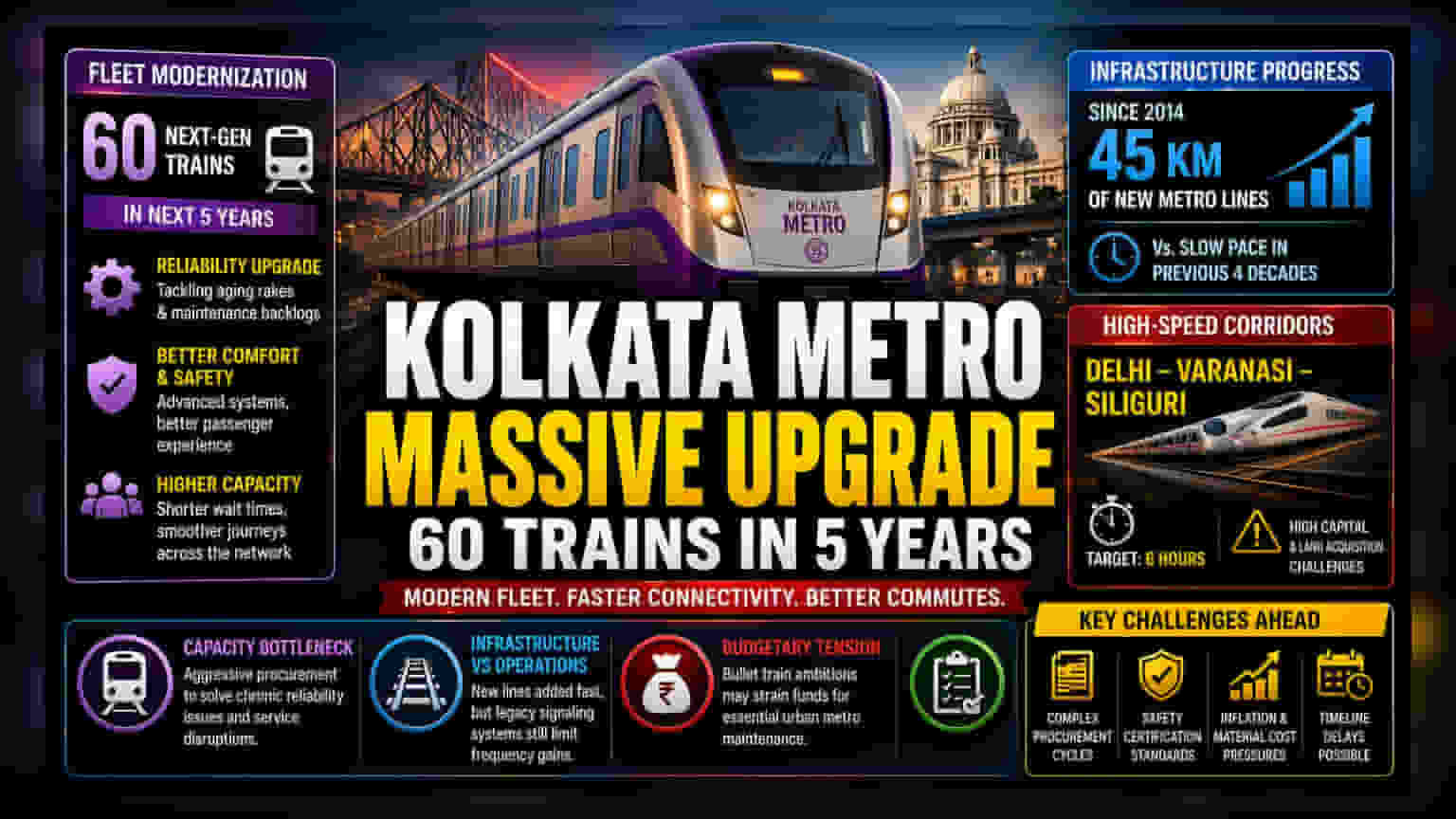


The Capacity Bottleneck
The commitment to deploy sixty next-generation trains across the Kolkata Metro network within the next five years represents an aggressive pivot toward asset modernization. While political rhetoric emphasizes the expansion of the rail network, the practical execution of this procurement hinges on the supply chain throughput of Indian rolling stock manufacturers. Historically, the Kolkata Metro has struggled with maintenance backlogs and aging rakes that suffer from frequent mechanical disruptions. By forcing a fleet refresh, the Ministry is attempting to solve a chronic reliability crisis that has hindered the system's operational efficiency for decades.
Infrastructure vs. Operational Reality
Comparing recent progress to historical benchmarks reveals a clear shift in fiscal priority. Since 2014, the addition of 45 kilometers of trackage suggests a rapid acceleration in infrastructure delivery compared to the glacial pace of the preceding four decades. However, the operational reality for commuters remains strained by integration issues between new lines and legacy corridors. Investors and stakeholders should observe whether this influx of new rolling stock actually translates into reduced headway times or if the bottleneck remains the antiquated signaling systems currently in place on the city's older north-south arteries.
The High-Speed Integration Risk
Beyond metropolitan transit, the proposed high-speed corridors linking Delhi, Varanasi, and Siliguri introduce significant capital allocation risks. Connecting Siliguri to the national capital in a projected six-hour window requires a massive scale of engineering and land acquisition that has historically stalled similar projects. The financial burden of these mega-projects often pressures the railway budget, potentially cannibalizing funds meant for urban metro maintenance. While the headline figures suggest rapid progress, the underlying budgetary tension between high-profile bullet train ambitions and routine, essential urban transit upgrades remains a primary concern for long-term project viability.
Execution and Regulatory Hurdles
The successful delivery of these trains depends heavily on the government’s ability to navigate complex procurement cycles and stringent safety certification standards. Given the logistical complexity of the Siliguri-Delhi corridor and the ongoing pressure to maintain aging urban assets, the Ministry faces a balancing act. If procurement cycles for the new Kolkata rakes experience delays similar to those seen in other regional metro rollouts, the anticipated improvement in passenger experience may be pushed well beyond the five-year window. Furthermore, the reliance on specialized technology for these high-speed segments exposes the project to inflationary pressures in materials and engineering expertise, which could potentially force upward revisions in capital expenditure forecasts.