

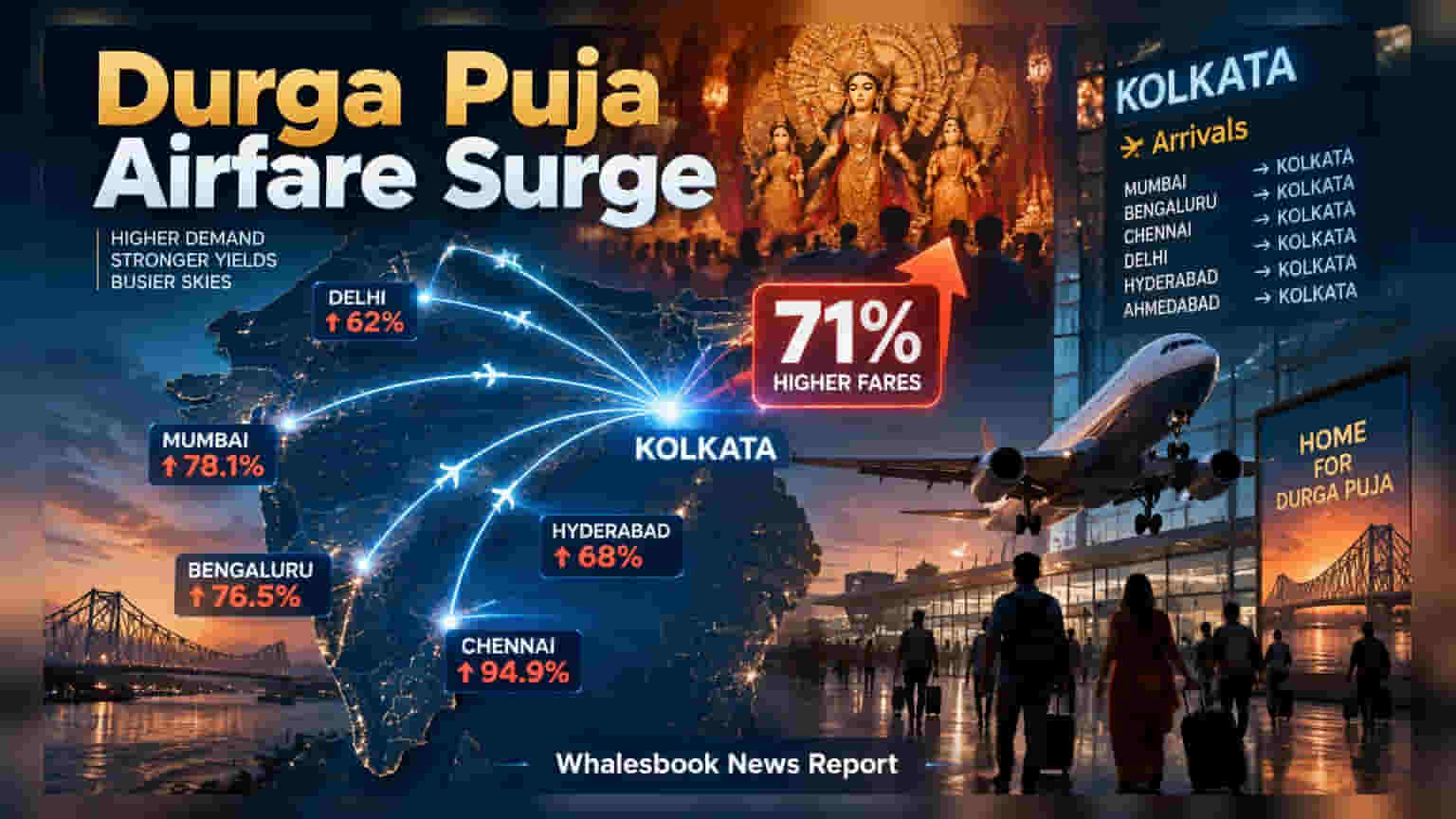
Air travel costs to Kolkata for October 16 have spiked by 71% compared to typical November rates, driven by intense Durga Puja homecoming demand. Major hubs like Chennai, Mumbai, and Bengaluru are seeing the steepest price hikes, highlighting strong seasonal pricing power for Indian airlines during festive peaks.
Air travel costs into Kolkata have risen sharply as the Durga Puja festive season approaches, with ticket prices for October 16 showing a 71% premium compared to rates expected in mid-November. This significant increase highlights the seasonal bottleneck that occurs as thousands of passengers travel to West Bengal, creating a temporary, demand-driven supply imbalance on key domestic routes.
For investors monitoring the aviation sector, this trend demonstrates the effectiveness of dynamic yield management systems, where airlines adjust ticket prices in real-time to match high demand. During peak periods like Durga Puja, major carriers such as IndiGo and the Air India group can capture higher revenue per seat, which is crucial for improving short-term financial performance. The data indicates that this pricing pressure is concentrated on flights originating from major corporate hubs, with Chennai leading the surge at a 94.9% increase. Mumbai and Bengaluru follow with price hikes of 78.1% and 76.5% respectively, showing that travelers from western and southern cities face the highest costs.
It is important to note the nature of this pricing shift. The data shows an asymmetric pattern where inbound fares to Kolkata are rising, while outbound fares from the city remain relatively stable. This suggests that airlines are capitalizing on the specific homecoming demand rather than a broader, national increase in airfare for October. While this spikes top-line revenue, it is a seasonal phenomenon and not necessarily a permanent structural change in market pricing.
From a business perspective, the primary monitorable for shareholders is whether this strong demand translates into better operating margins in the upcoming quarterly results. While festive demand improves yields, airline profitability remains sensitive to fluctuating costs such as aviation turbine fuel (ATF) and operational expenses. Furthermore, while airlines currently benefit from high demand, they often face regulatory and public scrutiny when prices hit such premiums, although current policies primarily allow market forces to dictate rates. Investors may watch for future updates on seat load factors and average yields to understand if this festive pricing strength can offset broader cost pressures in the aviation industry.