

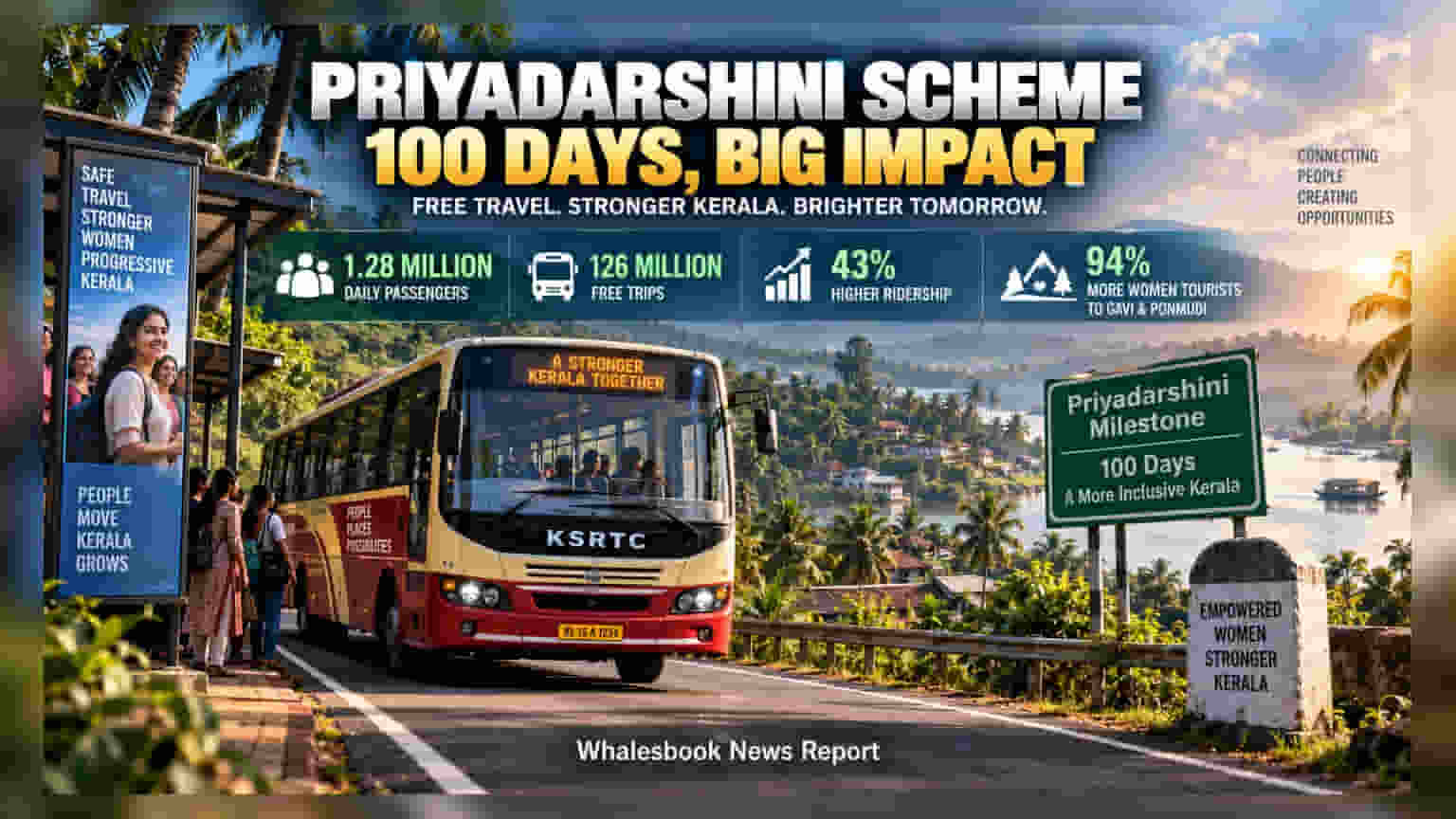
The Kerala government's Priyadarshini bus scheme has reached 1.28 million daily users in its first 100 days, leading to a 43% rise in KSRTC ridership. To manage the increased load, the state is focusing on optimizing existing bus routes rather than adding new vehicles.
The Kerala government’s Priyadarshini bus scheme, which provides free travel to women and transgender individuals, marked its 100th day of operation on September 22, 2026. Since its launch on June 15, 2026, the initiative has seen steady adoption, with current usage reports showing 1.28 million daily passengers across the state’s public transport network.
According to the Kerala State Road Transport Corporation (KSRTC), the scheme has facilitated over 126 million free trips during this period. The influx of passengers has contributed to a 43% increase in total ridership for the state-run transport body. Beyond daily commuting, the transport department observed a 94% rise in female travelers visiting tourist destinations such as Gavi and Ponmudi, suggesting that the free travel policy is also influencing leisure and tourism patterns.
For the state budget, the performance of the Priyadarshini scheme is a key metric for evaluating public service efficiency. Transport Minister C P John stated that despite the rising demand, the government does not plan to increase the total bus fleet to accommodate the load. Instead, the administration is focusing on optimizing current bus routes and reallocating existing resources to meet the passenger demand. This strategy allows the transport department to manage the operational cost of the free-travel mandate without the significant capital spending required to purchase and maintain new vehicles.
Moving forward, the effectiveness of this resource reallocation will be the primary monitorable for the KSRTC. Ensuring that service quality does not drop while optimizing routes is essential to maintaining these ridership levels. The state’s decision to prioritize operational efficiency over fleet expansion will continue to be a factor in the overall fiscal management of the transport sector.