 Whalesbook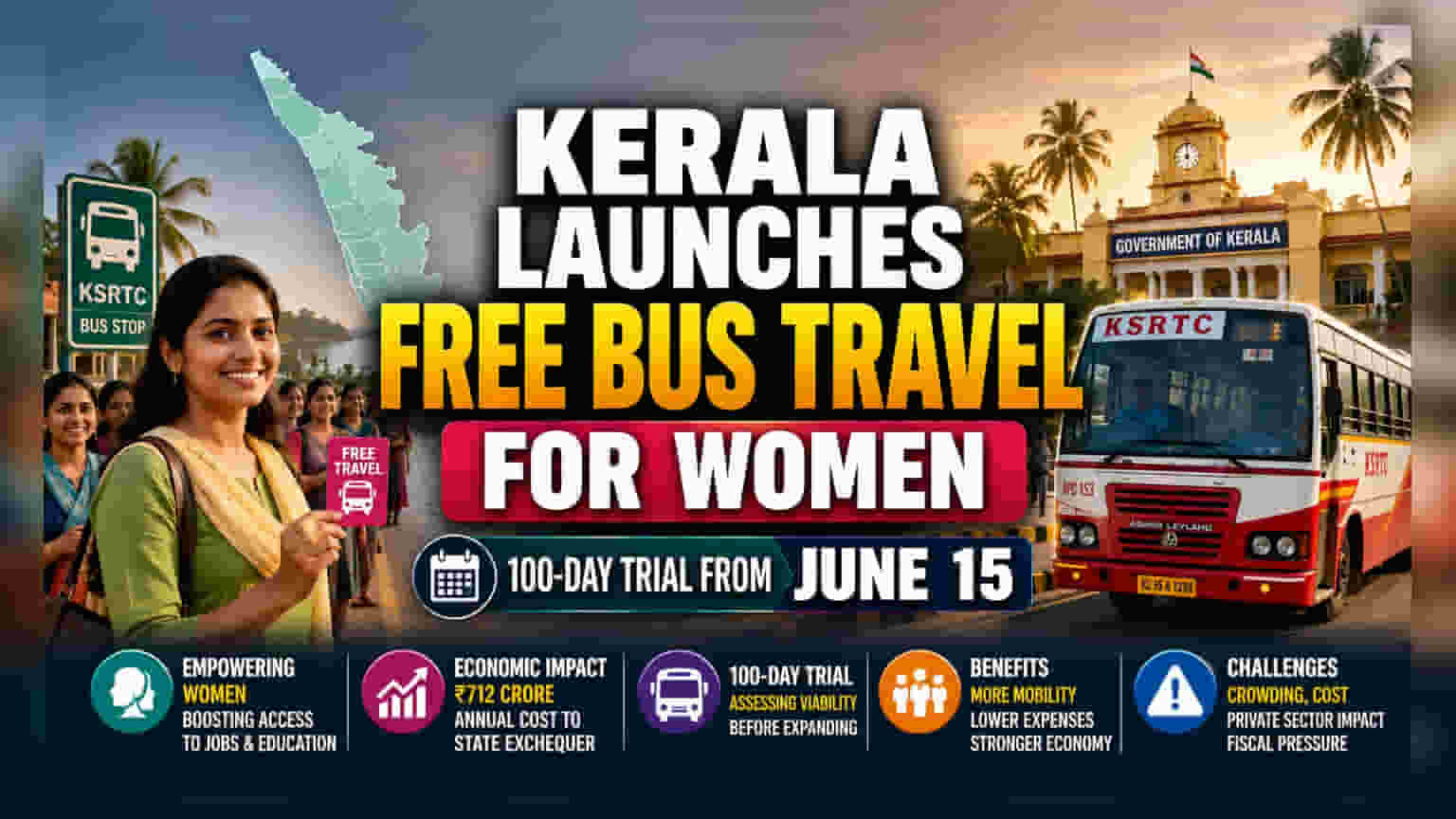


What Happened
The Kerala government has announced a new initiative to provide free bus travel for women on ordinary Kerala State Road Transport Corporation (KSRTC) buses. The program is scheduled to begin on June 15. Initially, this will be launched as a 100-day trial to assess its viability before the state considers expanding it to other service categories. The government estimates that this measure will cost the state exchequer approximately ₹712 crore per year.
Why This Matters For The Economy
Public transport policy often involves a difficult balance between social welfare and fiscal sustainability. On one hand, studies, including those by the World Bank, suggest that women make up a vast majority of public transport users in India. Providing free travel can reduce household financial burdens and increase access to employment and education, which supports broader economic activity. However, for a state government, this creates a recurring annual expense. Analysts often monitor such schemes for their impact on the state’s fiscal deficit, as these recurring costs must be funded through tax revenue or by reallocating money from other development projects.
Peer and Sector Context
Kerala is not the first state to introduce such a scheme. Several other Indian states, including Karnataka, Tamil Nadu, and Delhi, have implemented similar programs. In states like Tamil Nadu, data showed a significant rise in the number of women using public buses after these schemes were introduced. While these programs have generally been popular with commuters, they have also placed significant pressure on the finances of state transport corporations, which often operate with high levels of debt and depend on government subsidies to remain operational.
Challenges for the Private Sector
One of the most notable economic impacts of such schemes is the potential effect on the private bus sector. In many parts of India, private bus operators provide critical connectivity, often filling gaps where government services are infrequent. When government buses become free, there is a risk that passengers will shift away from private operators, which could lead to revenue losses for these private businesses. In regions where private operators are the primary providers, such as parts of northern Kerala, the actual impact of the scheme may be limited unless the state government significantly increases the frequency and reach of its own fleet.
What Could Go Wrong
The implementation of free transport schemes is not without operational risks. Experiences in other states have shown that a sudden surge in demand can lead to overcrowding on buses, which may affect the quality of service for all passengers. There is also the risk that the increased financial burden on the state could lead to delays in upgrading bus infrastructure or purchasing new vehicles. For investors and observers of state-level economics, the key monitorable will be how the government manages the funding of this scheme without compromising the long-term health of the KSRTC or increasing the state's total debt burden.
What Investors Should Track
Investors and observers of the transport and logistics space may want to monitor several factors as the 100-day trial progresses. First is the actual cost impact versus the budget estimate. Second is the effect on private bus operator revenue, which could trigger policy debates or demands for compensation or tax relief for the private sector. Third, the government’s approach to service frequency will be critical—if demand spikes and supply does not match, the system may face operational bottlenecks. Finally, the state’s ability to sustain this spending amidst other fiscal commitments will be a key indicator of its overall budgetary management.