

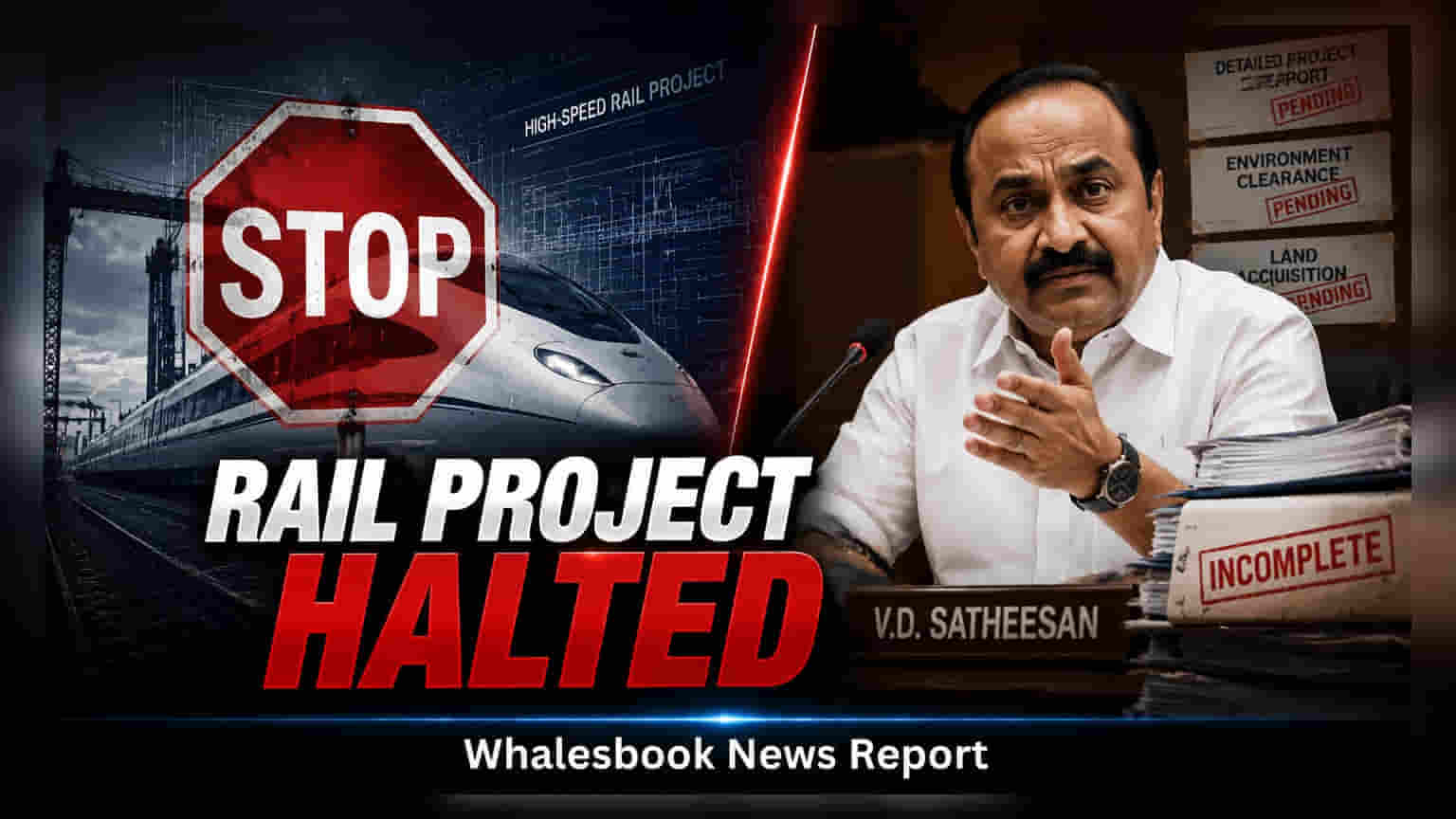
The Kerala government has put its high-speed rail project on hold after an expert committee flagged missing environmental, social, and financial feasibility studies. The move prevents immediate land acquisition and highlights concerns over the project's long-term ability to repay loans without freight revenue.
The Kerala government has officially paused its high-speed rail project following a critical review by an expert committee. The committee found that the proposal, initially prepared with support from the Delhi Metro Rail Corporation (DMRC), lacks essential groundwork required for a project of this scale. As a result, the government has halted all plans for land demarcation and acquisition until more thorough reports are prepared.
Missing Studies Stall Progress
The expert panel identified major gaps that prevent the project from moving forward. Most notably, the proposal currently lacks mandatory social and environmental impact assessments. These studies are crucial for understanding how the rail corridor might affect local communities and the surrounding ecosystem. Furthermore, the committee highlighted a lack of detailed planning regarding how this new rail network would integrate with existing infrastructure, such as the metro systems and inland waterways. Without this information, the government has determined that it is too early to commission a Detailed Project Report (DPR).
Financial Sustainability and Freight Concerns
A central issue raised by State Minister V.D. Satheesan involves the financial structure of the project. The current plan focuses entirely on passenger transportation, which the committee believes poses a risk to financial viability. The minister noted that relying solely on passenger fares could make it difficult for the state to manage the repayment of large loans required for construction. By adding a freight or logistics component, the government hopes to create a more stable revenue stream. The state is now prioritizing an investigation into how logistics can be incorporated to improve the project's economic model and ensure long-term sustainability.
Learning From Past Infrastructure Challenges
The current administration has explicitly stated its intention to avoid the mistakes associated with the previous government’s SilverLine project. In that earlier attempt, the focus on land acquisition before completing all necessary feasibility studies led to widespread public concern and delays. By pausing the current proposal, officials aim to ensure that all technical, financial, and environmental questions are answered before committing to land purchase or massive capital spending.
Investors and stakeholders should monitor upcoming government announcements regarding the commissioning of new feasibility studies. The timeline for future progress will depend on when the government finalizes these assessments and whether it can successfully restructure the project to include a viable freight logistics plan.