

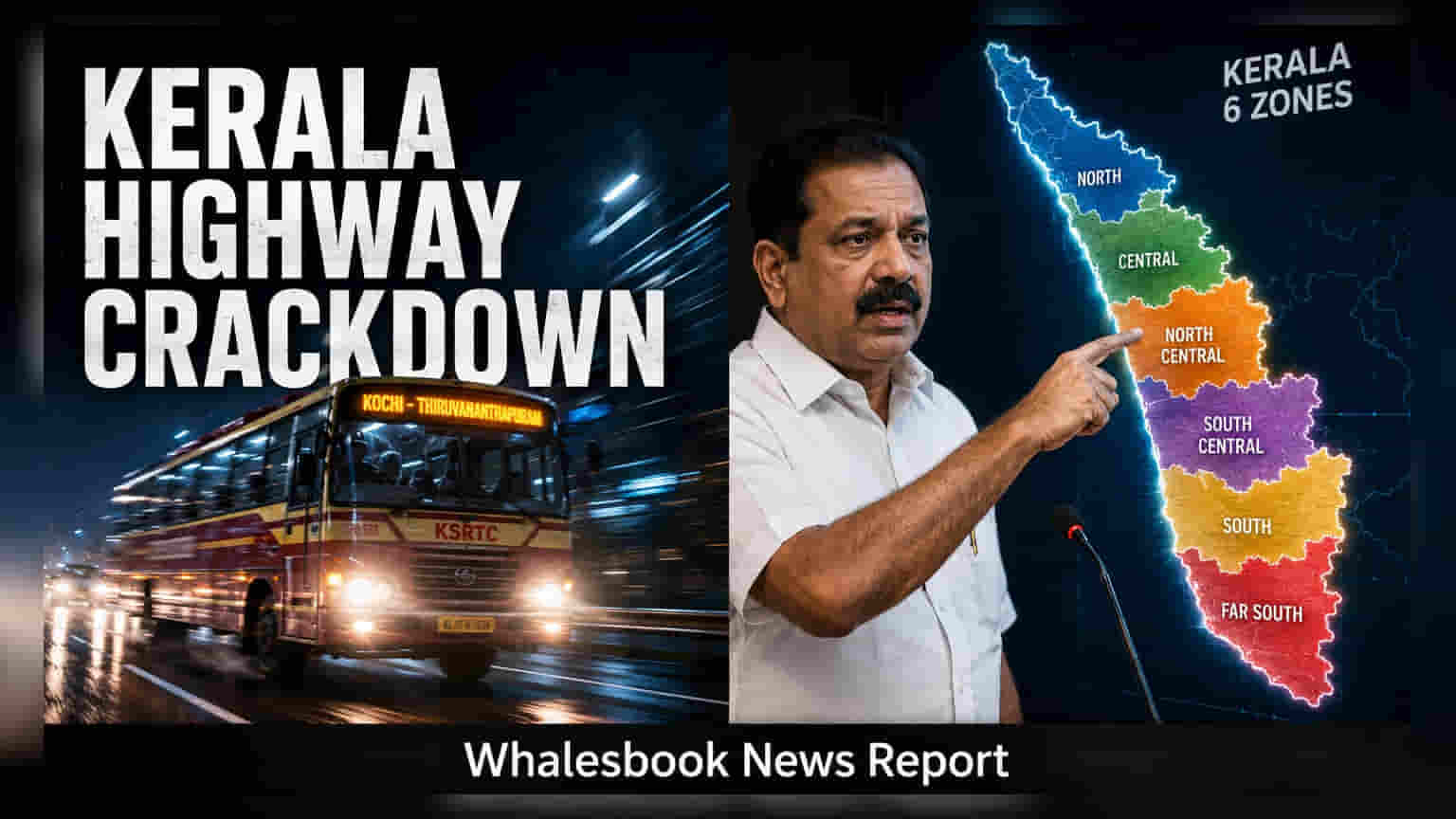
The Kerala government has introduced round-the-clock highway patrolling to curb accidents following a fatal bus crash in Malappuram. Six enforcement zones have been created to monitor speed and traffic compliance, aiming to improve road safety on major national highways.
Detailed Coverage
The Kerala government has deployed a new 24x7 highway enforcement initiative to address road safety concerns following a serious accident near Kuttipuram in the Malappuram district. This move comes after a private bus travelling on National Highway 66 overturned due to reported overspeeding, an incident that resulted in one death and injuries to 26 passengers.
Operational Structure and Enforcement Zones
Under the new plan, the state’s national highway network has been divided into six distinct enforcement zones. Each zone covers approximately 100 kilometers and will be patrolled by dedicated teams. The management of these zones is distributed among senior transport officials, with the Deputy Transport Commissioners in Thiruvananthapuram, Ernakulam, Thrissur, and Kozhikode overseeing their respective jurisdictions. To ensure continuous operation without affecting daily administrative tasks, enforcement squads comprising Motor Vehicle Inspectors, assistant inspectors, and drivers will work in rotational shifts.
Focus on Traffic Safety and Compliance
The primary mandate for these teams is to reduce road fatalities by targeting critical violations such as overspeeding, drunken driving, and the use of mobile phones while operating a vehicle. The patrols are also tasked with enforcing standard safety rules, including the use of helmets and seatbelts, and monitoring for dangerous driving practices. Additionally, squads will check for overloaded goods vehicles, illegal vehicle modifications, and ensure that all vehicles have valid fitness certificates, permits, and insurance documentation.
Technology and Coordination
Moving away from static checkpoints, these teams will utilize a mobile patrolling model to maintain constant movement along designated highway stretches. The enforcement strategy involves surprise inspections and collaborative efforts with local police. Officials will also utilize technology, including digital enforcement tools and camera footage provided by the National Highways Authority of India (NHAI), to identify and penalize violators. The program includes a structured oversight mechanism where Deputy Transport Commissioners will track personnel using GPS and conduct weekly review meetings with Regional Transport Officers and local police leadership. Beyond enforcement, these teams are expected to act as first responders at major accident sites to assist with clearing vehicles and coordinating with authorities to identify high-risk areas for future infrastructure improvements.