

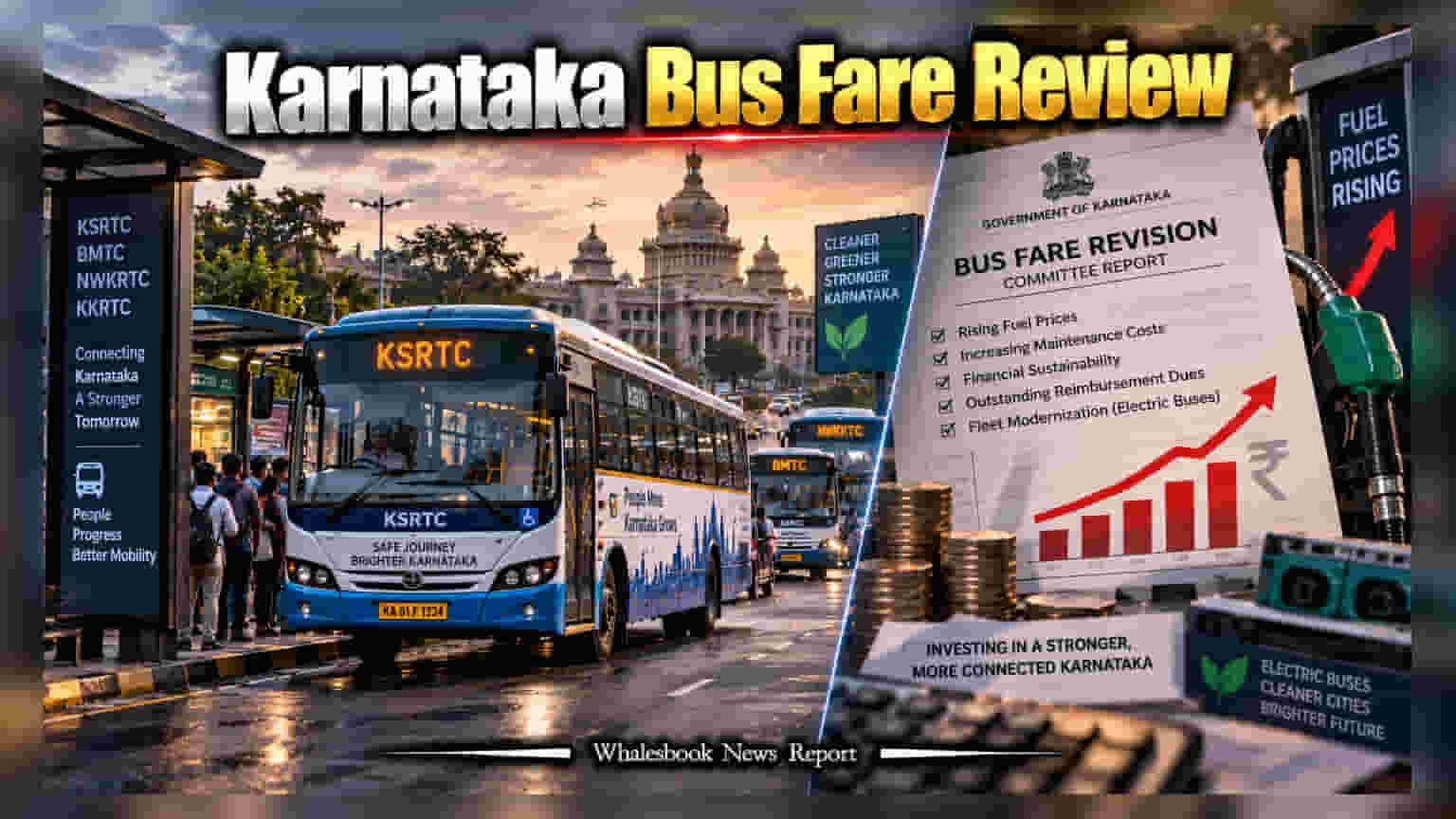
The Karnataka government is reviewing a potential bus fare hike for its four state transport corporations to address mounting operational costs. Financial strain has been worsened by the impact of the 'Shakti' free travel scheme, which has recorded over 797 crore journeys. A committee headed by former IAS officer Atul Tiwari is currently analyzing the fare revision proposal to help stabilize the finances of the state-run transit network.
The Karnataka government is currently exploring a fare revision for its state-run transport corporations, including the Karnataka State Road Transport Corporation (KSRTC), Bangalore Metropolitan Transport Corporation (BMTC), North Western Karnataka Road Transport Corporation (NWKRTC), and Kalyana Karnataka Road Transport Corporation (KKRTC). The proposal is being evaluated by a committee led by retired IAS officer Atul Tiwari, following increasing pressure on these bodies to balance service delivery with financial sustainability.
The push for a fare adjustment stems from significant financial challenges, primarily driven by rising fuel prices and increasing maintenance requirements. These corporations have faced long-standing fiscal strain, which has been further intensified by the 'Shakti' scheme. Since its launch in June 2023, the scheme—which provides free travel for women—has facilitated over 797 crore passenger journeys. While this has improved public access to transport, the financial burden on the corporations, including substantial outstanding reimbursement dues estimated at approximately ₹5,600 crore, has created a need for external funding or revenue adjustments.
Simultaneously, the state is investing heavily in modernization. In early September 2026, the Karnataka Cabinet approved the procurement of 4,500 electric buses under the central government's PM E-DRIVE program. This initiative represents a major capital investment, aiming to upgrade infrastructure and lower long-term operational costs associated with traditional fuel. However, the requirement to fund both ongoing operational losses and capital-intensive fleet upgrades has placed the state's transport sector at a critical juncture.
For the transport corporations, the main risk remains the balancing act between political sensitivity and financial viability. Fare hikes are often met with public opposition, yet the current level of dependence on government reimbursements makes the system vulnerable to budget constraints. The state government must now decide how to address these liabilities without compromising the efficiency of the public transit network.
Investors and observers will now track the outcome of the committee's report. The timing and scale of any potential fare hike, along with the government’s timeline for clearing outstanding reimbursement dues, will be the next key monitorables for the financial health of these transport corporations.