

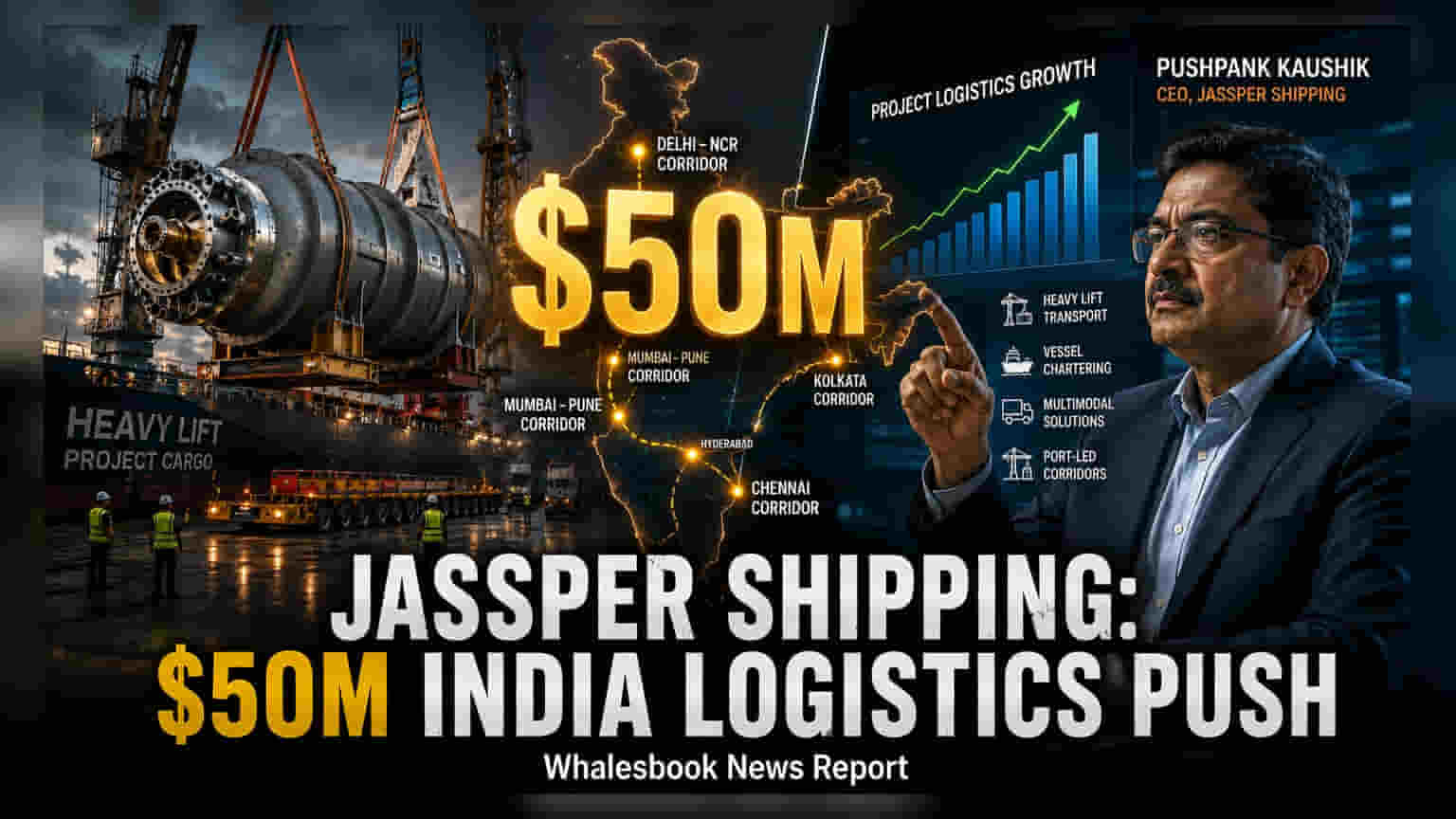
Jassper Shipping has announced a $50 million, three-year investment plan to expand its project and heavy-lift cargo services in India. The company aims to tap into the country's growing infrastructure needs, though investors should note it is a private, unlisted firm and its shares are not traded on stock exchanges.
Jassper Shipping, a private logistics firm based in Hyderabad, has announced plans to invest $50 million over the next three years to expand its operations in India. This capital infusion is designed to strengthen the company’s capabilities in handling complex, large-scale industrial cargo. The company plans to focus heavily on the project logistics segment, which involves moving oversized and critical equipment for large infrastructure projects.
The investment will be rolled out in stages, with an initial $10 million set aside to boost the company’s business-to-business project logistics segment. The expansion targets key industrial sectors that require specialized transport, including steel, power, petrochemicals, and manufacturing. By enhancing its fleet and infrastructure for heavy-lift transportation and vessel chartering, the company intends to provide more integrated supply chain solutions across major industrial and port-led corridors.
It is important for readers to note that Jassper Shipping is a private entity and is not listed on major Indian stock exchanges like the NSE or BSE. As a result, the company’s financial records, debt levels, and profit margins are not available for public review in the same way they are for listed logistics firms. This means that while the announced investment indicates expansion activity within the private logistics market, there is no direct way for retail investors to participate in this specific company's growth.
The logistics sector in India remains competitive, driven by the government's push for infrastructure development. Private companies in this space often face significant operational challenges. These include fluctuating fuel costs, changing international charter rates, and the complexity of managing cross-border supply chains. Large-scale logistics projects also carry execution risks, where delays in infrastructure development or industrial project timelines can impact the speed and profitability of the logistics service provider.
While this investment reflects positive sentiment toward India’s industrial growth, the broader logistics sector is still subject to macroeconomic pressures. Increased capacity in project logistics can lead to better competition, but it also means that service providers must manage rising operational costs effectively to maintain their margins. For industry observers, the key monitorable will be how such private investments impact the overall service quality and pricing efficiency in the specialized heavy-lift and multimodal transport market in the coming years.