

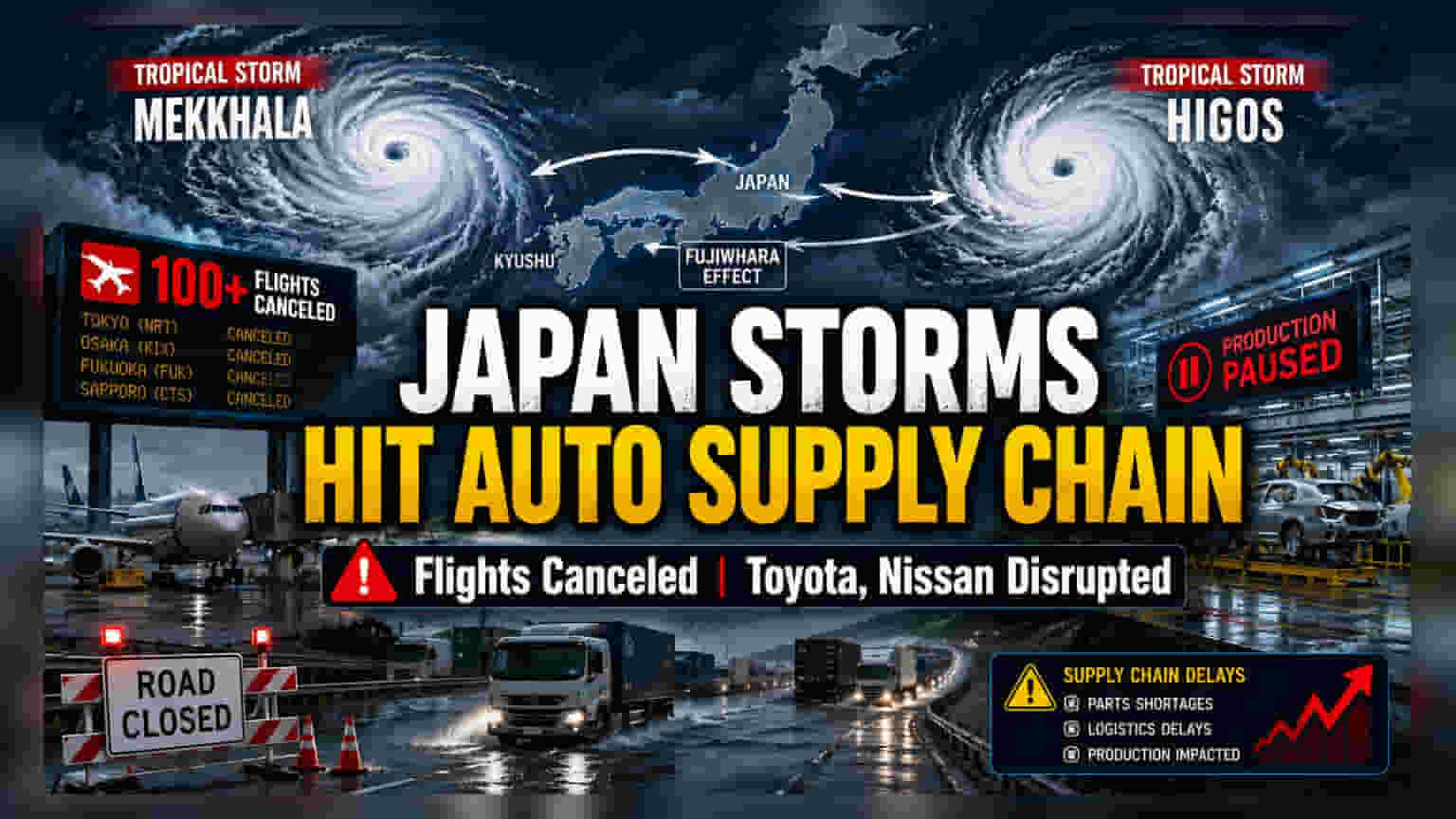
Twin tropical storms, Mekkhala and Higos, have triggered flight cancellations and evacuation alerts across Japan. Major automakers Toyota and Nissan have suspended production lines at plants in Kyushu due to severe weather and logistics disruptions, highlighting the vulnerability of auto supply chains to extreme weather.
What Happened
Tropical storms Mekkhala and Higos are moving toward the Japanese archipelago, prompting widespread weather alerts and significant operational disruptions. As of June 26, 2026, Japanese airlines have canceled over 100 flights, primarily affecting connections in the southern regions of Okinawa and Kagoshima. Local authorities have issued evacuation advisories for parts of the Kyoto region, citing risks of flooding and landslides as river levels rise. The Japan Meteorological Agency has flagged the potential for a "Fujiwhara effect," where the two storms interact, making their trajectory and intensity harder to predict.
Impact on Auto Manufacturing
The severe weather has reached industrial hubs, forcing major automotive players to pause operations. Toyota Motor Corporation has suspended activity at a plant in Kyushu, citing road closures that make it impossible to move goods safely. Nissan Motor has also indicated plans to halt certain production lines in the same region, primarily due to the weather-related delay of parts deliveries.
Kyushu serves as a key automotive manufacturing cluster in Japan. Even temporary halts in this region can affect the broader supply chain, as modern car manufacturing often relies on a "just-in-time" model—where parts must arrive at the assembly line exactly when they are needed. When road or weather conditions block logistics, even a short break can ripple through the entire production schedule.
Why Supply Chain Logistics Matter
For investors following global automotive stocks, these weather events serve as a reminder of the operational risks inherent in manufacturing. While temporary shutdowns due to typhoons are common in Japan, they represent a recurring logistical challenge. The primary concern during such events is not just the lost production hours for the day, but the difficulty of recalibrating supply chains once the weather clears. Automakers must coordinate with parts suppliers, logistics providers, and internal teams to restart multiple production lines simultaneously.
Historically, Japanese automakers have refined their response to such disasters, often prioritizing safety and inventory management over maintaining output. However, recurring disruptions can lead to minor fluctuations in quarterly production targets, which investors often watch during earnings season.
What Investors Should Track
Investors in the automotive sector may look for the following updates in the coming days:
- Resumption Timelines: Official updates on when Toyota and Nissan expect to resume full-scale operations at the impacted Kyushu facilities.
- Supply Chain Impact: Any management commentary regarding potential delays in vehicle delivery or specific component shortages caused by these logistical breaks.
- Production Guidance: Whether these localized interruptions are significant enough to impact broader quarterly production goals or financial guidance.
Market participants typically view these as short-term operational hurdles unless they escalate into prolonged shutdowns. The key monitorable remains the duration of the weather impact and the ability of logistics networks to normalize operations quickly.