

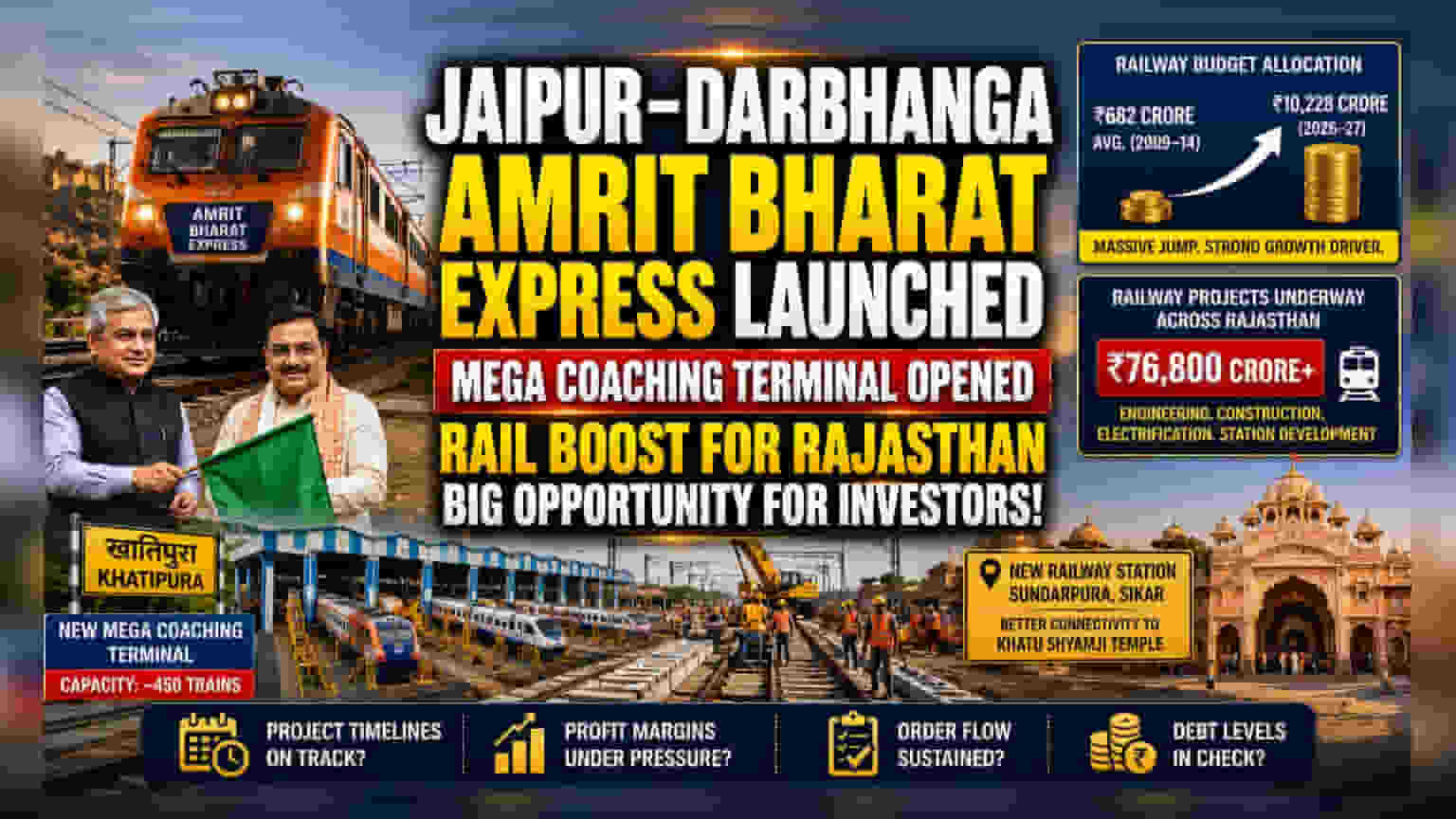
Railway Minister Ashwini Vaishnaw inaugurated the Jaipur-Darbhanga Amrit Bharat Express and a new Mega Coaching Terminal in Jaipur. This development highlights the ongoing aggressive infrastructure spending in the rail sector. For investors, the rise in Rajasthan's railway budget allocation to ₹10,228 crore signals a sustained, long-term order pipeline for construction, engineering, and infrastructure companies.
What Happened
Union Railway Minister Ashwini Vaishnaw and Rajasthan Chief Minister Bhajanlal Sharma officially inaugurated the Jaipur-Darbhanga Amrit Bharat Express. Along with the train service, a new Mega Coaching Terminal was opened at Khatipura railway station in Jaipur. The terminal is designed to handle the maintenance of approximately 450 trains, which aims to reduce pressure on existing infrastructure and improve train operations in the region. Additionally, plans for a new railway station at Sundarpura in Sikar district were announced, specifically to improve access to the Khatu Shyamji temple.
Why This Matters For Investors
The most important takeaway for the market is not just the new train, but the massive scale of capital spending. The state’s railway budget allocation has jumped from an average of ₹682 crore between 2009 and 2014 to ₹10,228 crore for the 2026-27 period. This consistent, high-level funding is a major driver for companies in the engineering, procurement, and construction (EPC) space. With railway projects worth over ₹76,800 crore currently underway across Rajasthan, companies providing materials, electrification services, track laying, and station development are seeing a consistent flow of orders.
The Infrastructure Reality Check
While infrastructure spending creates revenue opportunities, investors must understand that this is a long-term game. Projects of this magnitude—involving terminals and new lines—often take years to complete. The companies involved in these projects face specific business challenges, such as the risk of cost overruns, delays in land acquisition, and working capital lockups where payments may be delayed. Investors tracking companies exposed to these railway projects should look beyond the order book size and monitor how quickly these companies can convert orders into completed work and cash.
What To Watch Next
For those tracking the sector, the key focus should be on the execution quality of these major railway projects. Keep an eye on:
- Project Timelines: Are the large railway projects announced in the state meeting their completion dates?
- Profit Margins: Large construction companies often face margin pressure due to rising material costs and competition. Watch the quarterly results of companies involved in rail infrastructure for margin stability.
- Order Flow Consistency: The jump in budget is significant, but investors should verify if this spending pace is maintained in future union budgets.
- Debt Levels: Large infrastructure projects often require high borrowing. Check if companies are managing their debt effectively as they take on more projects.