 Whalesbook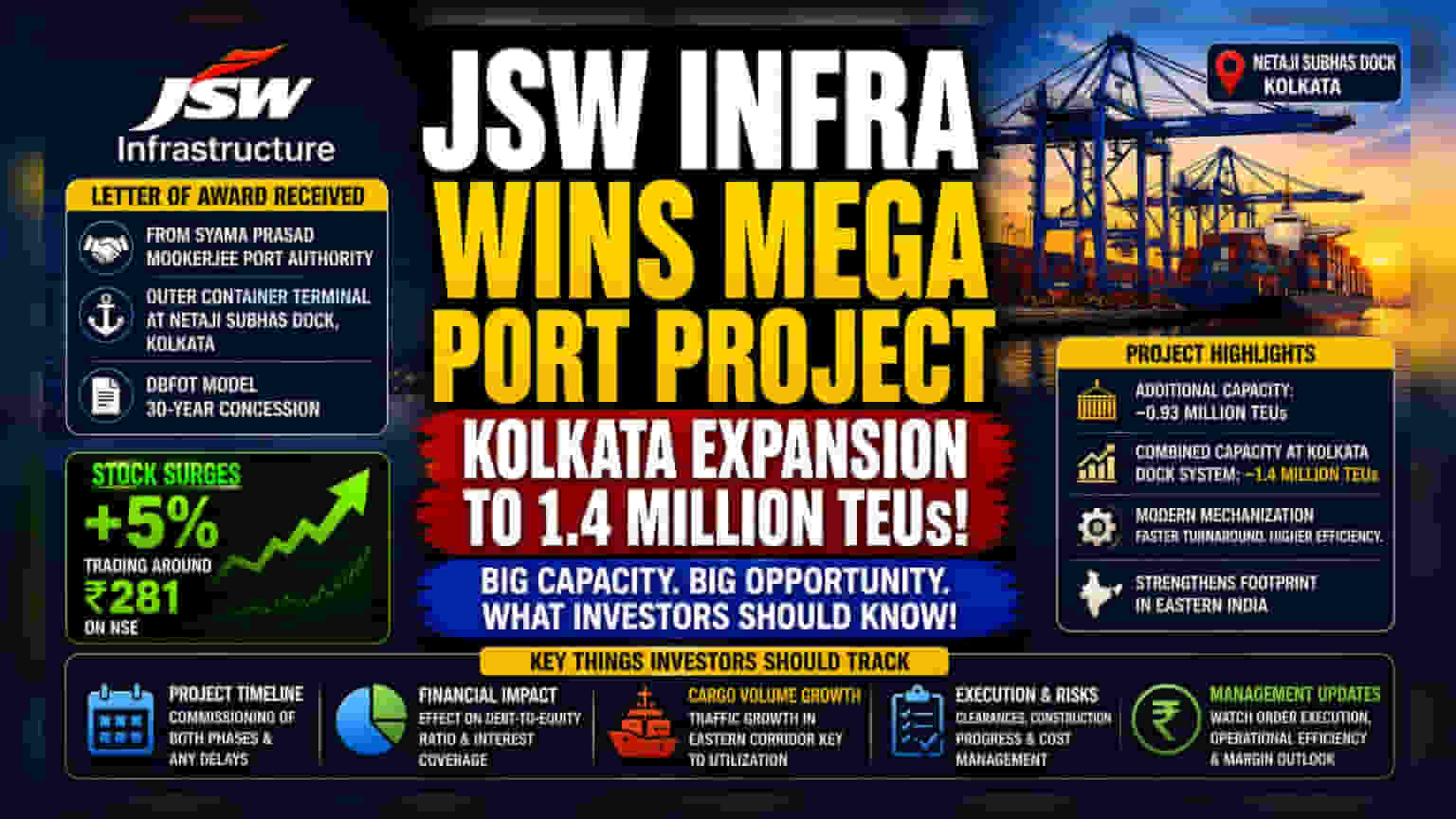


What Happened
JSW Infrastructure has received a Letter of Award from the Syama Prasad Mookerjee Port Authority to develop the Outer Container Terminal at the Netaji Subhas Dock in Kolkata. This project is structured under a public-private partnership model on a Design, Build, Finance, Operate, and Transfer basis, commonly known as DBFOT. The contract spans a 30-year concession period. The project is designed to create an additional container handling capacity of approximately 0.93 million TEUs. This development follows the company's earlier initiative at the same dock to reconstruct and mechanize specific berths.
Why This Matters For Investors
This project is part of a broader strategy to increase the company's footprint in eastern India, a region that serves as a gateway for significant cargo traffic. By combining the new container terminal with its ongoing berth reconstruction work, JSW Infrastructure aims to reach a total container handling capacity of about 1.4 million TEUs at the Kolkata Dock System. For investors, this development highlights the company’s focus on increasing its scale in high-demand areas. The initiative is intended to reduce vessel turnaround times and enhance operational efficiency through modern mechanization, which can potentially lead to better margins over the long term if cargo volumes meet expectations.
How The Stock Reacted
Following the announcement, shares of JSW Infrastructure rose by nearly 5 percent, trading around Rs 281 on the National Stock Exchange. While market reactions to project wins are often immediate, it is important for investors to consider that these infrastructure projects have long gestation periods and involve significant upfront spending before they begin to generate consistent revenue.
The Capital Spending Question
Port infrastructure projects are capital-intensive. Developing container terminals requires substantial investment in civil work, equipment, and technology. While the DBFOT model allows the company to operate the facility without the full cost of land acquisition, it still requires the company to manage its debt and cash flow carefully during the construction phase. Investors often monitor how a company funds such large expansions—whether through internal cash, additional debt, or equity—as high debt levels can impact financial flexibility.
Potential Risks And Challenges
Infrastructure development in India is subject to several risks that investors should monitor. First, project execution is a major factor; delays in getting environmental clearances, construction setbacks, or supply chain issues can push back the commissioning date and increase costs. Second, the success of this project depends heavily on the actual volume of cargo from the Kolkata metropolitan area and its hinterland. If industrial demand in the region slows down, the expected utilization of the terminal may not reach targeted levels, affecting profitability. Finally, as this is a government-concession project, the company must work within the framework set by the port authority, which includes fixed tariffs and regulatory oversight.
What Investors Should Track
Investors looking at the long-term impact of this project may want to monitor several key factors. First, the management’s timeline for the commissioning of the two phases of the terminal will be important to watch, as any delays could impact revenue expectations. Second, the impact of this new project on the company’s debt-to-equity ratio and interest coverage will be a point of interest in quarterly financial filings. Finally, continued growth in container traffic through the eastern corridor will be a necessary condition for the project to deliver the expected return on investment. Keeping an eye on management commentary regarding order execution and operational efficiency will provide better clarity than the initial stock reaction alone.