 Whalesbook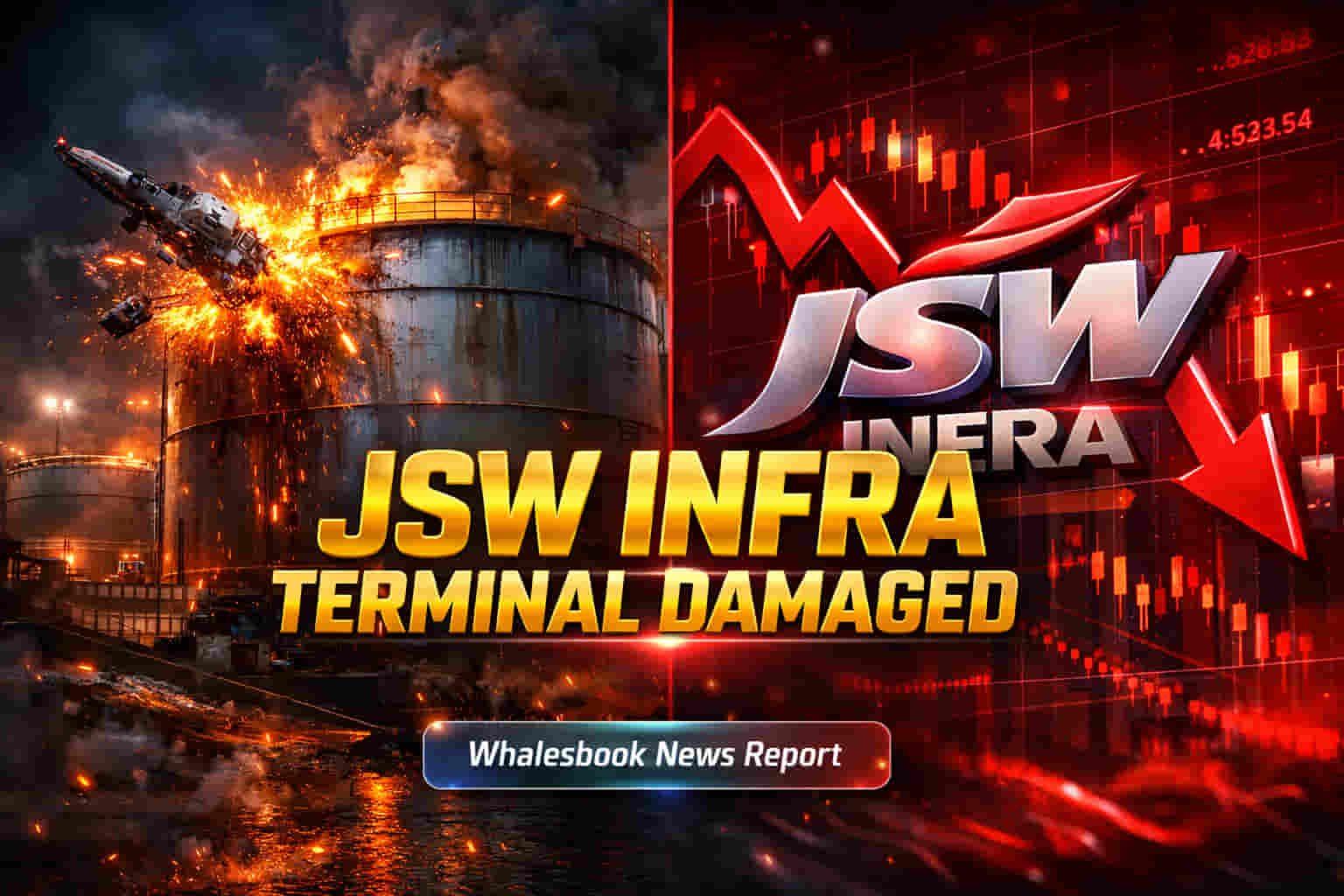


THE SEAMLESS LINK
The damage at JSW Infrastructure's Fujairah Liquid Terminal on March 3, 2026, marks a stark physical manifestation of the escalating geopolitical instability in West Asia, impacting a critical operational asset. Debris from an intercepted drone struck one of the facility's fifteen storage tanks, prompting immediate activation of emergency response procedures. While the company reported no personnel injuries and secured the remaining tanks, the incident casts a long shadow over the operational resilience of its international infrastructure. The market reacted swiftly, with JSW Infrastructure shares declining 1.93% in early trading on March 4.
The Geopolitical Spillover
The drone debris incident at the Fujairah Liquid Terminal has brought the tangible risks of operating in volatile regions to the forefront for JSW Infrastructure. The facility, acquired in November 2023, with a capacity of 465,000 cubic meters, represents a significant international footprint for the company [2, 13]. This event directly impacts the company's diversification strategy and raises questions about the adequacy of its risk mitigation frameworks beyond standard insurance coverage. The stock's immediate dip reflects investor apprehension regarding potential disruptions to revenue streams and increased operational costs. JSW Infrastructure, India's second-largest private port operator, generated approximately 13% of its projected FY25 EBITDA from its Fujairah operations [15, 23].
A Wider Market Tremor
This incident occurs against a backdrop of widespread geopolitical anxiety impacting the broader Indian logistics and infrastructure sectors. Fears of disruptions to key shipping routes like the Strait of Hormuz have already triggered significant sell-offs in port and logistics stocks, with Adani Ports and Special Economic Zone Ltd. (APSEZ) seeing its shares fall by approximately 6% on March 2nd amid escalating conflict [4, 12]. Competitors like L&T also faced market pressure, with its stock dropping nearly 5% due to concerns over its substantial Middle Eastern order book, which accounts for 37% of its $80 billion backlog [27]. The disruption in West Asia is also leading to soaring air freight rates, with spot market prices increasing by as much as 400%, significantly impacting high-value Indian exports like pharmaceuticals and technology [28].
Resilience and Risk
JSW Infrastructure has emphasized that the Fujairah facility has adequate insurance coverage and is undertaking a detailed technical assessment to determine restoration plans [11, 40]. This response aligns with standard corporate procedure. However, the incident highlights a growing challenge for companies like JSW Infrastructure and APSEZ, which have strategically invested in overseas assets. While APSEZ is increasingly diversifying its international growth towards newer assets in Colombo and Tanzania to dilute Middle East risk [21], JSW Infrastructure's Fujairah terminal remains a key component of its liquid cargo expansion. The market's reaction, while perhaps amplified by broader sector fear, underscores the persistent premium investors are applying to geopolitical risk in infrastructure assets located in or exposed to conflict zones.
Analyst Outlook
Despite the immediate stock market jitters and the operational incident, analyst sentiment towards JSW Infrastructure remains broadly positive. A consensus of 15 out of 16 analysts rates the stock as a 'Buy', with an average 12-month price target of ₹334.87 [32, 39]. Analysts point to the company's robust growth strategy and ongoing capital expenditure plans as key drivers. However, concerns regarding the sustainability of dividends and potential underperformance in specific market conditions, as noted in an October 2025 report, suggest a degree of caution amidst ongoing volatility [35, 36].
The Forensic Bear Case
The escalating conflict in West Asia presents a continuous risk premium for companies with significant overseas operations. For JSW Infrastructure, the Fujairah incident, though contained, serves as a potent reminder of the unpredictable nature of geopolitical events. A prolonged or widening conflict could lead to sustained increases in insurance premiums, higher operational costs due to rerouting or security measures, and potentially impact the valuation of overseas assets if they face repeated disruptions. Unlike L&T, which has diversified its Middle Eastern exposure across multiple countries and project types, JSW Infrastructure's direct asset in Fujairah represents a more concentrated point of vulnerability. The company's debt-to-equity ratio of 48.3% and interest coverage ratio of 21.7 suggest a healthy balance sheet, but significant unforeseen capital expenditure for repairs or operational downtime could strain financial flexibility [50].
Forward Projection
JSW Infrastructure's long-term growth narrative remains anchored by its significant capex plans and expansion into logistics [38]. The company is projected to grow earnings and revenue by approximately 17.9% and 26.5% per annum, respectively [36]. The Fujairah incident, however, necessitates a thorough re-evaluation of its international risk management strategy. Investors will be watching closely to see if the company can effectively navigate these geopolitical headwinds, maintain operational continuity, and ensure that its strategic global expansion does not become a significant liability in an increasingly unstable region. The company's ability to execute projects within budget and on time, while also demonstrating enhanced resilience to external shocks, will be critical.