

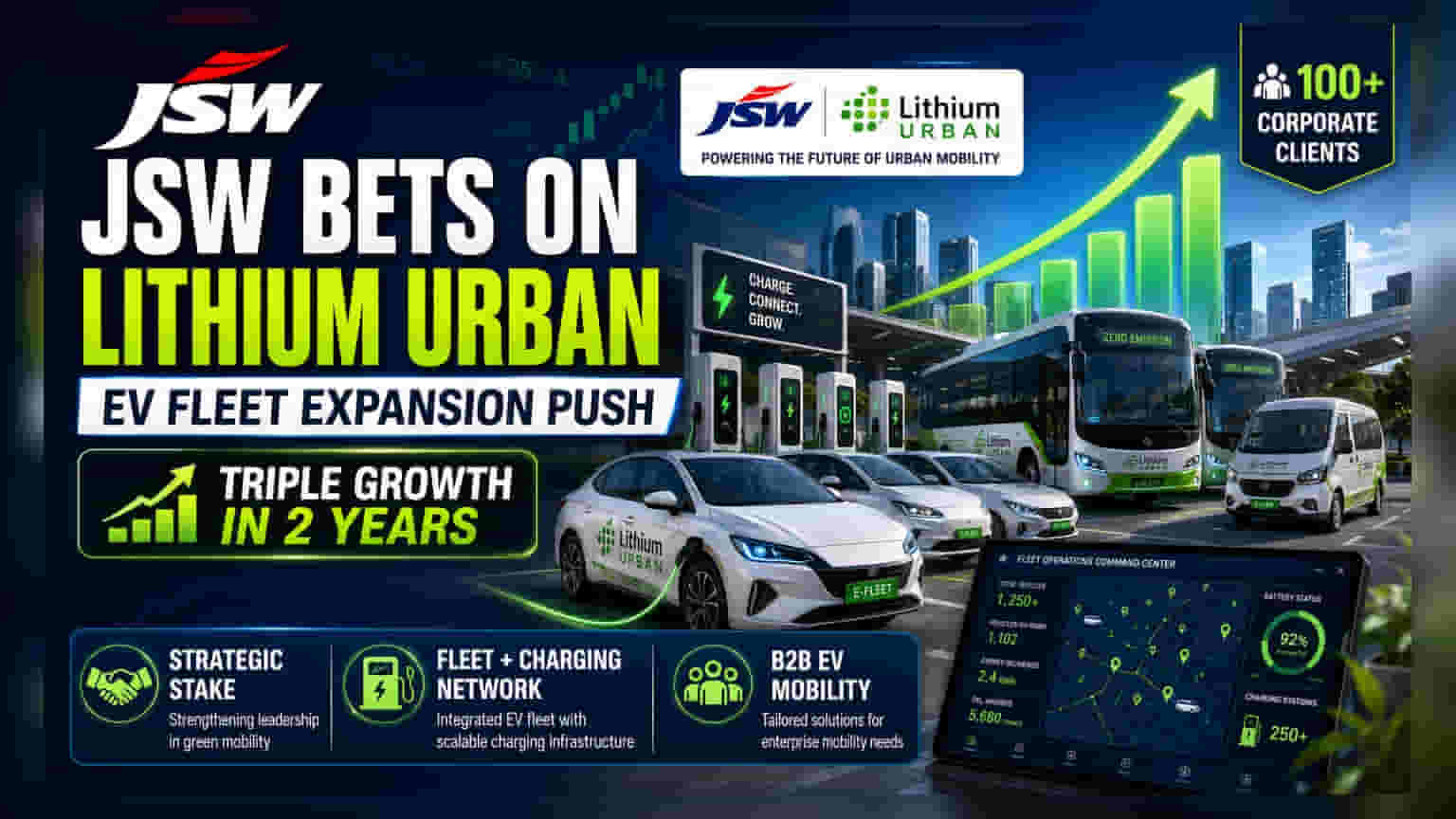
JSW Green Mobility has announced a strategic investment in Lithium Urban Technologies to triple its size over the next two years. The partnership focuses on scaling up electric vehicle fleets and charging infrastructure to meet corporate demand. For investors, this marks a consolidation move in India's capital-intensive B2B electric mobility sector.
What Happened
JSW Green Mobility, the electric vehicle-focused arm of the JSW Group, has secured a strategic stake in Lithium Urban Technologies. Lithium Urban is a known player in the B2B electric mobility space, providing corporate transportation services. The companies have announced plans to use this capital to triple Lithium Urban's growth over the next two years. The expansion will cover both the company's electric fleet and the necessary charging infrastructure to support these vehicles.
Why This Matters For The Business
The investment aligns with JSW Group’s broader strategy to establish a strong presence across the entire electric vehicle ecosystem. JSW has been actively building its footprint in the EV space, including its involvement with JSW MG Motor. By backing Lithium Urban, JSW is not just investing in cars but in an integrated model that combines fleet management, charging networks, and operational command centers.
This "ecosystem" approach is increasingly common in the EV sector. The goal is to control both the vehicle and the energy infrastructure, which allows for better management of operating costs and vehicle uptime. For Lithium Urban, which already serves over 100 corporate clients, the partnership provides the financial backing needed to scale up rapidly in a competitive market.
The EV Fleet Reality Check
Investing in electric fleet operations is highly capital-intensive. It requires significant upfront spending on vehicles and charging stations before revenues can scale to cover these costs. While the demand for sustainable corporate travel is rising, profitability in this sector depends on high vehicle utilization rates and efficient energy management.
Companies in this space face constant pressure to maintain their fleets, upgrade battery technology, and expand their charging networks ahead of demand. Investors should note that while this expansion aims to capture market share, it also involves significant ongoing investment. The success of this move will depend on whether the company can maintain service quality while scaling up its operations to 12,000 to 15,000 new jobs and a significantly larger vehicle count.
Competition and Sector Trends
The B2B electric mobility space in India has become highly competitive, with several players, such as BluSmart, also aggressively building fleet and charging infrastructure. These companies compete on service reliability, technological capabilities, and the ability to offer seamless, integrated solutions to large corporate clients.
For Lithium Urban, the partnership with JSW Group brings a strong balance sheet and industrial experience to the table. However, the sector remains sensitive to changes in government subsidies, charging infrastructure availability, and the cost of capital. A key challenge for all players in this space remains achieving sustained profitability amid the need for constant reinvestment.
What Investors Should Track
Going forward, the key metrics for investors to monitor will be the pace of fleet expansion and the utilization rates of both the new vehicles and the charging stations. Management's commentary on how this investment impacts long-term margins and cash flow will also be crucial. Furthermore, the ability of Lithium Urban to retain and grow its corporate client base while scaling up will determine the long-term success of this growth strategy.