 Whalesbook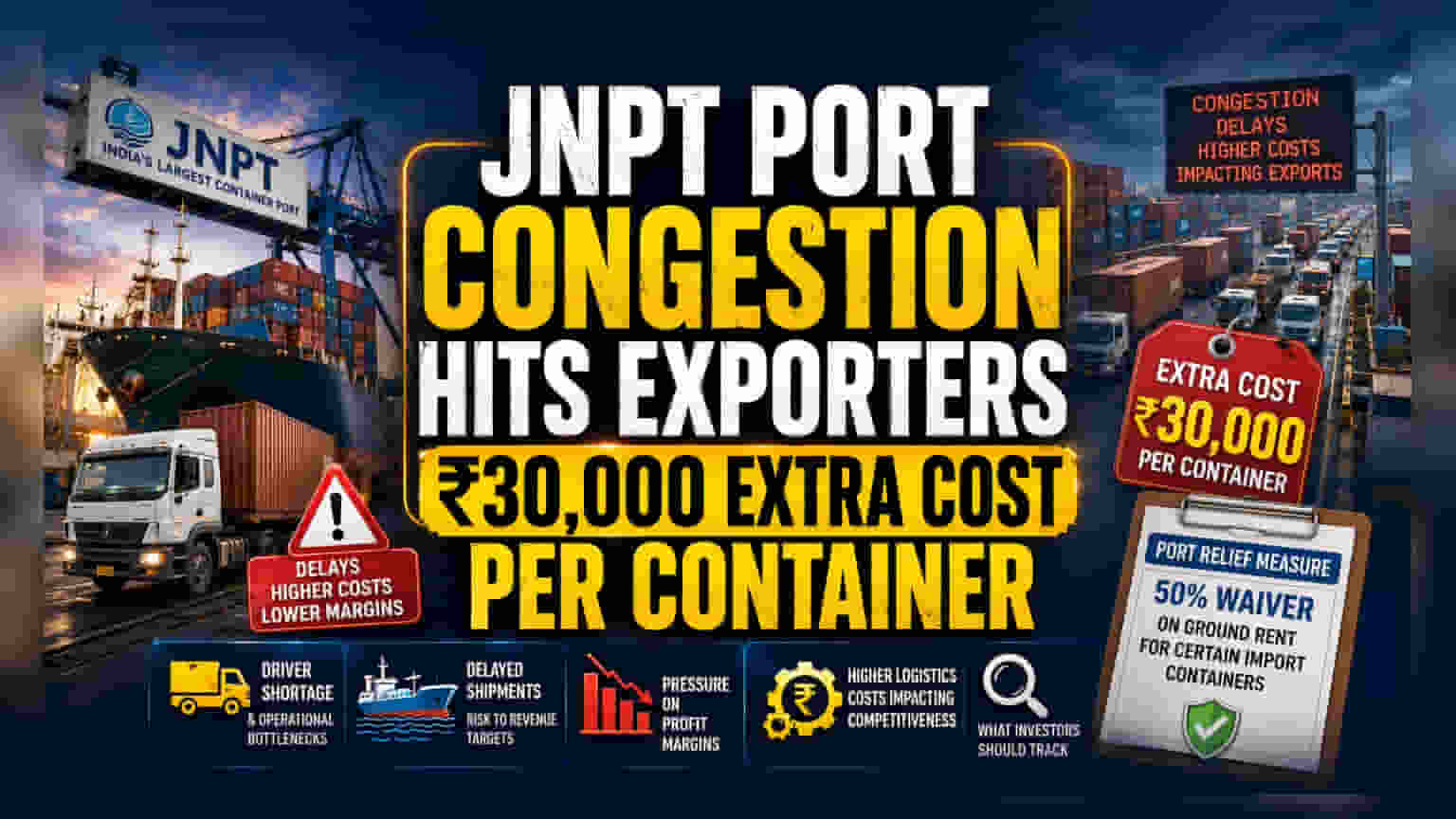


What Happened
Jawaharlal Nehru Port Trust (JNPT), which serves as India’s largest container port, is experiencing severe congestion that is disrupting the movement of goods. This bottleneck has caused delays in shipping and forced exporters to deal with a sudden rise in operational expenses. Specifically, industry data suggests that these delays are adding approximately Rs 30,000 in extra costs to each container. The situation has been worsened by a combination of factors, including a seasonal shortage of trailer drivers and a backlog of cargo previously headed for West Asia that has been returned due to regional tensions.
Why This Matters For Investors
For investors, the immediate concern is how this operational delay impacts the financial health of listed companies. Businesses that depend heavily on exporting goods—such as those in the textile, automobile, engineering, and pharmaceutical sectors—often operate on thin profit margins. When logistics costs spike suddenly, these companies face a difficult choice: absorb the higher expenses, which lowers their profit margin, or try to pass the cost to their international customers, which can be difficult in a competitive global market.
How Investors May Read This
When evaluating companies with high export exposure, investors often look at whether the management team has a proven track record of handling supply chain disruptions. If the congestion at JNPT lasts for a long time, it may lead to delays in order fulfillment. This could potentially result in missed revenue targets for the current quarter, as goods sit at the port rather than reaching international buyers on time. The ability of a company to manage its inventory and maintain shipping schedules during such crises is a key indicator of its operational efficiency.
The Margin Test
Profit margins are often the first thing hit by logistics disruptions. While large, diversified companies may have enough financial strength to absorb a temporary spike in costs, smaller firms with high debt or low cash reserves are more vulnerable. If an exporter cannot pass on the Rs 30,000 per container cost, their quarterly profit figures may come under pressure. Investors should check whether a company has a history of managing logistics costs effectively or if they are prone to margin drops whenever external transport issues arise.
Understanding the Port Relief Measure
The port authority has introduced a 50% waiver on ground rent for certain import containers to encourage faster removal of cargo from the port premises. While this is a relief measure, some market participants view it as only a partial solution that does not solve the root cause of the transport worker shortage. For investors, this shows that while the port is trying to manage the situation, the impact on shipping schedules and overall logistics efficiency may remain uncertain until the worker shortage is resolved.
What Investors Should Track
The primary monitorable for shareholders is the duration of this congestion. Investors should look for updates in upcoming management commentaries or quarterly earnings reports, where companies are likely to address how these logistics issues affected their operations. Key indicators include whether there was a decline in export volumes, an increase in selling and distribution expenses, or a delay in recognizing revenue from pending shipments. A quick resolution to the driver shortage and a reduction in port turnaround times would be positive signs for the health of the export-import sector.