

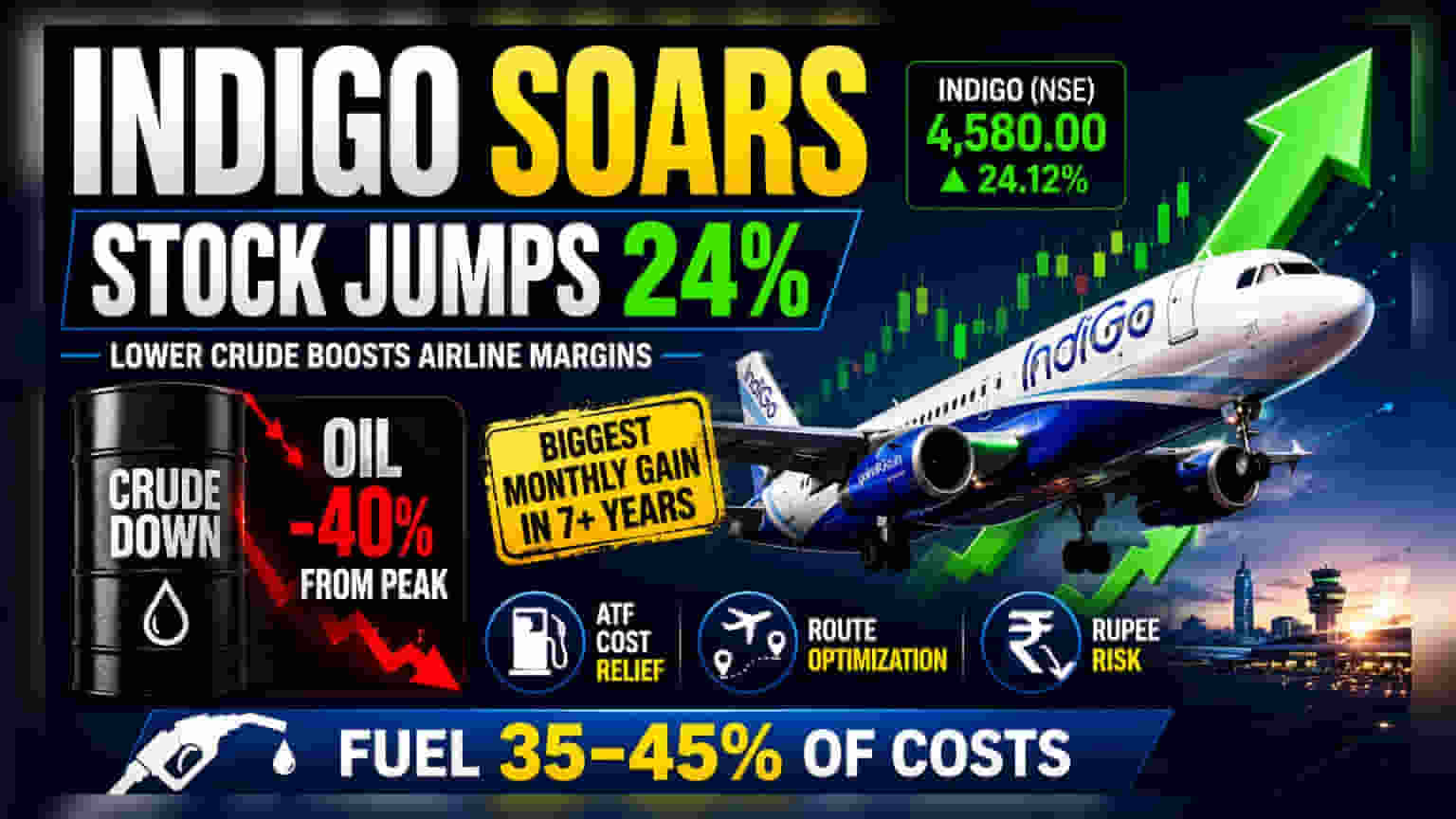
InterGlobe Aviation, the parent of IndiGo, is on track for its best monthly performance in seven years with a 24% gain in June. The surge is driven by a sharp decline in crude oil prices, which directly helps the airline lower its fuel costs. Investors are also watching the company's tactical decision to pause six international routes to optimize capacity during the off-season.
What Happened
InterGlobe Aviation, which operates IndiGo, has seen a sharp rally in June 2026, with the stock climbing nearly 24%. This performance marks the airline's most significant monthly gain in over seven years. The primary driver for this market optimism is the substantial drop in global crude oil prices, which have corrected by over 40% from their recent peaks. For Indian airline operators, where fuel accounts for 35% to 45% of total operating expenses, this development provides immediate relief to profitability margins.
Why Lower Oil Prices Matter
For investors, the direct correlation between crude oil and Aviation Turbine Fuel (ATF) is the most critical factor to monitor. When crude oil prices fall, airlines experience an expansion in their gross profit margins, assuming ticket pricing remains stable. Because ATF is the airline's single largest expense, any significant reduction allows the company to either improve its net profit or compete more aggressively on ticket prices. With global supply concerns easing, the market is pricing in the potential for better earnings in the upcoming quarters for the entire sector.
Strategic Capacity Management
Alongside the market rally, IndiGo has announced the temporary suspension of six international routes from July 3 to September 30, 2026. While some might interpret this as a sign of weak demand, it is a well-established practice for the airline. IndiGo frequently uses this strategy to optimize fleet utilization during seasonally softer travel periods. By pruning routes that typically see lower occupancy during the monsoon and off-season, the company aims to protect its yield and avoid running flights with empty seats, which would otherwise burn cash.
The Currency And Cost Risk
While lower oil prices provide a tailwind, investors must be aware of the persistent risks in the aviation sector. The most significant factor is the exchange rate between the Indian Rupee and the US Dollar. A large portion of an airline’s costs—including aircraft leasing, maintenance, and international landing charges—is denominated in dollars. If the Rupee weakens significantly against the dollar, it can offset the gains made from cheaper fuel. Furthermore, the industry faces ongoing competition, and any aggressive pricing by peers to capture market share could limit the airline's ability to retain the benefits of lower costs.
What Investors Should Track
Moving forward, the primary monitorables are the sustainability of the crude oil price decline and the airline's quarterly financial results. Investors should look for management commentary on unit revenue—often reported as RASK (Revenue per Available Seat Kilometer)—to understand if the company is passing on fuel savings to passengers or holding them to improve margins. Additionally, tracking the load factor on the remaining network during the off-season will provide insight into whether core demand remains robust.