

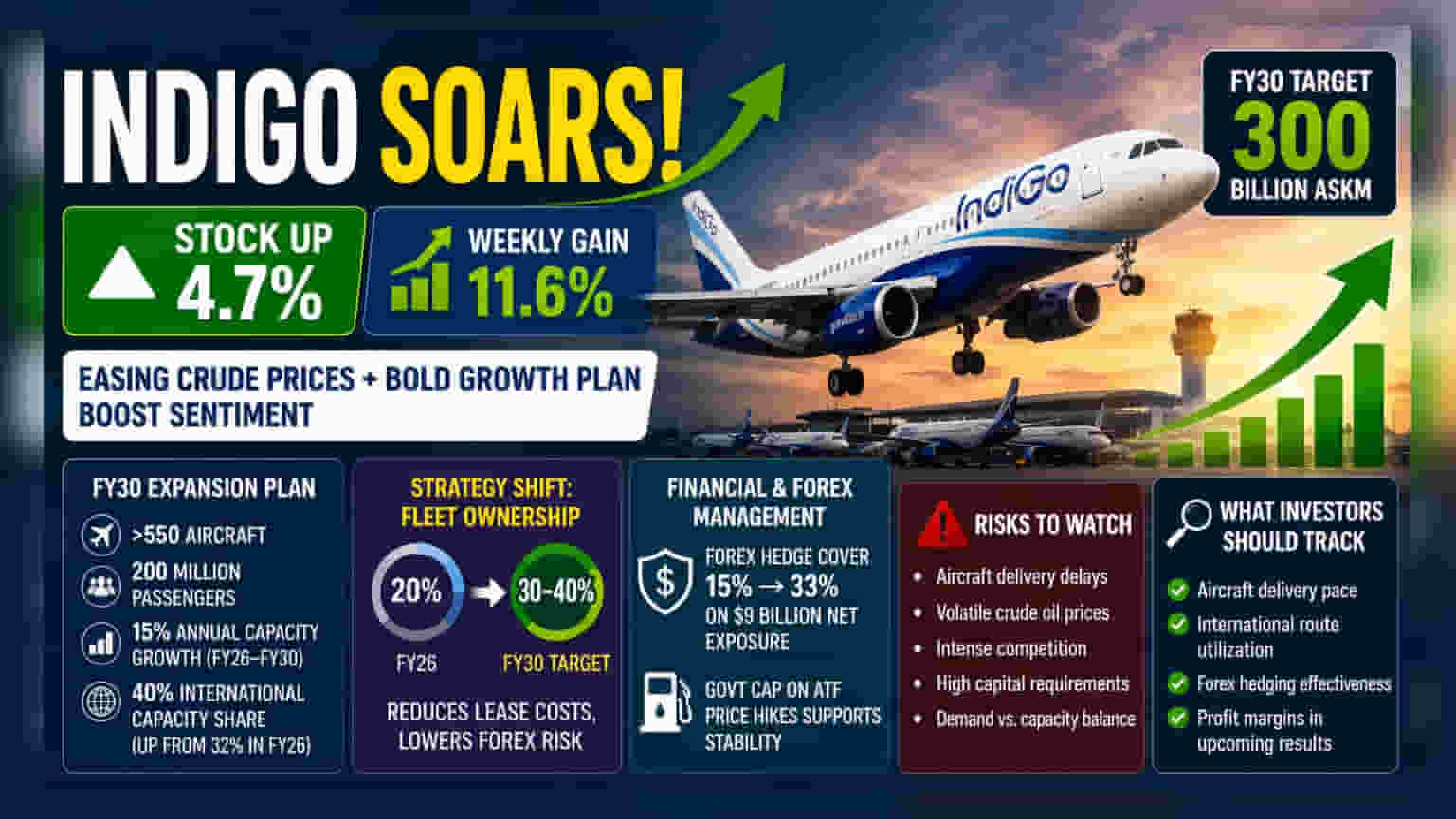
InterGlobe Aviation shares gained as management unveiled an ambitious roadmap for 2030, targeting 300 billion in seat capacity and a shift toward higher fleet ownership. The rally was also supported by moderating global crude oil prices, which typically help lower operating costs for airlines. Investors are analyzing the long-term impact of this capital-intensive expansion on the company's balance sheet and forex exposure.
What Happened
InterGlobe Aviation, which operates the IndiGo brand, saw its stock price rise by 4.7% on Thursday. This gain contributes to a broader weekly increase of 11.6%. The upward move follows positive sentiment regarding easing crude oil prices, a key factor in airline profitability, and detailed long-term growth plans shared by the company during a recent analyst meeting in June 2026.
The FY30 Expansion Plan
Management has laid out a clear target to scale up operations significantly by the end of fiscal year 2030. The airline aims to reach an annual capacity of 300 billion Available Seat Kilometers (ASKM), a metric that measures the total number of seats available for passengers multiplied by the distance flown.
Key goals for FY30 include:
- Expanding the fleet to over 550 aircraft.
- Handling 200 million passengers annually.
- Achieving a 15% annual capacity growth rate between FY26 and FY30.
- Increasing the international route share to 40% of total capacity, up from 32% in FY26.
Strategy Shift: Fleet Ownership
Historically, many airlines, including IndiGo, have relied heavily on sale-and-leaseback models to remain asset-light. However, the company is pivoting toward a strategy of higher fleet ownership. The goal is to raise the proportion of owned or finance-leased aircraft to 30-40% by FY30, compared to 20% in FY26.
For investors, this transition is significant. While owning aircraft requires more upfront capital spending, it can reduce long-term lease rental payments, which are often dollar-denominated. This helps the company manage its foreign exchange (forex) risks more effectively, as lease payments are a major source of currency volatility.
Financial and Forex Management
As part of its financial prudence, IndiGo is increasing its hedge cover on its $9 billion net forex exposure from 15% in FY26 to 33%. By hedging a larger portion of its dollar-denominated liabilities, the company aims to reduce earnings volatility caused by fluctuations in the Indian Rupee. Additionally, the government’s policy to cap Aviation Turbine Fuel (ATF) price hikes for domestic flights remains a supporting factor for the sector's operational stability.
Risks and Considerations
The aviation industry is inherently cyclical and sensitive to external factors. While the expansion plan is ambitious, several risks remain that investors should watch. These include potential supply chain delays in receiving new aircraft, the volatility of global crude oil prices, and intense competition in both domestic and international markets. Additionally, large-scale expansion often requires significant capital, which can impact cash reserves if passenger demand does not keep pace with capacity additions.
What Investors Should Track
Moving forward, the primary monitorables include the actual pace of aircraft deliveries, the ability of the airline to maintain high capacity utilization on new international routes, and the effectiveness of the increased forex hedging strategy. Investors will also look for updates on profit margins in upcoming quarterly results, particularly how the company manages cost pressures while funding its fleet expansion.