

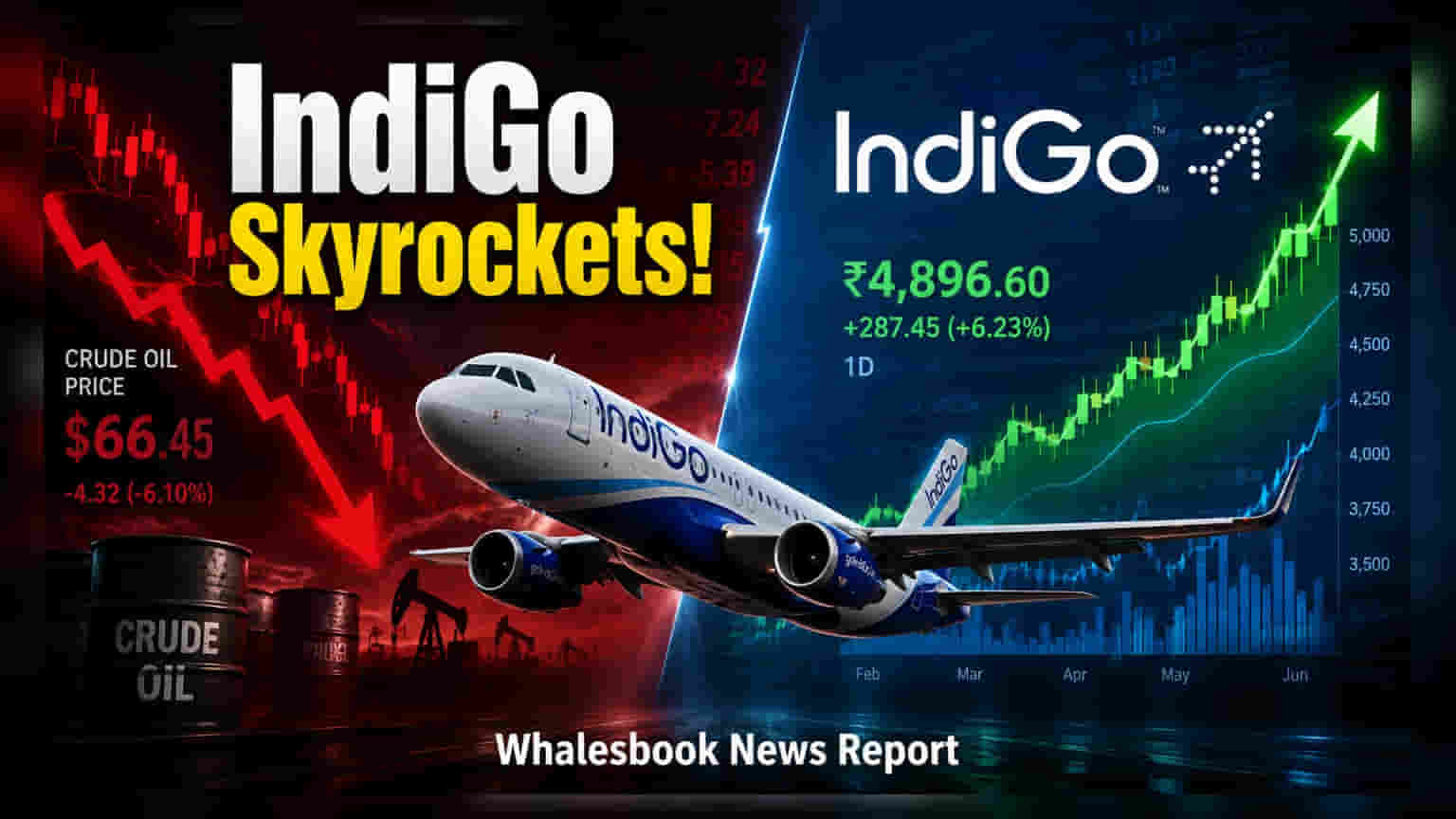
IndiGo shares climbed to an eight-month peak as global crude oil prices dropped, easing investor concerns about high fuel costs. While the stock reflects optimism, the company recently reported a net loss for the June quarter due to steep fuel expenses and currency headwinds, making cost management a critical area for investors to watch.
Shares of InterGlobe Aviation, the parent company of IndiGo, reached an eight-month high as global crude oil prices pulled back. This stock movement reflects the airline industry's high sensitivity to energy costs, as fuel is typically the largest operating expense for carriers. When crude oil prices decrease, investors often anticipate better profit margins for airlines, as it lowers the cost of Aviation Turbine Fuel (ATF).
While the recent stock rally indicates market optimism, investors should balance this with the company's recent financial performance. In the first quarter of fiscal year 2027, which ended in June, IndiGo reported a consolidated net loss of approximately ₹237.6 crore. This marked a significant turnaround from the profit the company earned in the same quarter last year. The primary reason for this loss was an 86% year-on-year surge in fuel costs, compounded by currency depreciation that made international expenses more expensive.
Despite these short-term financial pressures, the company continues to focus on long-term capacity expansion. As of the end of the June quarter, IndiGo operates a fleet of 432 aircraft. The company maintains a substantial order book of over 900 aircraft, including plans for newer, more fuel-efficient models. Furthermore, the airline has signed an agreement with CFM International to procure a large number of LEAP-1A engines, which may help improve long-term operational efficiency.
For investors, the key to the company’s future performance lies in how it balances its rapid growth with rising costs. While consolidated revenue grew by 19.9% in the June quarter, proving that passenger demand remains healthy, the company must manage structural cost increases, such as rising lease expenses and wage costs. Additionally, the airline is undergoing a leadership change in its finance department, with Kiran Thadimarri taking over as the new Chief Financial Officer.
Moving forward, the primary monitorables for shareholders will be the trend in global crude oil prices and the company’s ability to control its operating margins. If oil prices remain volatile or the rupee continues to weaken, the pressure on the bottom line may persist. Investors will likely look for management commentary on cost-saving initiatives and efficiency improvements during the coming quarters to see if the company can return to consistent profitability amidst its ambitious expansion plans.