 Whalesbook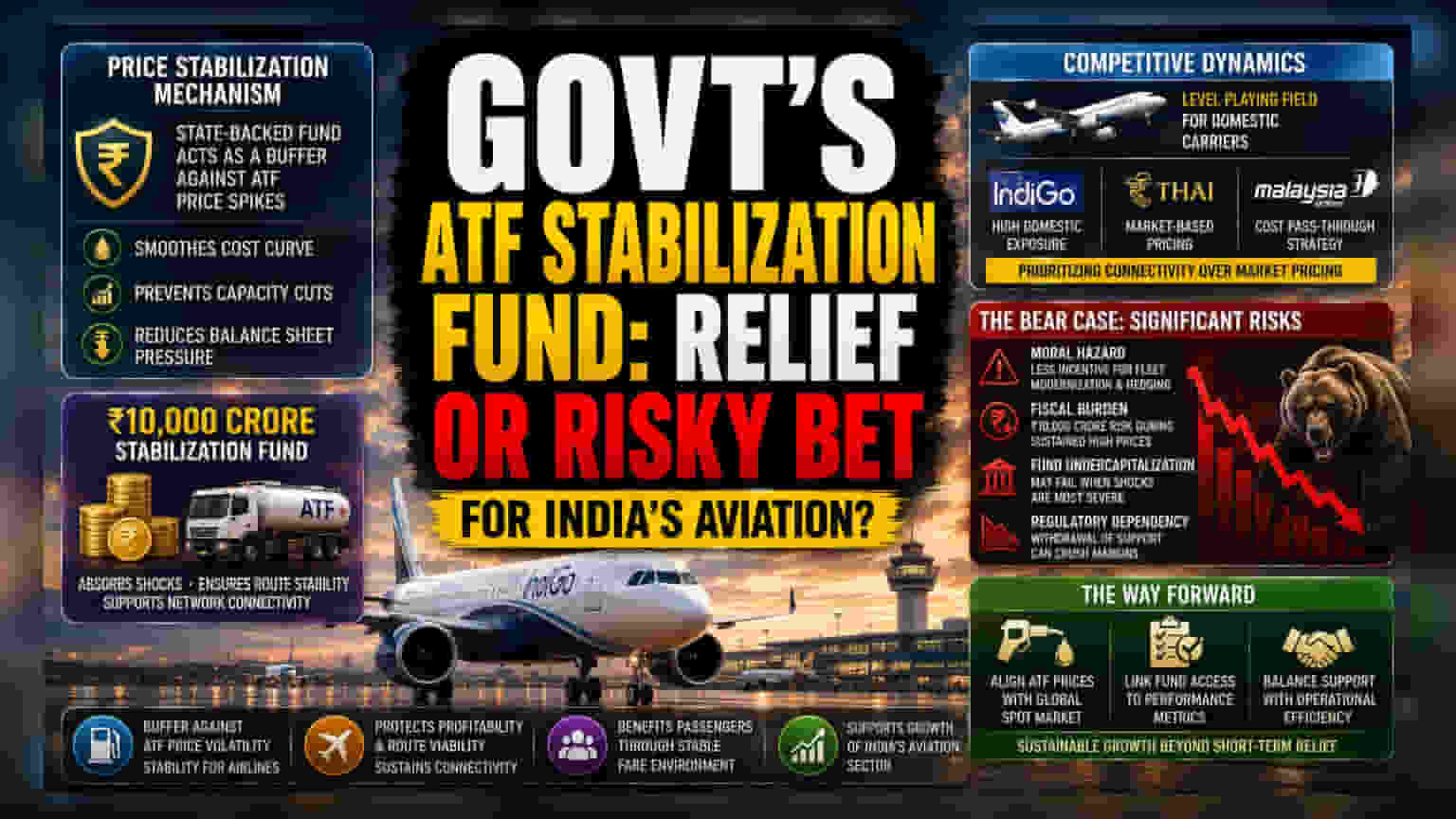


The Mechanism of Price Stabilization
The proposed state-backed fund acts as a liquidity buffer intended to absorb shocks when Aviation Turbine Fuel (ATF) premiums spike beyond historical norms. By smoothing the cost curve, the government aims to prevent the reflexive capacity cuts that have recently plagued the domestic network. This intervention addresses a specific structural flaw where domestic fuel prices frequently remain disconnected from international crude benchmarks, effectively taxing Indian carriers at rates higher than their regional peers. However, institutional observers note that while this provides immediate solvency relief for balance sheets strained by thin margins, it does little to address the underlying infrastructure constraints driving these regional price discrepancies.
Competitive Dynamics and Operational Reality
Unlike markets where fuel hedging is a standard risk-management tool, the Indian aviation sector has struggled to implement sophisticated hedging strategies due to regulatory hurdles and tax complexities. Major players such as InterGlobe Aviation (IndiGo) are disproportionately exposed to these fluctuations because of their dominant domestic market share. The fund serves as a de facto subsidy, potentially giving domestic carriers an artificial competitive edge over international operators who do not benefit from similar domestic price-smoothing mechanisms. Comparative analysis of regional peers suggests that while Thai and Malaysian carriers face similar fuel cost pressures, they have not sought direct state price stabilization, choosing instead to pass costs through to consumers or absorb them through aggressive cost-restructuring programs. By opting for a stabilization fund, the Indian government is prioritizing network connectivity over a fully market-driven pricing model.
The Forensic Bear Case
The primary risk inherent in this stabilization fund is the potential for moral hazard. By guaranteeing a floor on fuel-cost volatility, there is less incentive for carriers to modernize aging, fuel-inefficient fleets or negotiate more favorable long-term supply contracts. Furthermore, the fiscal burden of a Rs 10,000 crore fund during periods of sustained energy inflation could necessitate significant taxpayer support, creating a recurring liability for the exchequer. History shows that such price-control mechanisms often fail to account for prolonged supply-side shocks, leading to scenarios where the fund itself becomes undercapitalized just when it is most needed. Investors should remain wary of the regulatory dependency this creates; should the government pivot away from this support, carriers with high debt-to-equity ratios could see their operating margins collapse overnight.
Long-Term Outlook
Brokerage sentiment remains cautiously optimistic regarding the short-term impact on airline profitability, as the fund is expected to reduce the frequency of earnings volatility. However, the long-term sustainability of the sector will rely more heavily on the liberalization of fuel taxation and the alignment of domestic jet fuel prices with the global spot market. The market will likely watch closely to see if the government imposes strict operational performance metrics as a condition for accessing these stabilization funds, which would be the only way to ensure capital is not merely subsidizing operational inefficiency.