

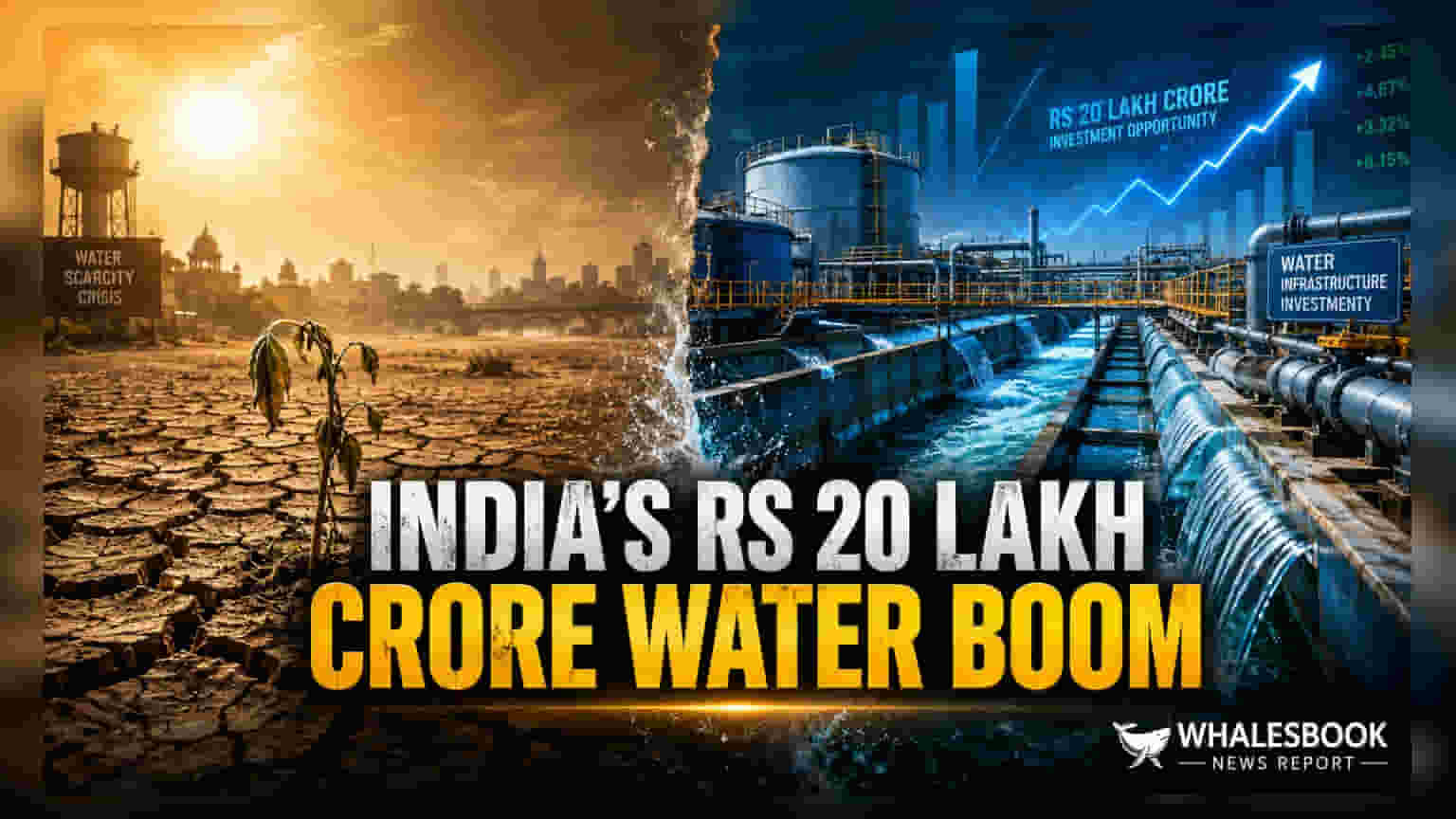
India requires an estimated Rs 20 lakh crore in water infrastructure investment by 2030 to bridge the growing gap between supply and demand. Government initiatives like the Jal Jeevan Mission and AMRUT 2.0 are driving significant capital spending. This sector offers long-term growth potential for specialized engineering and treatment firms.
What Happened
India is facing a critical water supply challenge as the country’s demand for freshwater is projected to nearly double its current availability by 2030. To combat this, a report by brokerage firm Prabhudas Lilladher highlights that the nation requires an investment of Rs 20 lakh crore in water infrastructure. This massive capital need covers essential areas, including drinking water supply, sewage treatment, wastewater recycling, and desalination plants. With India hosting 18% of the global population but having access to only 4% of the world’s freshwater, the need for efficient infrastructure has become a national priority.
The Sewage Treatment Gap
A major area of focus for this investment is the treatment of sewage. Currently, India generates approximately 72,000 million litres per day (MLD) of sewage, but the existing infrastructure can only treat around 27,000 MLD. This means nearly 70% of generated sewage remains untreated, creating a significant infrastructure gap. Companies specializing in water and wastewater technology are expected to capture this demand as environmental regulations become more stringent for both urban bodies and industrial units.
Government Spending As A Catalyst
Public spending remains the primary driver for this sector. Several central government initiatives are providing a steady flow of projects for infrastructure firms. The Jal Jeevan Mission, which focuses on providing tap water to households, continues to receive an annual allocation of around Rs 67,000 crore. Additionally, the Ministry of Jal Shakti was allocated nearly Rs 99,500 crore for FY26. Other major schemes like AMRUT 2.0, with an outlay of Rs 2.99 lakh crore, and the Namami Gange Phase II project, with Rs 22,500 crore dedicated to river rejuvenation, are central to the industry’s growth outlook.
Business Potential For Listed Players
Several listed companies are currently positioned to participate in these government-led projects. VA Tech Wabag, a specialist in water treatment, maintains an order book of Rs 17,200 crore, which represents about 4.4 times its projected FY26 revenue. Similarly, Enviro Infra Engineers has demonstrated growth in its top and bottom lines, supported by an order book of Rs 6,814 crore. Other players, such as Denta Water and Infra Solutions, are also focusing on government-linked water management contracts.
Risks And Monitorables
While the sector holds long-term promise, investors should be aware of specific business risks. These projects are often capital-intensive and subject to lengthy execution timelines. Any delay in project commissioning or increase in material costs can pressure profit margins. Furthermore, since a large portion of the order book for these firms is tied to government spending, payment cycles and the pace of project awarding by state and central authorities are critical to monitor. The ability of these companies to maintain margins amid competitive bidding for large infrastructure contracts will remain an important factor for long-term value creation.