 Whalesbook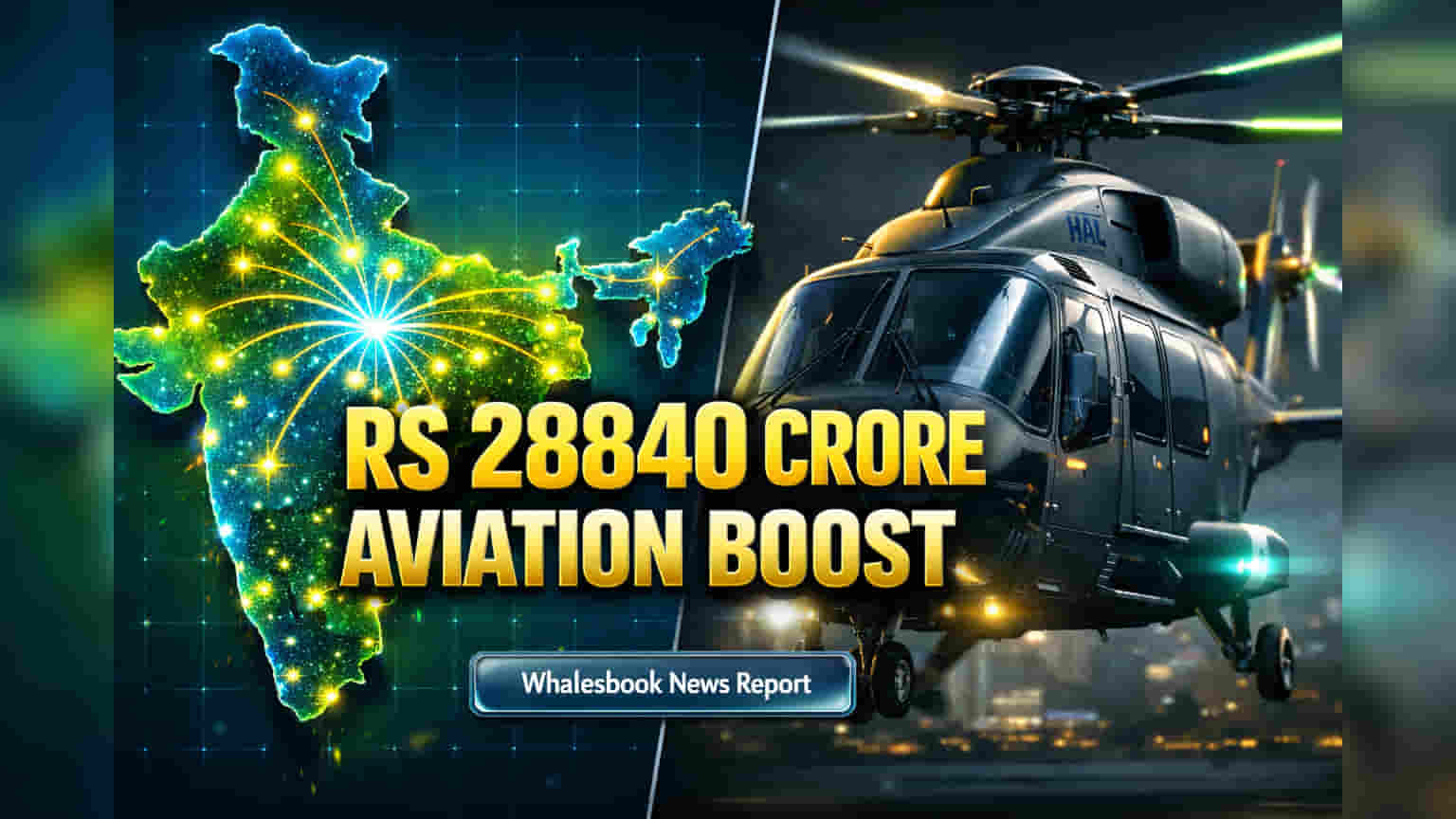
**### The Connectivity Engine
The Indian government has greenlit a substantial Rs 28,840 crore infusion into the modified UDAN (Ude Desh ka Aam Naagrik) scheme, extending its mandate through fiscal year 2035-36. This decade-long initiative aims to dramatically reshape regional air connectivity, targeting the development of 100 new airports and 200 modern helipads. The plan includes a Rs 12,159 crore allocation for airport development and Rs 3,661 crore for helipads, with a focus on underserved, hilly, and remote regions. To ensure operational viability, Rs 2,577 crore is earmarked for operation and maintenance support for approximately 441 aerodromes. Furthermore, Rs 10,043 crore will be disbursed as Viability Gap Funding (VGF) to airline operators over the scheme's duration, a crucial component for sustaining routes with limited revenue potential.
**### Indigenous Aerospace Drive
A significant aspect of the revamped UDAN scheme is its alignment with the 'Atmanirbhar Bharat' (self-reliant India) vision. The plan incorporates the procurement of two HAL Dhruv helicopters for Pawan Hans and two HAL Dornier aircraft for Alliance Air, directly addressing the shortage of small fixed-wing aircraft and helicopters for difficult terrains. Hindustan Aeronautics Limited (HAL), a key state-owned defense and aerospace manufacturer, plays a central role in this strategy. HAL's robust order book, exceeding ₹2.59 lakh crore as of September 2025, provides strong revenue visibility for the coming years, though its valuation, with a Price-to-Earnings ratio around 27.46x, is considered elevated by some analysts, trading significantly above its historical median. This strategic push aims to bolster domestic manufacturing capabilities within the aerospace sector.
**### Sectoral Headwinds & Valuation Puzzles
Despite the government's significant investment, the Indian aviation sector is navigating a challenging financial period. Analysts forecast net losses between Rs 170-180 billion for FY2026, a substantial increase from the previous year, driven by subdued passenger growth, fleet inductions, and geopolitical disruptions. Domestic passenger traffic growth has been revised downwards to 0-3% for FY2026. The Nifty Aviation Index currently holds a PE ratio of 20.0, while HAL trades at a PE of approximately 27.46x. This valuation, 93% above its 10-year median, raises concerns about stretched valuations, even as analysts maintain a generally positive 'Buy' or 'Moderate Buy' consensus for HAL, with median price targets around ₹5,179. The sector's resilience is further tested by a weaker rupee and escalating geopolitical tensions impacting market sentiment, as evidenced by HAL's stock experiencing volatility and hitting a 52-week low in March 2026.
**### The Bear Case: Viability Under Scrutiny
The UDAN scheme's history indicates both progress and persistent challenges. While it has operationalized 663 routes across 95 airports and heliports, carrying over 16 million passengers by February 2026, air passenger traffic under the scheme has shown volatility, declining in 2023-24. The core issue remains the inherent difficulty in ensuring profitability on low-demand regional routes, a challenge amplified by recurring operational and maintenance costs. The scheme's support for airlines is typically time-bound, often for three years, creating uncertainty for long-term route sustainability. Critics point to previous issues such as poor infrastructure at regional airports, dominance by larger airlines, and slow implementation, which have plagued earlier phases of the scheme. The substantial government outlay for UDAN 2.0, while vital for infrastructure development and market creation, relies heavily on continued budgetary support and effective demand stimulation to prove its long-term economic viability.
**### Future Trajectory
The expanded UDAN scheme is designed to integrate with the 'Viksit Bharat 2047' vision, aiming to transform India into a globally competitive aviation ecosystem. The government's commitment, backed by significant financial outlays and policy support, targets enhanced connectivity, improved healthcare access, and economic growth in tier-2 and tier-3 cities. However, the sector's overall financial health, marked by projected losses and subdued domestic traffic growth in FY2026, coupled with HAL's elevated valuation, presents a complex outlook. The success of UDAN 2.0 will hinge on its ability to overcome the structural challenges of regional route economics and the broader industry's cyclical pressures.